

Custom Pet Apparel for Professional Pet Sitters
Table of Contents
- What Custom Pet Apparel Means for a Working Pet Sitter
- Human Workwear vs. Clothing for Pets: Getting the Category Right
- Pet Sitter Uniform Ideas That Look Professional on the Job
- Comfortable Work Shirts for Pet Sitters: What the Fabric Has to Do
- Pet Sitter Hoodies: When a Layer Beats a Tee
- Print Durability, Care, and the Real Cost per Wear
- Branding and Client Trust: Turning a Shirt Into a Business Signal
- Gifts for Professional Pet Sitters: What They Actually Wear
- Conclusion
- Frequently Asked Questions
Last Updated: October 20, 2026
What Custom Pet Apparel Means for a Working Pet Sitter
Custom pet apparel for professional pet sitters is printed clothing that a sitter wears on the job to signal credibility, comfort, and a clear brand identity. It is not clothing for the animals. This guide from Ortrends shows sitters how to buy workwear that survives real working conditions.
The distinction matters more than most buying guides admit. A sitter who orders a printed tee expecting it to handle leash friction, slobber, and daily washing needs to know what the fabric and print actually do before checkout. Below, we cover uniform ideas, fabric choices, hoodie layering, print durability, branding, and gifting, all aimed at apparel a working sitter will actually wear.

Human Workwear vs. Clothing for Pets: Getting the Category Right
The two categories get mixed constantly in search results, and that confusion costs buyers money. Human workwear is clothing a sitter wears: tees and hoodies printed with a business name or logo. Clothing for pets is apparel worn by the animal, such as bandanas, harnesses, and pet-sized shirts.
A working sitter needs the first category. Pet-sized apparel rarely survives a muddy walk, and it does nothing for client trust at the front door. The practical difference comes down to three factors:
- Fit: human workwear follows standard unisex sizing; pet apparel follows breed measurements.
- Durability: work shirts face repeated washing and abrasion; pet garments face chewing and rolling.
- Purpose: workwear builds a business signal; pet clothing is decorative or functional for the animal.
Pet Sitter Uniform Ideas That Look Professional on the Job
A workable pet sitter uniform pairs one printed graphic tee with neutral bottoms and a treat pouch. That combination reads as professional without looking corporate, and it keeps the sitter's hands free for leashes and keys. But a uniform that only looks right is half a uniform. The setups below are built around what the job actually demands: reaching, kneeling, lifting, handling leashes, and moving between indoor and outdoor visits in the same shift.
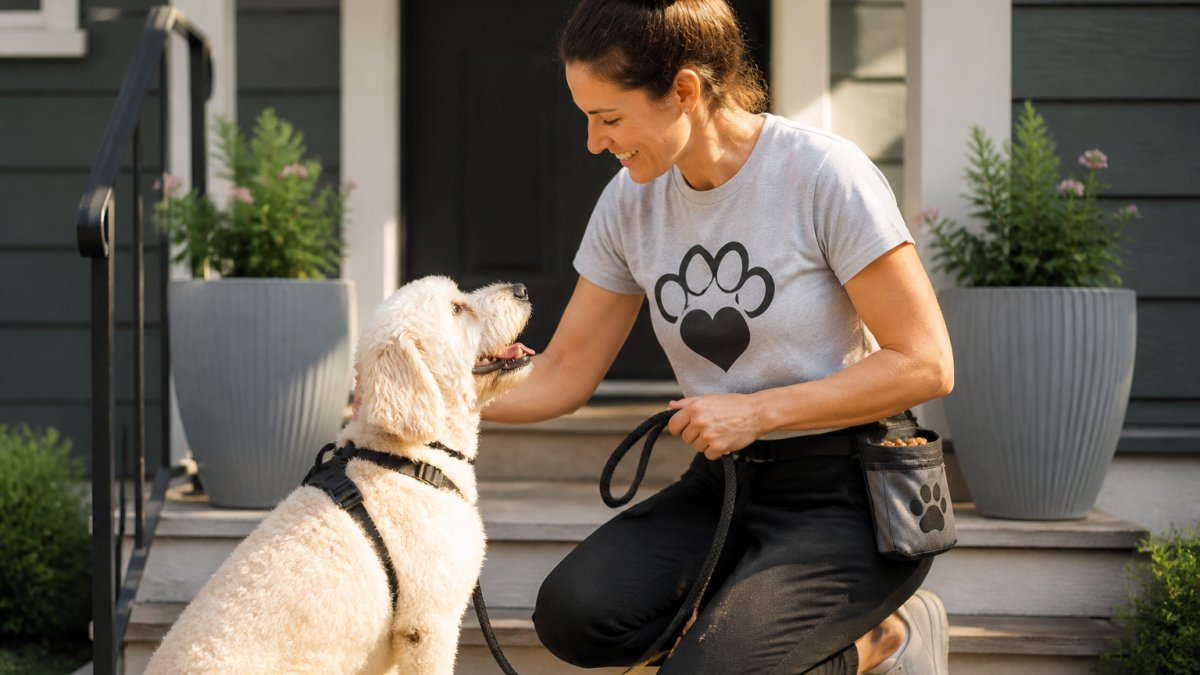
Three uniform setups that hold up on the job
- The solo sitter: one printed tee in a dark color, dark shorts or jeans, and a treat pouch. Dark colors hide fur and mud between visits, and a midweight ring-spun cotton tee moves with the sitter during leash handling instead of pulling across the shoulders.
- The small team: matching tees with the business name on the chest and a pet-themed graphic on the back. Matching shirts make a two-person team look organized at meet-and-greets, and a readable chest logo lets a client confirm the sitter at the door before opening it.
- The cold-weather setup: a printed hoodie over a plain tee, so the sitter can shed a layer indoors without losing the branding. A midweight hoodie handles early-morning and late-evening visits; the tee underneath keeps the business signal visible once the hoodie comes off.
What separates a work uniform from a costume
The difference is in the details a client never notices but the sitter feels by the second visit:

- Pockets that work with a treat pouch. A shirt with a chest pocket or a hoodie with a front kangaroo pocket gives the sitter a place for keys, phone, and baggies without digging into a waist pouch mid-walk.
- A cut that allows overhead reach. Raglan-sleeve tees and hoodies with a fuller shoulder allow the sitter to lift a dog into a car or reach over a fence without the shirt riding up.
- Snag-resistant fabric weight. Lightweight blanks snag on crate doors, fence wire, and harness hardware. A midweight cotton or cotton-poly blend resists pulls better than a thin fashion tee.
- Visibility without neon. A light-colored tee or a hoodie with a light back panel reads clearly at dusk, which matters for evening walks in residential areas.
- Layering that survives a shift. A hoodie sized to fit over a tee without pulling across the back lets the sitter move between a cold porch and a warm kitchen without stripping down.
One focal point per shirt
A common mistake is choosing a busy graphic on the front and a logo on the back at the same time. Pick one focal point per shirt. Clients read a shirt in about two seconds at the door, and one clear message lands better than three. For a team, put the business name on the chest and keep the back clean, or put a single pet-themed graphic on the back and keep the chest plain. Either way, the sitter should be able to describe the shirt in one sentence.
Buying for a team versus buying for one
A solo sitter can order one or two shirts and rotate them through the week. A team needs a plan:
- Order one sample first. Confirm the blank, the print placement, and the size run before committing the whole team.
- Standardize the color, not the cut. A single shirt color reads as a uniform; letting each sitter choose a fit they can move in keeps the team comfortable.
- Size up for layering. Sitters who wear a hoodie over a tee should size the hoodie one step up so it sits over the base layer without pulling.
- Keep the design readable at arm's length. A logo that looks sharp at ten feet but muddy up close undermines the professional impression the shirt is meant to create.
A uniform earns its place when it looks intentional at the door and stays comfortable through the third visit of the day. The styling is the easy part; the fabric, cut, and pocket details are what make a sitter reach for the same shirt every morning.
Comfortable Work Shirts for Pet Sitters: What the Fabric Has to Do
Comfortable work shirts for pet sitters need breathable cotton, a print method that does not stiffen the chest, and a cut that allows reaching, kneeling, and lifting. Fabric does the heavy lifting here, not the design.
Most sitters underestimate how much a shirt's blank matters. A 100% ring-spun cotton tee, like the Bella+Canvas blanks used across the Ortrends pet lover collection, feels soft from the first wear and holds shape through repeated washing. This matters when a shirt goes into the laundry after every muddy visit.
Print method matters just as much. Direct-to-film and direct-to-garment printing lay color into the fabric rather than sitting on top of it as a thick plastic patch. A heavy transfer print can feel rigid across the chest, which is exactly where a sitter needs flexibility while bending to clip a leash.
Pet Sitter Hoodies: When a Layer Beats a Tee
A hoodie wins over a tee when the sitter works early mornings, late visits, or cold-weather walks, and when the job calls for pockets. Pet sitter hoodies also carry a larger printable area across the back, which suits a business name or a bigger graphic.
The trade-off is heat. A midweight hoodie becomes uncomfortable fast during an active midday walk, and a sitter who overheats stops wearing it. The practical approach is layering: a printed tee as the base, a hoodie over it for the first and last visits of the day.

Sizing deserves attention here. A hoodie that fits snugly at the shoulders restricts reaching and lifting. Sitters who layer regularly often size up one step so the hoodie sits over a tee without pulling across the back. Check the size chart before ordering rather than assuming a familiar size carries over from another brand.
Print Durability, Care, and the Real Cost per Wear
Print durability decides whether a work shirt is a bargain or a false economy. A shirt that cracks after a few washes gets replaced sooner, and the replacement cost is the real price of a cheap print. Most buying guides stop at "wash cold, dry low." This section goes further: what actually fails on a printed work shirt, how the two common print methods behave under repeated washing, and how to judge a shirt before the first crack appears.
What actually fails on a printed work shirt
A printed tee worn on the job faces three stressors a fashion tee never sees:
- Abrasion at the chest and back. Leash handling, lifting, and carrying gear rub the print against harnesses, crates, and car seats. A print that sits on top of the fabric as a thick layer abrades faster than one that sits in the fibers.
- Repeated washing. A working sitter may wash the same shirt two or three times a week. Detergent, agitation, and heat compound over a season.
- Stretch and recovery. Bending, reaching, and kneeling stretch the fabric. A print that cannot flex with the fabric cracks along the stretch lines.
The failure usually shows up first as a fine crack across the chest or a dulling of the graphic's color, not as a full peel. By the time a sitter notices, the shirt is already on its way out.
How the two common print methods behave
Our custom apparel for sitters is printed one of two ways, and the difference matters on the job:
- Direct-to-garment (DTG) printing lays ink into the fabric fibers. The print flexes with the shirt, which suits the chest and back where a sitter stretches and bends. DTG prints tend to feel soft from the first wear and hold detail well on cotton.
- Direct-to-film (DTF) printing transfers a printed film onto the fabric. It holds bright color and fine detail on darker shirts, which is why it is common for team logos and graphics on dark blanks. A well-applied DTF print flexes, but a heavy or poorly applied transfer can feel rigid across the chest.
A heavy plastisol-style transfer, the thick patch-like print common on older custom shirts, is the method most likely to feel stiff and crack along stretch lines.
A care routine that protects the print
The care routine that protects a print is simple, but each step has a reason:
- Wash cold, inside out, on a normal cycle. Cold water slows ink breakdown; turning the shirt inside out reduces abrasion against other garments.
- Skip fabric softener. Softener can leave a residue that dulls the print surface over time.
- Tumble dry low or hang dry. High heat is the fastest way to crack a print and shrink a cotton blank.
- Avoid ironing directly over the graphic. If a shirt needs pressing, turn it inside out or use a pressing cloth.
Judging durability before the first wash
You can spot a fragile print before buying:
- Feel the print through the bag or after delivery. A print that feels like a thick plastic patch will likely crack before one that feels like part of the fabric.
- Check the stretch. Gently stretch the printed area. A print that flexes with the fabric will survive bending and reaching; one that resists will crack.
- Look at the edges. A sharp, clean edge on a DTF print is a good sign; a thick, raised edge suggests a heavy transfer.
- Ask about the blank. A named retail blank with a known fabric weight behaves more predictably than a generic blank, and the blank determines how the shirt holds shape after washing.
Thinking in cost per wear
Sitters should think in cost per wear rather than sticker price. A shirt worn three times a week for a full season gets roughly three dozen wears; a shirt that fades or cracks in a month never reaches that number. The practical test is simple: divide the price by the number of wears before the print fails. A better-made shirt at a higher upfront price often wins on that math, and it avoids the disruption of reordering mid-season.
| Factor | What to Check | Why It Matters on the Job |
|---|---|---|
| Blank quality | Named retail blank, ring-spun cotton | Softness and shape retention after washing |
| Print method | DTG or DTF designed to flex, not heavy transfer | Flexibility across the chest and back |
| Print feel | Flexes with the fabric, clean edges | Predicts cracking along stretch lines |
| Care routine | Cold wash, low dry, no softener | Prevents cracking and shrinkage |
| Cost per wear | Price divided by wears before print failure | Reveals the true cost of a cheap shirt |
Ortrends prints each piece to order using DTF and DTG methods designed to hold color through repeated washing, and the brand ships from California. For a working sitter, the takeaway is to buy on the print method and the blank, not on the lowest sticker price, and to treat care as part of the purchase rather than an afterthought.
Branding and Client Trust: Turning a Shirt Into a Business Signal
A printed shirt is the cheapest branding a sitter owns. It turns a stranger at the door into a recognizable business, and it does the introduction before the sitter says a word. Clients remember a logo and a friendly graphic far better than a name repeated over text.
The branding decision comes down to what goes on the shirt:
- Business name only: clean and professional, best for sitters building a formal brand.
- Business name plus pet graphic: warmer and more memorable, best for sitters whose clients are pet owners first.
- Graphic only: best for solo sitters who want the shirt to double as everyday wear.
What most guides miss is that branding on a work shirt should survive being seen up close. A logo that looks sharp at ten feet but muddy at arm's length undermines the professional impression the shirt is meant to create.
Gifts for Professional Pet Sitters: What They Actually Wear
Gifts for professional pet sitters work best when they are apparel the sitter will wear on the job rather than a novelty item that stays in a drawer. A printed tee or hoodie from a pet lover collection fits that brief because it doubles as workwear and everyday clothing.
The safest picks are designs that match how the sitter already talks about the work. A funny dog mom shirt lands with a sitter who jokes about fur on everything. A rescue-themed tee suits a sitter who fosters. A cat nurse design works for a sitter who also handles veterinary visits. Ortrends prints each design to order, so the gift arrives as a finished piece rather than a blank waiting on a heat press.
Sizing is the one detail that sinks apparel gifts. Ask, or check the size chart against a shirt the person already owns, before ordering. A great design in the wrong size gets returned, and a returned gift sends the wrong signal.
Conclusion
Custom pet apparel for professional pet sitters only earns its place in a wardrobe when the blank is comfortable, the print survives real washing, and the design says something the sitter is happy to repeat at every front door. The category confusion between human workwear and clothing for pets is the first trap; fabric and print durability are the second. Sitters who buy on cost per wear and keep care simple end up with shirts that work as hard as they do.
Frequently Asked Questions
What should a professional pet sitter wear to work?
Start with a soft, breathable tee in a print that reads as intentional rather than random. A 100% ring-spun cotton crew neck from a made-to-order shop like Ortrends runs $24.99 to $25.99 and holds its shape through repeated washing. Add a hoodie for early walks and cooler visits, keep pants with real pockets for treats and keys, and closed-toe shoes. The goal is clothing that survives a full day of kneeling, lifting, and leash handling while still looking like a business decision rather than whatever was clean.
Are graphic T-shirts appropriate for pet sitters?
They are, when the graphic is deliberate. A pet-themed design signals what you do before you say a word, which helps at the door and in photos clients share. Choose a print that fits the job, such as a rescue-themed or dog-mom design, and pair it with clean pants and closed-toe shoes. Custom pet apparel works as a uniform only if it looks chosen. A faded novelty tee from a drawer does not send the same message as a fresh, well-fitted shirt you bought for work.
How do you choose comfortable work shirts for pet sitters?
Look at three things: fabric weight, print method, and fit. Ring-spun cotton on a Bella+Canvas blank is soft enough for long days and holds shape after washing. DTF and DTG prints sit smooth on the fabric instead of forming a stiff patch that cracks at the fold points. For fit, a unisex cut works across a team, but check the size chart rather than guessing. Wash cold and tumble dry low, and a work shirt should last a full season of daily wear.
What are good gift ideas for professional pet sitters?
Buy something they will wear on the job, not another mug. A graphic tee in a design that matches their niche, such as a rescue pet or fishing-with-dogs print at $24.99, gets worn weekly. Hoodies work for sitters who handle early-morning or winter visits. Skip sizing guesswork by asking or checking the size chart, and skip anything with a client's pet name on it unless you are certain of the spelling. A shirt they can wear to a client's door is the gift that keeps earning.
Are hoodies practical for pet-sitting work?
For cold-weather visits and early walks, yes. A hoodie gives you a layer you can shed between houses and a pocket for treats or a phone. The trade-off is bulk: a loose hoodie can catch on a leash or get grabbed by a jumping dog, so a closer fit is safer around energetic animals. Wear one over a tee rather than as the only layer, and check that the sleeves stay out of the way when you are bending to clip a harness.