

Designing Matching Pet and Owner Outfits: A How-To Guide
Last Updated: October 22, 2026
Quick Summary
Designing matching pet and owner outfits starts with a shared theme, then a two-color palette plus one neutral tested against your pet's coat. Measure your pet's chest, neck, and back before ordering, and let one piece lead while the other echoes it.
- Pick a personality trait both wearers share, since themes scale better across sizes than a single cute picture.
- Build a palette from a base neutral, one bold accent, and one secondary tone, then test it against fur in daylight.
- Measure chest girth, neck, and back length twice with a soft tape, and lead with chest girth when checking size charts.
- Size up one step for heavy coats, and check back length separately for long-bodied, narrow-chested dogs.
- Keep warm-weather sets to one layer each, and choose a bandana or light vest over a full shirt for pets that run hot.
Table of Contents
- Start With a Shared Theme Before You Design Matching Pet and Owner Outfits
- Step 1: Build a Color Palette That Works on Fabric and Fur
- Step 2: Choose Pet-Themed Apparel Design Ideas That Scale Across Sizes
- Step 3: Measure Your Pet Before You Order Any Pet Clothing
- Step 4: Pick Matching Pet and Owner Shirts for Warm Weather
- Step 5: Layer Up With Matching Pet and Owner Hoodies
- Step 6: Coordinate Patterns and Prints Without Going Identical
- Step 7: Style Coordinating Pet and Owner Outfits for Real Life
- Common Mistakes to Avoid When Designing Matching Pet and Owner Outfits
- Conclusion
- Frequently Asked Questions
Start With a Shared Theme Before You Design Matching Pet and Owner Outfits
Designing matching pet and owner outfits starts with one decision: the story you want the pair to tell. Pick that story first, and every later choice gets easier. This guide from Ortrends walks through a repeatable process, from theme to fit to final photo. Below, you'll see exactly how to build a set that looks intentional rather than costume-like.
Matching pet and owner outfits are coordinated garments for a person and their animal that share a visual link, such as color, print, or theme, while each piece is cut for its wearer's body. The best sets share a mood, not a photocopy of the same graphic.
Most guides jump straight to pictures. That's backwards. A theme holds up across sizes, seasons, and fabric types; a single cute image often doesn't.
Pick a Personality, Not Just a Picture
Choose a personality trait both wearers share, then design around it. "Beach bum," "cozy homebody," and "trail hound" are themes. A cartoon dog face is just a picture.
Themes scale better. A sunset palette works on a human chest and a small pet panel alike. A detailed portrait of one specific animal often turns to mush at pet-shirt size.
Try this filter before you commit:
- Name three traits your pet actually shows
- Circle the one you'd wear on a shirt yourself
- Check that a color and a short phrase can carry it
That third step matters. If the theme needs a long explanation, it won't read on a small garment.
Step 1: Build a Color Palette That Works on Fabric and Fur
Start with two colors and one neutral. A two-color palette with a neutral base keeps the set readable on cotton, on a pet bandana, and against fur of any shade.
Consider the animal's coat. A cream dog disappears against a cream shirt in photos. Dark fur swallows dark navy. Contrast is what makes a matching set pop in a picture.
Build the palette in this order:
- Pick a base neutral: black, white, heather gray, or sand
- Add one bold accent that suits both wearers
- Add one secondary tone for small details
- Test the trio against your pet's coat in daylight
Fabric changes color, too. Cotton holds dye differently than a poly blend, so a red that looks deep on a tee may read brighter on a pet bandana. Order swatches when you can.
Step 2: Choose Pet-Themed Apparel Design Ideas That Scale Across Sizes
Design for the smallest panel first. If a graphic works on a pet shirt's small chest area, it will work everywhere else in the set.
Pet-themed apparel design ideas that scale well tend to share three traits: bold shapes, limited colors, and short text. Fine linework and small lettering break down when printed at pet size.
Strong scalable concepts include:
- A single large icon, like a paw, wave, or sun
- A short phrase in a heavy, readable font
- A simple retro scene with flat color blocks
- A repeating pattern used on one piece only
Ortrends builds its pet-lover graphics around this idea. The Every Beach Is Better Together Dog Tee pairs a retro beach scene with a short slogan, so the same artwork reads clearly on a full-size tee and on a smaller youth cut.

Designs That Read Well on a Small Chest Panel
A small panel rewards simplicity. One focal point, two colors, and no text under four characters tall is the safe zone.
Test any design by shrinking it on screen to roughly the size of a pet shirt chest. If you can't tell what it is at that size, neither can anyone else.
Step 3: Measure Your Pet Before You Order Any Pet Clothing
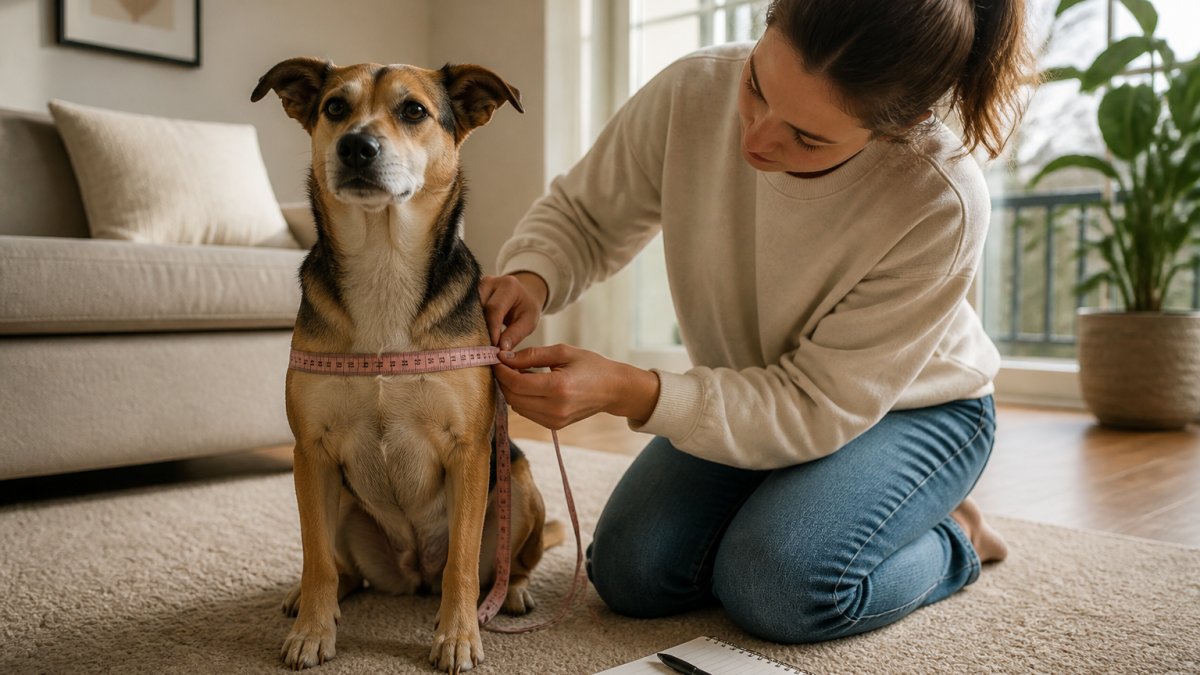
Measure the chest, neck, and back length before ordering, and write the numbers down. Guessing by breed or weight is the fastest route to a bad fit. This is the step most matching-set guides skip, and it is the one that decides whether the outfit gets worn twice or lives in a drawer.
Use a soft tape and keep it snug but not tight. Take each measurement twice. A wiggly pet makes the first pass unreliable. Have a second person hold a treat at eye level so the animal stands square instead of sitting or turning.
The three numbers that matter:
- Chest girth: the widest point behind the front legs, usually a hand's width back from the armpits
- Neck: where a collar naturally sits, not the widest part of the head
- Back length: from the base of the neck (between the shoulder blades) to the base of the tail
Write the numbers in this order and keep them in your phone: chest, neck, back. Chest girth is the number that most often decides the size, so lead with it when you compare against a size chart.
Adjust for Coat Type and Build
Fur adds bulk that a tape measure does not capture. A thick double coat on a husky or a fluffy doodle can push a garment up a size, while a short-coated breed like a boxer or a greyhound may need a smaller size with a longer back. A common pattern is to size up one step for heavy coats and to check back length separately for long-bodied, narrow-chested dogs.
Body shape matters as much as circumference. Barrel-chested breeds need a roomier chest panel; sighthounds need a longer back and a snugger neck. If the size chart only lists weight, treat it as a starting point and confirm with your three measurements.
Build In Garment Ease
Ease is the extra room between the body and the fabric. A tee or light vest should leave roughly two fingers of slack under the chest strap and at the neck. A bandana should sit flat without digging into the neck. Too tight restricts breathing and movement; too loose slips, twists, and trips.
For the human half of the set, measure your own chest and check the size chart rather than assuming your usual size. A retail-fit tee and a mid-weight hoodie can run differently, and a set only reads as coordinated when both halves fit their wearer.
Do a Fit Test Before the Real Outing
Fit affects safety, not just looks. Put the piece on for a few minutes indoors before any walk or photo. Watch for these signs of discomfort:
- Pawing at the garment
- Freezing in place or refusing to walk
- Excessive panting or scratching at the neck
- Trying to bite or pull the piece off
- A strap that leaves a red mark or rides up
If any of those show up, the fit is wrong. Take it off and size up or down. Check mobility by asking the pet to sit, lie down, and walk a few steps; the garment should move with the body, not against it. Never leave a dressed pet unattended, and remove any piece at the first sign of stress.
Step 4: Pick Matching Pet and Owner Shirts for Warm Weather
Lightweight cotton wins for warm-weather sets. A breathable tee keeps the human comfortable and gives the pet a light layer that won't trap heat. The goal is one thin layer each, in a fabric that moves air and dries fast.
Look for combed cotton with a retail fit. It feels soft against skin, holds its shape through washes, and takes a crisp print. Ortrends uses lightweight Airlume combed cotton on its tees, which keeps the fabric cool on hot days and prints cleanly at both full-size and small-panel scale.
For the human half of the set, the Good Times & Golden Skies Beach Dog Tee shows how a painterly dog graphic can carry a summer theme without feeling busy. The matching pet and owner shirts idea works best when the human tee is the louder piece and the pet piece is simpler: a bandana or a light vest in the same palette, not a second busy print.

Match Fabric Weight to the Heat
Fabric weight is measured in ounces per square yard, and it is the number that decides whether a tee feels cool or clammy. A common range for warm-weather tees is roughly 4 to 5 ounces; heavier than that and the shirt holds heat. For pets, a thin cotton bandana or a single-layer vest is cooler than any knit garment, because it covers less surface area and traps less air.
Color matters in sun, too. Dark fabrics absorb more heat, so a black tee and a black pet piece can both run warmer on a bright day. If you want a dark palette, save it for shade, early mornings, or cool-weather sets and lean lighter for peak summer.
Keep Warm-Weather Sets Safe
Heat is the real risk in summer sets, and pets cool themselves poorly through fur. Keep warm-weather sets to one layer each. Two layers on a pet in summer is a recipe for overheating. Watch for heavy panting, drooling, a slowed pace, or a pet that lies down and refuses to move; remove the garment and get the animal to shade and water.
A few practical rules for hot-weather outings:
- Put the pet piece on just before the outing, not hours ahead
- Choose a bandana or light vest over a full shirt for pets that run hot
- Check the fit at the neck and chest before you leave
- Bring water and plan shade breaks on longer walks
- Skip the pet layer entirely on extreme-heat days and let the human tee carry the theme
Build the Summer Set Around One Loud Piece
A summer set reads best when one piece leads and the other echoes it. Put the detailed graphic on the human tee, then repeat only the palette and one simple shape, like a sun or a wave, on the pet bandana. That keeps the pair coordinated in photos without turning the pet into a second billboard.
For a family or group look, the Every Beach Is Better Together Dog Unisex Tee for kids lets a child join the set in the same theme, so the human pieces carry the graphic and the pet piece stays light and simple.

Step 5: Layer Up With Matching Pet and Owner Hoodies
Hoodies suit cool-weather sets because both halves can share a print on a heavier base. A fleece or mid-weight cotton hoodie holds a graphic well and keeps the human warm on long walks.
For pets, a simple bandana or light vest in the same print gives the coordination without the bulk.
Matching pet and owner hoodies work best when the palette matches and the graphic repeats at different scales. Same colors, same theme, different cut for each wearer.
A few practical notes for cold-weather sets:
- Choose a mid-weight hoodie so the human can move freely
- Keep pet layers light and never cover the face
- Check the pet's range of motion before a long walk
- Remove pet layers if the animal shows any sign of overheating
Step 6: Coordinate Patterns and Prints Without Going Identical
Coordinate, don't clone. A shared color with different prints looks more designed than two identical graphics, and it photographs better.
The strongest approach is one print per set, used at different scales. A bold stripe on the human tee and a thin stripe on the pet bandana reads as coordinated without looking like a uniform.
Three coordination formulas that work:
- Same print, different scale: large on the human, small on the pet
- Same palette, different print: stripes on one, dots on the other
- Same theme, different graphic: two beach scenes that share colors
Avoid putting two busy prints side by side. The eye needs one place to rest.
Step 7: Style Coordinating Pet and Owner Outfits for Real Life
Build coordinating pet and owner outfits around occasions you actually have. A set for a weekend walk looks different from a set for a family photo or a gift moment.
For everyday wear, keep it casual. A tee and a bandana in the same palette handles errands, park trips, and coffee runs without looking staged.
For photos, lean into the theme. Matching colors and a shared prop, like a beach towel or a picnic blanket, tie the frame together. The Every Beach Is Better Together Dog Unisex Tee for kids lets a child join the set, which turns a duo into a family look.
For gifting, a set centered on one theme makes a memorable present for a pet-obsessed friend. Keep the sizing flexible by choosing a simple tee for the human.
A quick reference for planning sets:
| Occasion | Human Piece | Pet Piece | Palette Move |
|---|---|---|---|
| Daily walks | Lightweight tee | Bandana | Two colors plus neutral |
| Family photos | Graphic tee | Simple vest | High-contrast accent |
| Cool-weather outings | Mid-weight hoodie | Light bandana | Same print, smaller scale |
| Gift set | Classic tee | Bandana | One theme, shared tones |
Common Mistakes to Avoid When Designing Matching Pet and Owner Outfits
The biggest mistake is designing for the photo instead of the wearer. A set that only works for one posed shot won't get worn again.
Other frequent missteps:
- Ordering pet clothing by breed instead of measured size
- Choosing identical graphics that overwhelm a small panel
- Ignoring fur color when picking the palette
- Skipping a trial wear before a long outing
- Forgetting care instructions, so the print fades after a few washes
Print quality matters here. A graphic that cracks after a few washes ruins the set. Look for DTF or DTG printing and follow the care label: cold wash, low tumble dry, no dry cleaning.
Conclusion
Designing matching pet and owner outfits comes down to a shared theme, a tested palette, and a fit that respects the animal. Start with personality, measure carefully, and let one piece lead while the other echoes it. Ortrends makes made-to-order graphic tees and hoodies with original prints and soft, durable cotton, so a set can be built around a theme both wearers actually enjoy.
Frequently Asked Questions
How do you design matching outfits for pets and their owners?
Start with one theme, then translate it for two different bodies. Pick a phrase or illustration, choose a two- or three-color palette, and assign the busiest artwork to the largest surface. A human tee has a full chest panel, so simplify the graphic for the smaller garment. Test the design at thumbnail size first. If you cannot read it small, it will not work on pet clothing. Order the human piece from the same print method so the colors match in photos.
What designs work well on matching pet and owner shirts?
Short slogans, single-subject illustrations, and simple line art hold up best. Phrases like "Better Together" or a small beach or paw motif stay legible. Keep the human shirt as the hero with the fuller artwork. Avoid tiny text, thin script fonts, and gradients that fade against fur-colored backgrounds.
How can you coordinate outfits without wearing identical prints?
Share a color, not a copy. Put the full graphic on the human tee and a single element from it, a pawprint, a sunset stripe, or the slogan alone, on the pet piece. You can also flip the palette: a light shirt with a dark print for you, a dark shirt with a light print for your dog. Coordinating pet and owner outfits read as intentional when two or three colors repeat across both garments, even if the artwork differs.
What colors look good for matching pet and owner outfits?
Pick two anchor colors and one accent, then check them against your pet's coat. Cream, sand, and navy flatter most fur colors, while bright white can wash out a pale dog and near-black can swallow a dark one. If your pet has a patterned coat, keep the garment solid and let the print carry the contrast. Test the palette in daylight before ordering, since screen colors shift and DTG prints sit slightly differently on colored fabric.