

Alternatives to Plain T-Shirts for Daily Wear: 9 Elevated Tops
Table of Contents
- Why Swap the Plain Tee for Something Better
- Quick Comparison: 9 Alternatives to Plain T-Shirts
- 1. Graphic Tees: The Easiest Upgrade
- 2. Polos and Collared Shirts
- 3. Henleys: The Button-Up Alternative
- 4. Lightweight Knitwear for Summer
- 5. Linen and Natural Fiber Options
- 6. Comfortable Casual Wear Fabrics That Breathe
- 7. Layering Techniques for Daily Wear
- 8. Best Sites for Custom Graphic Hoodies
- 9. Body-Type Specific Recommendations
- Capsule Wardrobe Integration: Building a Versatile Rotation
- Care and Maintenance for Long-Lasting Tops
- Frequently Asked Questions
Last Updated: September 13, 2026
Why Swap the Plain Tee for Something Better
Plain t-shirts are the default setting of a wardrobe, and that's exactly the problem. They're comfortable and cheap, but they do nothing for you. Swap in alternatives to plain t-shirts for daily wear and you get the same comfort with actual personality, better fabric, and a silhouette that reads intentional rather than accidental.
At Ortrends, we build made-to-order graphic apparel for people who want their clothes to say something, so we think about this trade-off constantly. The upgrade most people are looking for isn't a more expensive blank tee. It's a shirt with a point of view: a print, a collar, a texture, or a cut that does the styling work for you.
Below, we'll walk through nine concrete alternatives, from graphic tees to linen blends, plus how to style them, which fabrics actually breathe, and how to fold them into a capsule rotation. Here's what most guides get wrong: they treat "upgrade" as a price bracket. It isn't. It's a fabric and fit decision.

Quick Comparison: 9 Alternatives to Plain T-Shirts
The fastest way to pick your upgrade is to match the alternative to your actual daily routine. A nurse working twelve-hour shifts needs a different shirt than someone piecing together a smart casual office rotation.
| Alternative | Best For | Fabric Focus | Styling Effort |
|---|---|---|---|
| Graphic tees | Self-expression, casual days | Airlume combed cotton | None, the print does the work |
| Polos and collared shirts | Smart casual, work-adjacent | Pique cotton, blends | Low, collar frames the face |
| Henleys | Layering, transitional weather | Cotton, cotton-modal | Low, buttons add detail |
| Lightweight knitwear | Summer evenings, offices | Fine-gauge cotton, linen | Medium, needs tucking |
| Linen and natural fibers | Heat, humidity, travel | Linen, linen blends | Medium, wrinkles are the point |
| Breathable performance fabrics | Active jobs, long shifts | Moisture-wicking blends | None |
| Layering pieces | Year-round versatility | Any lightweight base | High, but high reward |
| Custom graphic hoodies | Cooler days, gifting | Fleece, cotton blends | None |
| Body-type-specific cuts | Fit problems | Varies by cut | Low once you know your shape |
Use this as a filter, not a rulebook. Most people end up with two or three of these categories in rotation.

1. Graphic Tees: The Easiest Upgrade
A graphic tee is the lowest-effort replacement for a plain tee because it changes nothing about how you wear the shirt. Same crew neck, same fit, same wash-and-go routine. The only variable is that the front of the shirt now carries a design, a message, or a piece of art instead of empty cotton.

That matters more than it sounds. A plain tee asks the rest of your outfit to carry the look. A graphic tee carries part of it for you, which is why it works so well as a daily outfit staple for people who don't want to think about getting dressed.
Why Graphic Tees Beat Blank Tees
Blank tees are a canvas with nothing on them. Graphic tees are the finished piece. The practical difference shows up in three places:
- Visual weight. A well-placed print gives the eye something to land on, so the shirt reads as a deliberate choice rather than a layer you threw on.
- Conversation value. Original designs invite comments. Our customers regularly tell us the design gets noticed before the fit does.
- Gift-ability. A blank tee is a utility purchase. A graphic tee with a meaningful message is a gift, which is why so many of our orders are for occasions rather than restocks.
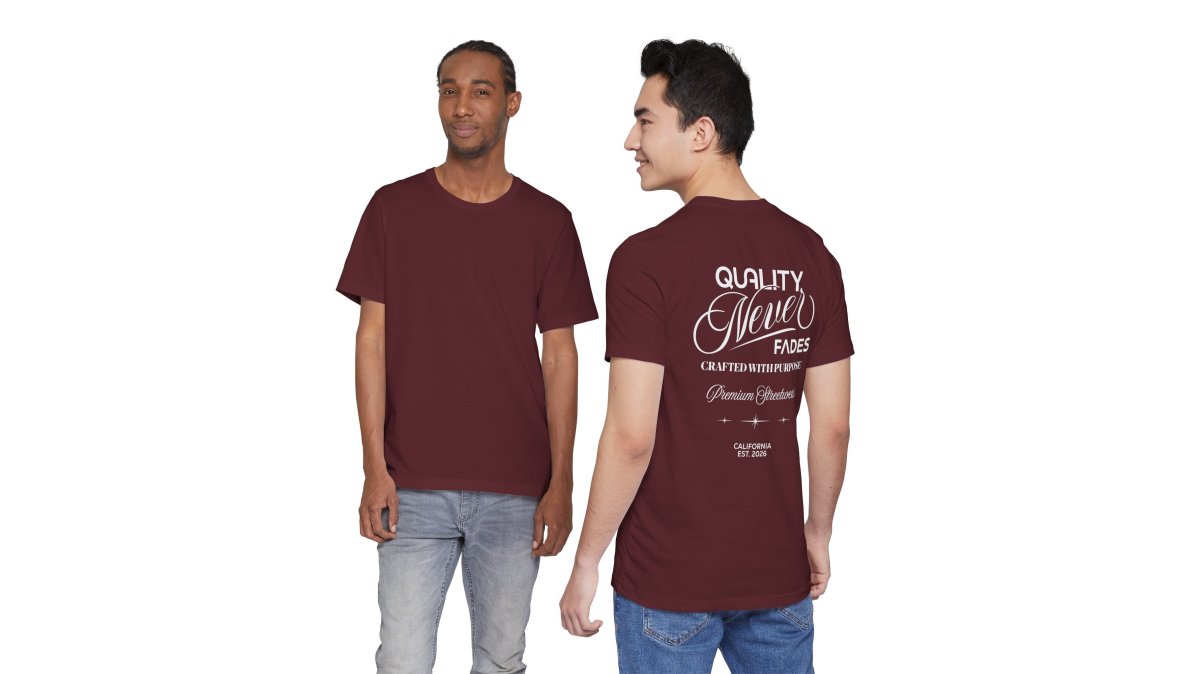
How to Style Graphic Tees for Women
Styling graphic tees for women comes down to balancing the print with the rest of the outfit. The print is already doing visual work, so the surrounding pieces should stay quiet.
A few combinations that hold up:
- Tuck and belt. A front tuck into high-waisted denim with a leather belt gives the shirt a waistline and reads intentional.
- Layer under a blazer. A graphic tee under an open blazer is the standard smart casual move, and it works because the blazer adds structure the tee lacks.
- Half-tuck with wide-leg trousers. Loose on loose can work if the tee is tucked at the front only.
- Roll the sleeves once. A single roll adds a bit of shape to the arm and breaks up the silhouette.
Ortrends carries graphic tees built on 100% Airlume combed and ring-spun cotton at 4.2 oz, which is light enough to layer and structured enough to hold a retail fit. The Textile Exchange preferred fiber guidance is a useful reference if you want to understand how fiber sourcing affects how a cotton shirt feels and ages.
2. Polos and Collared Shirts
A polo is the most direct step up from a plain tee when you need to look put-together without wearing a button-down. The collar frames your face, the placket adds vertical detail, and the whole thing reads one notch more formal than a crew neck without any extra effort.
Pique cotton is the traditional choice because the waffle texture hides wrinkles and holds shape. Cotton-modal and cotton-poly blends drape more softly and dry faster, which matters if you're moving between a hot commute and air conditioning all day.
Where polos fall short: they can read dated if the fit is boxy. A modern polo should hit mid-hip with a sleeve that ends mid-bicep. If yours flares at the waist, it's cut for a different decade.
Button-downs sit one step further up the formality ladder. For daily wear, look for a soft-collar button-down in a lighter weight, worn open over a tee or buttoned with the sleeves rolled. The CottonWorks fabric education library explains how weave structure changes breathability, which is the real reason two cotton shirts can feel completely different in August.
3. Henleys: The Button-Up Alternative
A henley is a knit shirt with a short placket and two to five buttons at the neck. It sits between a tee and a button-down: more detail than a crew neck, less formality than a collared shirt.
The placket is what makes it work. Worn open, it creates a V that lengthens the neck. Buttoned up, it reads tidy. That single variable gives you two shirts in one, which is why henleys are one of the most versatile tops in a daily rotation.
Fabric matters here. A thin henley collapses at the placket and looks sloppy within a few washes. Look for a mid-weight cotton or cotton-modal blend with enough body to hold the button placket flat.
4. Lightweight Knitwear for Summer
Summer-weight knitwear sounds like a contradiction until you try it. Fine-gauge cotton, linen-cotton, and lightweight merino knit at a thin gauge, so it breathes like a tee but drapes like something more considered.
The advantage over a tee is drape. Knit fabric moves with you and falls in soft folds rather than sitting flat, which makes a simple crew-neck knit look more expensive than it is. A lightweight knit also handles the seasonal transition problem: it's warm enough for air-conditioned offices and breathable enough for a warm afternoon.
What most guides miss is gauge. A 12-gauge knit is your summer layer. Anything heavier and you've bought a fall sweater. Check the fabric weight before you buy, not the product photo.
5. Linen and Natural Fiber Options
Linen is the best hot-weather fabric most people own and the one they wear least, usually because of the wrinkles. That's a mistake. Linen's wrinkles are the texture that makes it look intentional, and linen blends cut down on creasing without losing the breathability.
What most guides skip is where the fiber comes from and why that changes how the shirt wears. Natural fibers as a category, linen, cotton, hemp, and wool, handle moisture and heat differently than synthetics, and they also carry very different environmental and durability profiles depending on how they're grown and processed.
How the Main Natural Fibers Actually Compare
- Linen (flax). Wicks and dries fast, has the highest airflow of the common natural fibers, and gets softer with every wash. Flax is a low-input crop that grows well without heavy irrigation in cool, damp climates, which is part of why European flax has a long textile history. The trade-off is creasing, pure linen wrinkles, and that's the fabric behaving correctly, not a defect.
- Hemp. Durable, naturally resistant to mildew, and softens dramatically over the first dozen washes. Hemp uses less water than conventional cotton per unit of fiber and improves soil health when rotated. The trade-off is a rougher hand-feel in the first weeks and a narrower range of retail options.
- Cotton. Absorbs and holds moisture, which is why it feels cool when dry and heavy when wet. Conventional cotton is water-intensive; organic cotton avoids synthetic pesticides and is traceable through certification. Combed and ring-spun cotton (like the Airlume cotton used in graphic tees) removes short fibers for a smoother, more pill-resistant surface.
- Wool (including fine-gauge merino). Regulates temperature, resists odor, and breathes well at thin gauges. The trade-off is cost and care, merino needs cold washing and flat drying to avoid felting.
- Tencel (lyocell). A semi-synthetic made from wood pulp in a closed-loop solvent process that recovers most of the solvent. It drapes softly, resists shrinking, and blends well with cotton or linen. It's not a natural fiber in the strict sense, but it belongs in this conversation because it solves the drape problem linen has.
What to Look For on the Label
Sourcing claims are only as good as the certification behind them. A few that actually mean something:
- OEKO-TEX Standard 100 tests the finished fabric for harmful substances, useful if you have sensitive skin.
- Global Organic Textile Standard (GOTS) covers the whole supply chain for organic fiber, from harvest to finished garment.
- European Flax certification verifies the flax was grown in Europe without irrigation or GMO seed.
- Textile Exchange maintains the Preferred Fiber and Materials Matrix, which is the reference most brands use to compare fiber sustainability. The Textile Exchange preferred fiber guidance is worth bookmarking if you want to compare fibers on more than marketing copy.
A linen-cotton blend is often the practical sweet spot for daily wear: more structure than pure linen, more breathability than pure cotton, and less creasing than either alone. A linen-Tencel blend is the other one to watch, Tencel adds drape and reduces the crumpled look without adding synthetic content.
Care Is Simpler Than the Reputation Suggests
Cold wash, low tumble or line dry, and a medium iron while slightly damp. Linen softens with every wash, so the shirt you buy stiff in June is the one you reach for in September. Hemp behaves the same way, the first month is the worst month, and everything after that is a reward. Tencel blends should skip the dryer entirely; heat is what makes them pill.
6. Comfortable Casual Wear Fabrics That Breathe
Comfortable casual wear fabrics share three properties: they move moisture away from skin, they allow air to pass through the weave, and they hold their shape after washing. Get all three and you can wear the shirt for a long shift without it looking tired.
Here's how the main options compare:
- Airlume combed and ring-spun cotton. Smooth, soft, and breathable. Combed cotton removes short fibers, which is why it feels smoother than standard cotton and resists pilling.
- Linen and linen blends. Maximum airflow, natural texture, wrinkles by design.
- Cotton-modal. Softer drape than pure cotton, dries faster, resists shrinking.
- Moisture-wicking performance blends. Best for active jobs and long shifts where sweat is a given. Less breathable in still air than natural fibers.
- Fine-gauge knit. Breathable and structured, ideal for layering.
7. Layering Techniques for Daily Wear
Layering is how you get more outfits out of fewer shirts, and it's the single biggest reason a small wardrobe can feel larger than it is. The mechanics are simple: a lightweight base layer, a structure layer, and an optional outer layer.
Three combinations that work for daily wear:
- Tee plus open button-down. The button-down adds structure and vertical lines without hiding the base layer. Works year-round.
- Tee plus lightweight knit. The knit goes over the tee for warmth; the tee's print or color shows at the neckline and hem.
- Tee plus denim jacket or overshirt. The heaviest option, best for cooler mornings and evenings.
The rule that keeps layering from looking bulky: each layer should be thinner than the one under it, and only one layer should be loose. If the base is oversized, the outer layer needs to be fitted, and vice versa.
Layering pieces also solve the seasonal transition problem. The same graphic tee works alone in July, under an overshirt in October, and under a knit in December. That's wardrobe rotation doing its job.
8. Best Sites for Custom Graphic Hoodies
Finding the best sites for custom graphic hoodies comes down to three checks: whether the designs are original, whether the print process holds up to washing, and whether the production and shipping timeline is realistic for made-to-order apparel.
Print method is the variable most buyers ignore until the print cracks. Direct-to-film printing bonds the design to the fabric with a soft, flexible finish that resists cracking far better than older heat-transfer methods. If a shop won't tell you which method it uses, that's your answer.
Design originality is the second filter. A marketplace with thousands of user-uploaded designs will have volume but inconsistent quality, and you'll see the same artwork on a dozen storefronts. A made-to-order shop with an in-house design library gives you something you won't run into twice.
Ortrends prints made-to-order graphic apparel on Bella+Canvas blanks, including our motivational and pet-lover collections, with DTF printing for a soft, crack-resistant finish. Every piece is produced to order and shipped from California, so you're not waiting on a slow overseas production cycle. If you've been burned by a print that faded in two weeks, the print method is the first thing to check before you buy anywhere.
9. Body-Type Specific Recommendations
Fit problems are usually cut problems, not body problems. Matching the cut to your shape solves most of them before you spend a dollar on tailoring.
- Rectangle frame. Look for structured fabrics and side seams. A shirt with a defined waist or a front tuck creates shape that the fabric alone won't.
- Inverted triangle. Avoid heavy shoulder details and wide necklines. A relaxed crew neck and a straight hem balance broader shoulders.
- Pear shape. A slightly longer hem and a looser fit through the hip keep the shirt from riding up. Tucking into high-waisted bottoms shifts the visual waistline.
- Tall frames. Check the body length, not the chest measurement. A shirt that fits your shoulders but ends above your belt will look undersized all day.
- Petite frames. A shorter hem and a narrower shoulder seam matter more than the labeled size. Cropped or front-tucked styling prevents the oversized look.
Ortrends cuts most graphic tees in a unisex retail fit that runs true to size across a range of body types, with a women's cut available on select designs for a closer shoulder and waist fit. If you're between sizes, size up and tuck.
Capsule Wardrobe Integration: Building a Versatile Rotation
A capsule wardrobe works when every piece earns its place, and that's where alternatives to plain t-shirts for daily wear pull their weight. A graphic tee, a polo, a henley, and a lightweight linen shirt cover more outfit combinations than five identical blanks ever will.
Build the rotation around function, not color:
- Two graphic tees for casual days and self-expression
- One polo or collared shirt for anything work-adjacent
- One henley for layering and transitional weather
- One linen or natural-fiber shirt for heat and travel
- One lightweight knit for evenings and air conditioning
That's six pieces covering most of a week. Add a hoodie for cooler days and you've got a full rotation that fits in a single drawer.
The advantage of a made-to-order approach is that you can build this rotation around designs that actually mean something to you, whether that's a nurse-themed piece for a healthcare professional, a pet-lover design for someone obsessed with their golden retriever, or a positive-living message you want to wear. A capsule built from shirts you chose deliberately beats one built from whatever was on sale.
Care and Maintenance for Long-Lasting Tops
Garment care is where most wardrobes quietly fall apart, and it's the section most guides reduce to a laundry-symbol translation. The real question is why the rules exist, because once you understand the mechanism, you can make judgment calls instead of memorizing a list.
The Two Forces That Kill Clothes
Almost every care failure comes down to heat and agitation.
- Heat breaks hydrogen bonds in cotton fibers, which is what causes shrinkage, and it accelerates the breakdown of the binders that hold a screen print or DTF transfer to fabric. A print that cracks after ten washes was almost certainly dried on high heat.
- Agitation, the mechanical tumbling and friction inside the drum, abrades fiber surfaces, which is what produces pilling on knits and fuzz on cotton. It also wears down print edges faster than the print center, which is why cracking usually starts at the design's outline.
Cold water and low agitation solve both. Cold water cleans everyday soil just as effectively as warm for the wear patterns most people actually have.
Care by Fabric Type
Different alternatives need different handling. Here's how the pieces in this article break down:
- Airlume combed and ring-spun cotton (graphic tees). Machine wash cold, turn the print inside out, tumble dry low or line dry. Combed cotton resists pilling better than standard cotton because the short fibers were removed before spinning, but it still shrinks if you dry it hot.
- Pique cotton and cotton-blend polos. Wash cold, and skip the dryer if you can, pique's waffle texture flattens with heat and loses the body that keeps the collar standing.
- Henleys (cotton or cotton-modal). The placket is the failure point. Button them before washing so the placket doesn't twist, and dry flat or low to keep the buttons from warping the knit around them.
- Fine-gauge knitwear. Hand wash or use a mesh bag on a delicate cycle, then lay flat to dry. Hanging a knit stretches the shoulders permanently, and high heat relaxes the knit structure, a summer-weight sweater that shrinks half a size is unwearable.
- Linen and hemp. Cold wash, low tumble or line dry, medium iron while slightly damp. Both soften with washing, so the first month is the worst month.
- Tencel and lyocell blends. Cold wash, no dryer. Heat is what makes them pill, and the fiber is already prone to it under friction.
- Moisture-wicking performance blends. Wash cold and skip fabric softener, softener coats the fibers and blocks the wicking action that makes the fabric work in the first place.
Print-Specific Care
If you're wearing graphic apparel, the print is the part most likely to fail first, and it's the easiest to protect:
- Turn prints inside out before washing. This puts the fabric between the print and the drum, which is where most abrasion happens.
- Wash with like colors and no zippers or Velcro. Metal hardware snags and scratches print surfaces.
- Skip bleach entirely on prints. Non-chlorine bleach is gentler on white cotton, but it will still dull a colored print.
- Iron on medium, print side down or through a cloth. Direct high heat on a print will melt or lift it.
- Never dry clean a printed tee. The solvents are harsh on the print binder and the cost isn't justified for cotton.
Our own care labels follow the same logic: machine wash cold at a maximum of 90F, non-chlorine bleach only as needed, tumble dry low, iron at medium heat, and no dry cleaning. Follow that and a quality tee holds its shape and its print through a long rotation.
The American Cleaning Institute fabric care guidance covers the fiber-level reasoning behind cold washing if you want the full picture.
Storage Matters Too
- Fold knits, hang wovens. Hanging a fine-gauge knit stretches the shoulders over time; folding preserves the shape. Wovens like linen shirts and button-downs can hang without damage.
- Store clean. Body oils and deodorant residue attract pests and set stains over time, so wash before storing anything for a season.
- Keep prints from pressing against each other. Stacking printed tees face-to-face can cause the prints to stick in humid conditions. Fold with the print facing out, or interleave with tissue.
Frequently Asked Questions
What can I wear instead of a plain t-shirt for a casual look?
Swap plain tees for graphic tees, polos, henleys, or lightweight knitwear. Graphic tees add personality without sacrificing comfort. Polos offer a collar for a slightly dressier feel. Henleys have buttons for visual interest. Linen button-downs work for warmer days. Each alternative keeps you comfortable while looking more put-together than a basic blank tee.
How do I style graphic tees for women without looking messy?
Tuck a graphic tee into high-waisted jeans or a midi skirt to define your waist. Layer it under a blazer or denim jacket for structure. Choose tees with smaller chest prints for a subtle look or back prints for a surprise detail. Roll the sleeves once or twice. Pair with clean sneakers or ankle boots. The key is balancing the graphic's visual weight with simpler bottoms.
What are the best comfortable casual wear fabrics for daily tops?
Airlume combed and ring-spun cotton is lightweight and breathable, ideal for daily wear. Linen blends keep you cool in summer. Cotton-modal mixes add softness and drape. Look for fabrics with side seams and shoulder tape for shape retention. Avoid heavy polyester blends that trap heat. Natural fibers like cotton and linen regulate temperature better and feel softer against skin over time.
Are polo shirts or henleys better alternatives to plain t-shirts?
Polos work better for smart-casual settings like offices or dinners. Henleys suit relaxed weekends and layering under jackets. Polos have a structured collar and typically come in pique cotton. Henleys feature a buttoned placket and softer fabrics. Both offer more visual interest than a plain tee. Choose polos for polish, henleys for comfort and versatility.
How do I build a capsule wardrobe with alternatives to plain t-shirts?
Start with 3-4 graphic tees in neutral colors, 2 polos, 2 henleys, and 1-2 lightweight knitwear pieces. Choose a consistent color palette like black, white, navy, and heather gray. Add one linen button-down for summer. This gives you 10-12 tops that mix with jeans, chinos, and skirts. Rotate them weekly to extend garment life and keep your daily outfit fresh.