

Comfortable Hoodies for Active Lifestyles: 2026 Guide
Table of Contents
- What Makes a Hoodie Truly Comfortable for Active Lifestyles
- Breathable Fabric and Moisture-Wicking Technology
- Moisture-Wicking Hoodies for Men and Women
- Best Athletic Hoodies for Gym Workouts
- Fit and Range of Motion for Active Movement
- Durability and Long-Lasting Material Construction
- Hood Design and Functionality for Comfort
- Versatility: From Gym to Casual Wear
- Layering for Outdoor Activities and Temperature Control
- Sustainable and Organic Material Options
- How to Care for Performance Fabric Hoodies
- What to Avoid When Choosing a Hoodie for Active Use
- Finding Your Perfect Fit: A Decision Framework
- Conclusion
Last Updated: August 12, 2026
What Makes a Hoodie Truly Comfortable for Active Lifestyles
A truly comfortable hoodie for active lifestyles combines three essential elements: moisture management, unrestricted movement, and durability that survives frequent washing. When you're moving through intense workouts, outdoor activities, or unpredictable weather, your hoodie needs to perform as hard as you do.
The difference between a standard hoodie and one designed for active use comes down to fabric engineering and construction details. A regular cotton hoodie absorbs sweat, clings to your skin, and loses shape after repeated wear. An active-lifestyle hoodie uses technical textiles that pull moisture away from your body, maintain their form through hundreds of washes, and allow your shoulders and arms to move freely without restriction.
What most guides miss is that comfort isn't one thing, it's the intersection of how the fabric feels against your skin, how it manages temperature shifts, and how it stays reliable over time. A hoodie might feel soft in a store but pill after two weeks of gym sessions. Another might have great moisture-wicking but a hood design that pulls tight around your neck. The best hoodies balance all three: immediate comfort, long-term durability, and functional performance during actual movement.
At Ortrends, we understand that active individuals need apparel that keeps up with their lifestyle. Our approach focuses on selecting premium materials and construction techniques that deliver both comfort and longevity, whether you're a nurse working double shifts, a fitness enthusiast hitting the gym daily, or someone who needs reliable layers for outdoor adventures.
Breathable Fabric and Moisture-Wicking Technology
Breathability and moisture-wicking are two distinct properties, and understanding the difference changes how you evaluate hoodies. Breathable fabric allows air to pass through the material, keeping you cooler. Moisture-wicking actively pulls sweat away from your skin and moves it to the fabric's outer surface where it can evaporate. The best active hoodies do both simultaneously.
Polyester remains the gold standard for moisture-wicking because its fibers don't absorb water, they repel it. When you sweat, the moisture moves across the polyester surface rather than soaking in, creating a drying effect. Nylon offers similar benefits with slightly better durability. Many premium hoodies blend these synthetics with merino wool or cotton to add comfort and breathability without sacrificing performance.
The weave matters as much as the fiber type. A tightly woven fabric blocks airflow, keeping heat trapped against your body. A looser weave (often called "mesh" or "open knit") allows air circulation while still maintaining structure. This is why some hoodies feel stuffy during workouts while others keep you comfortable even during intense effort.
Thermal regulation, the hoodie's ability to adapt to temperature changes, depends on both the base fabric and any brushed or fleece lining. A brushed fleece interior creates an insulating layer that traps warm air, making it ideal for outdoor activities or cooler weather. The same brushed surface also enhances comfort against skin. However, brushed fleece can trap moisture if not paired with effective moisture-wicking in the outer layer. The best construction uses a synthetic outer layer for moisture management and a brushed inner surface for comfort and warmth.
Quick-dry fabric is another technical feature worth understanding. Some hoodies are treated with finishes that accelerate evaporation beyond what the base fiber can achieve. These treatments help the garment dry faster after washing and perform better during high-intensity activities where sweat accumulation happens quickly.
Moisture-Wicking Hoodies for Men and Women
The best moisture-wicking hoodies for men and women share the same core fabric technology but differ in fit, hood design, and pocket placement. These differences aren't trivial, they directly affect comfort during movement and practical usability.
For men, moisture-wicking hoodies typically feature a straight cut through the torso with slightly broader shoulders. This design accommodates larger frames and allows unrestricted arm movement during upper-body exercises. The hood tends to be more spacious, which some prefer for layering or wearing over fitted caps during outdoor activities. Pocket depth is often generous, designed for storing larger items.
Women's moisture-wicking hoodies account for different proportions: narrower shoulders, a defined waist, and a shorter overall length. The hood is typically smaller and more contoured to prevent excess fabric around the face. Sleeves are cut shorter to prevent excess fabric at the wrists. These adjustments aren't cosmetic, they're functional. A hoodie with poor fit creates bunching during movement, restricts arm range, and feels uncomfortable within minutes of activity.
The real distinction, though, is in how different bodies respond to the same fabric. A woman's smaller frame may experience a heavier hoodie as restrictive, while a man might find the same weight provides appreciated warmth. Similarly, sleeve length becomes critical. Too-long sleeves slide down during overhead movements; too-short sleeves expose your wrists to cold or create tension across the shoulders.
When shopping for moisture-wicking hoodies, test the fit during movement if possible. Raise your arms overhead, bend forward, reach across your body. The fabric should move with you, not against you. Seams should sit comfortably without digging in. The hood should frame your face without pulling tight around your neck.
Ortrends offers moisture-wicking hoodies designed with active individuals in mind, featuring original prints that celebrate your personal style while delivering the performance you need. Whether you're looking for a hoodie that works for your nursing shifts or one that keeps up with your gym routine, the fit and fabric quality determine whether you'll reach for it repeatedly or let it sit in your closet.
Best Athletic Hoodies for Gym Workouts
The best athletic hoodies for gym workouts prioritize unrestricted arm movement, sweat management, and a fit that doesn't shift during intense effort. Gym environments create specific demands: high heat, rapid moisture accumulation, and constant movement in multiple directions.
Start with fabric weight. Lightweight hoodies (under 7 ounces) excel for high-intensity workouts because they don't trap heat and dry quickly. Midweight hoodies (7-10 ounces) work well for moderate activity and cooler gym environments. Anything heavier than 10 ounces becomes uncomfortable during sustained cardio or strength training, though it's excellent for warmup layers or post-workout recovery.
Seam construction directly impacts comfort during repetitive movements. Flatlock seams, where the seam is sewn flat rather than overlapped, eliminate the irritation that comes from traditional seams rubbing against your skin during hundreds of arm movements. Gusseted underarms (reinforced fabric panels under the arms) prevent the common problem of seams pulling or tearing during overhead presses and pull-ups.
The hood itself should be minimal during workouts. An oversized hood can obstruct your peripheral vision, get in the way during exercises, or flap around during cardio. The best gym hoodies have a smaller, more fitted hood that stays in place without restricting movement. Some athletes prefer hoods with drawstrings they can tighten to keep the hood in place; others want minimal drawstring presence to avoid catching on equipment.
Pocket design matters more than many realize. Deep pockets are impractical during workouts, they bounce and distract. Shallow pockets or no pockets at all are ideal. If you need to carry keys or a phone, look for hoodies with secure, minimal pockets positioned to avoid movement interference.
The length of the hoodie affects how it performs during different exercises. A shorter cut (hitting at the hip) works better for dynamic movements like burpees or box jumps. A longer cut (extending to mid-thigh) provides more coverage but can shift during intense activity. Most gym-focused hoodies split the difference, extending slightly past the hip without excess length.
Fit and Range of Motion for Active Movement
Fit determines whether a hoodie enables your movement or restricts it. The wrong fit creates tension across your shoulders, limits your arm extension, or causes the fabric to bunch uncomfortably during exercise.
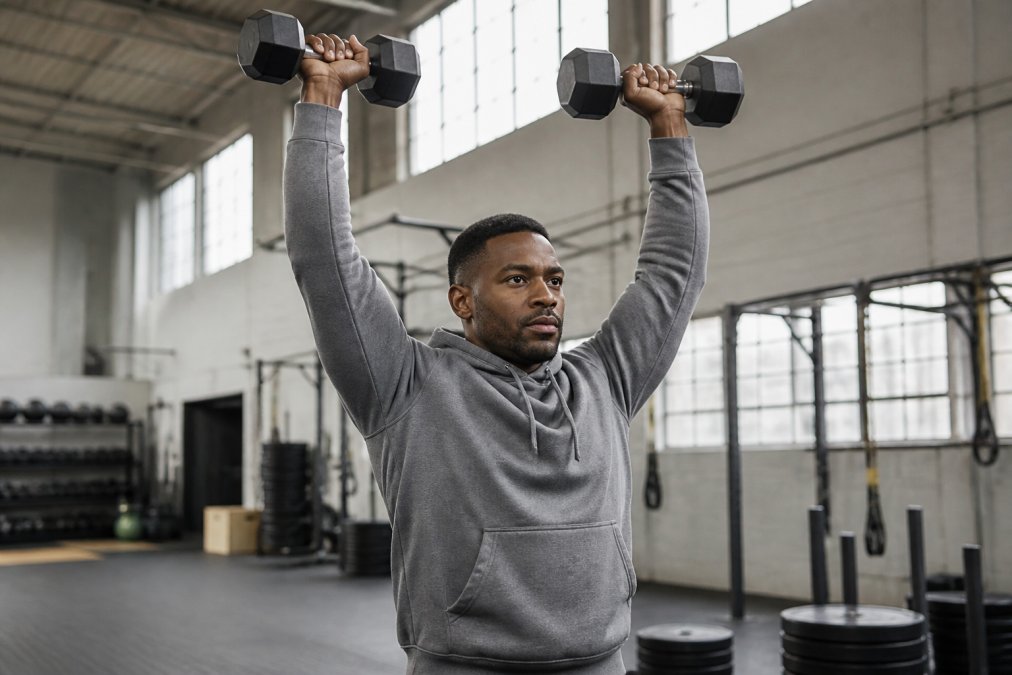
Start by understanding your typical movement patterns. If you do a lot of overhead work (swimming, throwing, climbing), you need a hoodie with higher armholes and looser shoulders. If your activity is more horizontal (running, cycling), you can tolerate a more fitted cut. The key measurement is sleeve length, it should allow your arm to extend fully without the cuff sliding up your forearm or pulling tight at the shoulder.
Shoulder seams should sit at the edge of your actual shoulder, not extending down your arm. When the seam sits too far back, it limits your arm's range of motion and creates tension during overhead movements. When it sits too far forward, it bunches awkwardly during any forward motion.
The torso fit affects both comfort and function. Too tight, and the fabric restricts your breathing and movement. Too loose, and the hoodie shifts around during activity, creating distraction and discomfort. The ideal fit allows you to move freely without excess fabric flapping. A simple test: raise your arms overhead and rotate your torso. The fabric should move with you without pulling or bunching.
Sleeve fit is often overlooked but critical. Sleeves that are too tight around the bicep restrict arm movement and create uncomfortable pressure during exercises. Sleeves that are too loose create excess fabric that gets in the way. The best fit is snug enough to stay in place but loose enough that you can fit a finger between the fabric and your skin.
Length matters for different activities. For gym work, a hoodie that hits at or slightly below your hip works best, it provides coverage without excess fabric. For outdoor activities where you layer over other pieces, a longer hoodie (extending to mid-thigh) provides better coverage. The length should never interfere with your movement or create bunching when you raise your arms.
Durability and Long-Lasting Material Construction
A hoodie that falls apart after three months of active use isn't comfortable, it's frustrating. Durability depends on fabric quality, seam construction, and how the hoodie is treated during manufacturing and washing.
Fabric weight and fiber quality are foundational. Heavier doesn't always mean more durable, a tightly woven synthetic blend often outlasts a loosely woven heavy cotton. The best long-lasting hoodies use high-quality polyester or nylon that resists pilling (those small balls of fiber that form on the surface from friction). Pilling resistance matters because even if the garment doesn't tear, visible pilling makes it look worn out within weeks.
Seam strength determines how long a hoodie survives active use. Double-stitched seams hold up better than single-stitched ones, especially at stress points like the underarms and shoulder seams. Reinforced seams at the base of the hood prevent the common problem of the hood separating from the body after repeated stress. Some premium hoodies use a technique called "bar tacking", extra stitching in an X or box pattern at stress points, to distribute force across a wider area.
The durability of printed designs is a common concern. A print that cracks or fades after two weeks of wearing defeats the purpose of investing in a quality hoodie. The best prints use direct-to-garment or screen printing with quality inks that bond to the fabric rather than sitting on top of it. Ortrends uses printing techniques designed to withstand repeated washing and active wear, ensuring your designs stay vibrant and intact.
Fabric treatment during manufacturing affects long-term durability. Some hoodies are pre-shrunk, reducing the risk of size changes after washing. Others use finishes that enhance color retention or reduce fading from UV exposure. These treatments add cost but significantly extend the hoodie's useful life.
The zipper or drawstring quality often gets overlooked. A cheap zipper that breaks after a few months is a common failure point. Premium hoodies use metal zippers or high-quality plastic ones with reinforced sliders. Drawstrings should be securely sewn in place and made from durable material that won't fray or break.
Storage and care affect durability as much as construction. A hoodie stored in a damp environment develops mildew or mold that weakens fibers. Exposure to direct sunlight during storage can fade colors. Proper care practices (which we'll cover later) extend the life of even well-made hoodies significantly.
Hood Design and Functionality for Comfort
The hood is often the most underrated component of a hoodie's design, yet it directly affects comfort and functionality during active use. A poorly designed hood can be uncomfortable, restrictive, or completely impractical for your actual activities.
Hood size and shape vary significantly across brands. A spacious hood works well for layering or wearing over a fitted hat during outdoor activities. A smaller, more contoured hood stays in place better during movement and doesn't obstruct your vision. The best hood design for active use is typically somewhere in the middle, large enough to provide coverage without being so oversized that it flaps around.
Drawstring design affects both comfort and security. Some hoodies have drawstrings that are too short, making it difficult to cinch the hood without excess cord hanging down. Others have drawstrings that are too long, creating dangling fabric that gets caught on things. The ideal drawstring is long enough to adjust the hood comfortably but not so long that excess cord hangs down your chest.
Hood lining matters for comfort. An unlined hood can feel stiff and uncomfortable against your face. A soft lining (fleece or cotton) feels better but can trap moisture. The best active hoodies use a lightweight lining that provides comfort without significant moisture retention.
The hood opening should sit comfortably around your face without pulling tight at the chin or creating gaps that let cold air in. This is where hood shape becomes important. A hood that's too wide creates excess fabric that bunches around your shoulders. A hood that's too narrow creates tension and feels restrictive. The opening should frame your face naturally without requiring constant adjustment.
For outdoor activities, some prefer a hood with a bill or visor to keep sun or rain off your face. This adds functionality but can be awkward during some movements. For gym use, many prefer a minimal hood that doesn't interfere with movement or vision.
Versatility: From Gym to Casual Wear
The best comfortable hoodies for active lifestyles work equally well for intense workouts and casual everyday wear. This versatility extends the value of your investment and means you'll actually reach for the hoodie in more situations.
A gym-focused hoodie that looks too technical or athletic might feel out of place in casual settings. A casual hoodie that looks too relaxed might not perform well during workouts. The best hoodies split the difference with a design that looks good in both contexts.
Color choice affects versatility more than many realize. Neutral colors (black, gray, navy, white) work in almost any casual setting and pair well with gym wear. Bold colors or graphic designs (like Ortrends' original prints celebrating your passions) make a statement but require more intentional styling in casual settings. Neither is wrong, it depends on your personal preference and how you'll actually use the hoodie.
Fit also determines versatility. A hoodie that's too fitted for gym wear might look awkward oversized for casual wear. A hoodie that's too loose for gym work might feel sloppy in casual settings. The ideal active-lifestyle hoodie has a fit that looks intentional in both contexts, not so tight that it restricts movement, not so loose that it looks like you're wearing a tent.
The ability to layer is another versatility factor. A hoodie that works well over a t-shirt during casual wear should also work well over a performance base layer during workouts. This requires thoughtful sleeve length and torso fit. Too-long sleeves create excess fabric when layered; too-short sleeves expose your wrists when layered over a long-sleeve base.
Ortrends designs hoodies that celebrate your individuality while maintaining the performance and comfort needed for active use. Whether you're wearing it for a workout, a casual outing, or layering it under a jacket for outdoor activities, a quality hoodie should adapt to your lifestyle rather than limiting how you can use it.
Layering for Outdoor Activities and Temperature Control
Layering is one of the most effective strategies for maintaining comfort during outdoor activities with changing conditions. A hoodie serves as an excellent mid-layer or outer layer in a temperature-control system.
As a mid-layer, a hoodie works well over a moisture-wicking base layer and under a wind-resistant jacket. This combination keeps moisture moving away from your skin, provides insulation, and blocks wind. The key is choosing a hoodie that's thin enough to fit comfortably under a jacket without creating bulk, but with enough insulation to provide meaningful warmth.
As an outer layer, a hoodie works well for moderate conditions where you don't need the protection of a full jacket. A heavier hoodie with brushed fleece lining provides significant insulation. A lighter hoodie works for warmer conditions or high-intensity activities where you're generating enough body heat that you don't need heavy insulation.
The hood itself becomes more functional in layering systems. When worn as a mid-layer under a jacket, the hood provides extra insulation around your neck and head without interfering with your jacket's hood. When worn as an outer layer, the hood provides weather protection without the bulk of a full jacket hood.
Sleeve fit becomes critical in layering. Sleeves that are too tight over a base layer create uncomfortable pressure and restrict blood flow. Sleeves that are too loose create excess bulk that makes your arms feel heavy. The best hoodies for layering have sleeves with enough room to accommodate a base layer without excess fabric.
Length also affects layering functionality. A hoodie that's slightly longer than your typical shirt length provides better coverage when layered under a jacket. A shorter hoodie works better if you're wearing it as an outer layer in warmer conditions.
Thermal regulation in layering systems depends on choosing the right weight hoodie for your conditions. A lightweight hoodie works well for high-intensity activities where you're generating significant body heat. A midweight hoodie provides more insulation for moderate-intensity activities or cooler conditions. A heavyweight hoodie is ideal for low-intensity activities in cold weather.
Sustainable and Organic Material Options
An increasing number of active individuals prioritize sustainability without sacrificing performance. The good news is that sustainable and organic materials can deliver comparable performance to conventional synthetics, though they often come with different trade-offs.
Organic cotton is grown without synthetic pesticides or fertilizers, making it a more environmentally responsible choice. However, organic cotton doesn't wick moisture as effectively as polyester. The best sustainable hoodies blend organic cotton with recycled polyester or other synthetic fibers to maintain moisture-wicking performance while reducing environmental impact.
Recycled polyester is made from post-consumer plastic (often recycled bottles) or post-industrial waste. Performance-wise, it's essentially identical to virgin polyester, it wicks moisture equally well and has similar durability. The environmental benefit comes from diverting plastic from landfills and reducing the energy required to create new polyester from petroleum.
Merino wool is a natural fiber that offers excellent thermal regulation, moisture-wicking, and odor resistance. It's naturally antimicrobial, meaning it resists bacterial growth that causes odor, a significant advantage for active wear. Merino wool is also biodegradable and renewable. The trade-off is cost: merino wool hoodies typically cost more than synthetic alternatives.
Recycled nylon offers similar performance benefits to virgin nylon while using reclaimed materials. It's particularly effective in hoodies designed for outdoor activities because it combines moisture-wicking with durability.
The sustainability question extends beyond fiber choice to manufacturing practices. Dyeing and finishing processes consume significant water and chemicals. Brands committed to sustainability use closed-loop systems that recycle water and reduce chemical waste. They also consider transportation impact by manufacturing closer to markets.
When evaluating sustainable hoodies, look for third-party certifications like Global Organic Textile Standard (GOTS) for organic materials or certifications from recycled content providers. These certifications provide assurance that the claims are verified rather than marketing language.
The environmental impact of synthetic performance blends is worth understanding. While petroleum-based synthetics have environmental costs, they often outlast natural alternatives, meaning you replace them less frequently. A synthetic hoodie that lasts three years might have lower total environmental impact than a natural-fiber hoodie you replace every year.
How to Care for Performance Fabric Hoodies
How you care for your hoodie after purchase determines whether it maintains performance and appearance for months or deteriorates within weeks. Performance fabrics require specific care approaches that differ from standard laundry practices.
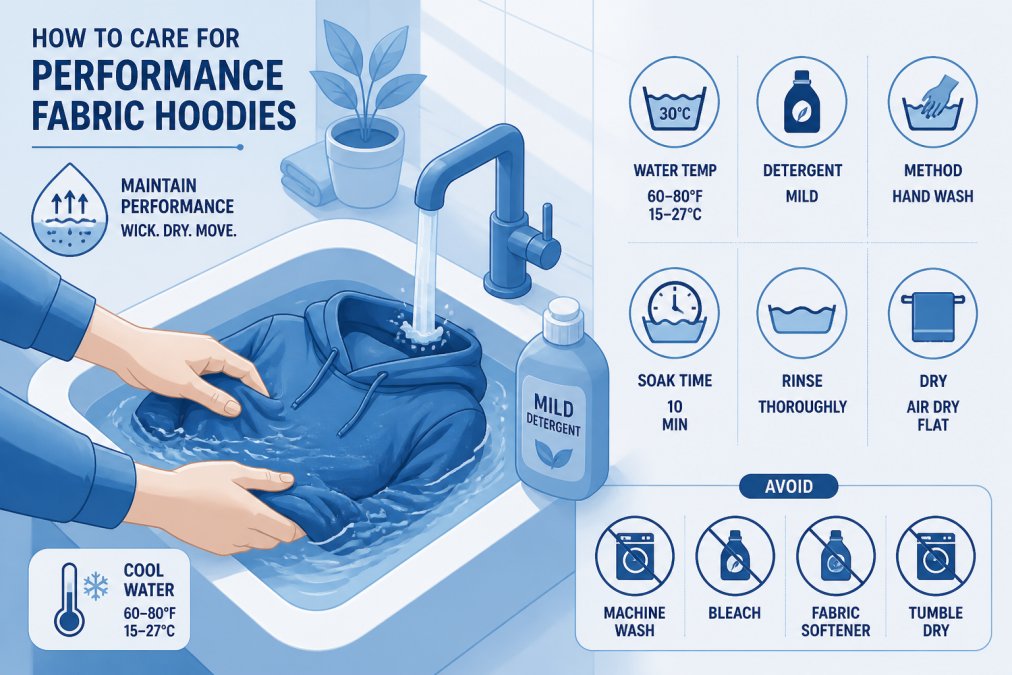
Start with water temperature. Hot water breaks down the finishes that make synthetic fabrics moisture-wicking and quick-drying. Warm water can fade colors and damage prints. Cold water is ideal for performance hoodies, it preserves fabric properties while protecting color and print quality. This applies regardless of whether your hoodie is visibly dirty.
Detergent choice matters significantly. Regular laundry detergent can leave residue on synthetic fabrics that reduces moisture-wicking effectiveness. Specialized sports detergents are formulated to clean without leaving buildup. If you don't have sports detergent, use less regular detergent than you normally would, roughly half the recommended amount.
Avoid fabric softener entirely. Fabric softeners coat synthetic fibers with a waxy layer that blocks moisture-wicking. They feel nice on the first wash but progressively reduce the hoodie's performance with each wash. This is one of the most common mistakes people make with performance apparel.
Washing machine settings should be gentle. Use a delicate or gentle cycle rather than normal. Wash with similar colors to prevent dye bleeding. If you're washing with heavier items like jeans, use a mesh laundry bag to protect the hoodie from abrasion.
Drying is where many people damage their hoodies. High heat from a dryer damages synthetic fibers, breaks down performance finishes, and can cause shrinkage. Air drying is ideal, hang the hoodie on a clothesline or lay it flat. If you must use a dryer, use the lowest heat setting and remove it while still slightly damp. Never use the high-heat setting.
Stain treatment should happen quickly but gently. For sweat stains, soak the area in cold water with a small amount of sports detergent for 30 minutes before washing. For other stains, spot-clean with a damp cloth and mild detergent, then wash normally. Avoid scrubbing aggressively, which can damage the fabric surface.
Storage affects long-term durability. Store your hoodie in a cool, dry location away from direct sunlight, which fades colors over time. Avoid storing in plastic bags, which trap moisture. A breathable cotton storage bag is ideal. Make sure the hoodie is completely dry before storing to prevent mildew growth.
What to Avoid When Choosing a Hoodie for Active Use
Understanding what doesn't work for active lifestyles is as important as knowing what does. Common mistakes in hoodie selection often become apparent only after you've already purchased and tried wearing it.
Avoid 100% cotton hoodies if you plan any intense activity. Cotton absorbs moisture rather than wicking it, leaving you feeling cold and clammy during and after workouts. The fabric also takes hours to dry, making it impractical for active use. Cotton's only advantage is comfort against skin, but that advantage disappears once it's saturated with sweat.
Avoid hoodies with poor seam construction, especially at stress points. Single-stitched seams fail quickly under the stress of active movement. Check seams before purchasing if possible. Look for double-stitching or bar-tacking at the underarms, shoulder seams, and hood attachment points.
Avoid oversized hoods if you plan gym work or high-intensity activities. A hood that flaps around during movement becomes distracting and uncomfortable. It can obstruct your peripheral vision and get caught on equipment. Test the hood fit before purchasing, it should stay in place without constant adjustment.
Avoid hoodies with excessive graphic prints or embellishments if durability is a priority. Large prints are more prone to cracking, especially if the printing technique isn't high-quality. Embellishments like rhinestones or heavy appliqués add weight and can snag or catch during movement. Ortrends uses printing techniques designed to withstand active wear, but this isn't universal.
Avoid hoodies with poor drawstring design, too short to adjust comfortably or too long with excess cord hanging down. Test the drawstring length before purchasing. It should cinch the hood without creating excess fabric.
Avoid hoodies made from low-quality synthetic blends that pill easily. Run your hand across the fabric, if it feels rough or has visible pilling already, it will only get worse with wear. Quality synthetic fabrics feel smooth and maintain that smoothness through many washes.
Avoid hoodies with zippers that feel flimsy or plastic sliders that don't move smoothly. A cheap zipper is a common failure point that makes the hoodie unwearable even if everything else is fine. Test the zipper before purchasing, it should slide smoothly without catching.
Avoid hoodies where the sleeve length is significantly off. Sleeves that are too long slide down during overhead movements and create excess fabric at your wrists. Sleeves that are too short expose your wrists and create tension across your shoulders. Proper sleeve length is critical for comfort during active movement.
Finding Your Perfect Fit: A Decision Framework
Choosing the right hoodie involves evaluating multiple factors and understanding how they interact. This framework helps you make decisions aligned with your actual needs rather than marketing claims.
Start with your primary use case. Are you buying this hoodie primarily for gym workouts, outdoor activities, casual wear, or a combination? Your primary use case should guide most other decisions. A gym-focused hoodie prioritizes unrestricted movement and quick-dry properties. An outdoor-activities hoodie prioritizes warmth and weather resistance. A casual-wear hoodie can prioritize style and comfort.
Evaluate your movement patterns. What movements do you perform most frequently? Overhead movements require higher armholes and looser shoulders. Horizontal movements (running, cycling) can work with a more fitted cut. Dynamic movements (burpees, box jumps) need a shorter length to avoid excess fabric. Match the hoodie's fit to your actual movement patterns.
Consider your climate and seasons. Do you need a hoodie for cold-weather outdoor activities, or are you looking for something for air-conditioned gym environments? Cold-weather use requires heavier fabric and better insulation. Gym use often benefits from lightweight, quick-dry hoodies. Seasonal variation matters, you might need different hoodies for different times of year.
Assess your care commitment. Are you willing to hand-wash and air-dry your hoodie, or do you need something that survives regular machine washing? High-performance hoodies often require more careful care. If you're not willing to follow care instructions, choose a hoodie with more forgiving fabric that tolerates standard washing.
Determine your budget. Quality hoodies cost more, but they last longer and perform better. A premium hoodie that lasts two years might cost less per wear than a cheap hoodie you replace every six months. However, budget constraints are real. Choose the best quality you can afford, understanding that durability and performance improve with price.
Evaluate fit in multiple ways. If possible, try on the hoodie and perform your typical movements. If buying online, check return policies carefully. Look at sizing charts and compare measurements to hoodies that fit you well. Read reviews that specifically mention fit and movement comfort.
Consider versatility. Will you wear this hoodie in multiple contexts, or is it dedicated to one specific use? Versatile hoodies in neutral colors work well across multiple situations. Highly specialized hoodies might perform better for their specific purpose but have limited use.
Check material composition carefully. Understand what you're buying, the exact fiber blend, seam construction, and any special finishes. Read labels thoroughly. Don't assume "performance hoodie" means it actually performs for your needs without checking specifics.
| Decision Factor | Gym Focus | Outdoor Activities | Casual Wear | Versatility Priority |
|---|---|---|---|---|
| Ideal Weight | Lightweight (under 7 oz) | Midweight (7-10 oz) | Midweight | Midweight (7-9 oz) |
| Fabric Blend | Polyester/nylon dominant | Merino blend or recycled poly | Cotton blend acceptable | Synthetic blend |
| Hood Style | Minimal, fitted | Spacious, functional | Style-dependent | Moderate size |
| Sleeve Length | Shorter to mid-forearm | Standard | Longer acceptable | Standard |
| Seam Construction | Double-stitched, reinforced | Heavy reinforcement | Standard quality | Double-stitched minimum |
| Care Requirements | Cold wash, air dry | Gentle care | Standard acceptable | Cold wash preferred |
Make the decision. Once you've evaluated these factors, prioritize the ones most important to your actual use. If gym performance is your primary goal, don't compromise on fit and seam construction for style. If casual versatility matters most, choose a hoodie that looks good in multiple contexts even if it's not optimal for intense workouts.
Ortrends offers hoodies designed with active individuals in mind, combining premium materials and construction with original designs that celebrate your personal style. Whether you prioritize performance, versatility, or a balance of both, finding the right fit means understanding what matters most for your lifestyle.
Choosing a comfortable hoodie for active lifestyles requires understanding how fabric, fit, and construction work together to support your movement and withstand repeated wear. The best hoodies balance immediate comfort with long-term durability, perform across multiple contexts, and reflect your personal style. Start with Ortrends' collection of premium hoodies designed for active individuals, each piece combines superior comfort and durable materials with original designs that help you express your individuality while keeping up with your lifestyle. Shop Now and discover a hoodie that truly fits your active life.
Frequently Asked Questions
What features should I look for in a comfortable hoodie for active lifestyles?
Prioritize moisture-wicking fabric that pulls sweat away from your skin, breathable construction that allows airflow, and four-way stretch or gusseted underarms for unrestricted movement. Check for flatlock seams to prevent chafing, thermal regulation to adapt to temperature changes, and a fit profile designed for athletic movement. Quality matters: brushed fleece interiors and recycled polyester blends offer durability and comfort without excess weight.
Are cotton or synthetic blends better for active lifestyles?
Synthetic blends and recycled polyester outperform pure cotton for active wear. Cotton absorbs moisture and dries slowly, leaving you feeling heavy and cold. Performance blends use moisture-wicking technology and quick-dry properties to keep you dry during workouts. Heavyweight cotton works for casual lounging, but technical apparel blends deliver superior sweat management, odor resistance, and shape retention through multiple wash cycles.
How do I choose a hoodie that transitions from the gym to daily wear?
Look for hoodies with a clean, versatile design that works in professional and casual settings. Neutral colors and minimal graphics offer more styling flexibility. Ensure the athletic fit isn't too tight or too loose for everyday wear. Hoodies with thoughtful details like ergonomic hoods and refined construction feel polished enough for work or social settings while maintaining the comfort and performance features you need for workouts.
How long do performance hoodie prints typically last?
Quality prints on performance hoodies can last 50+ washes with proper care. The durability depends on print method and fabric weight. Direct-to-garment printing on technical apparel tends to hold better than screen printing on synthetic blends. Wash in cool water, avoid high heat drying, and turn the hoodie inside out to extend print life. Premium construction ensures both the fabric and print maintain their integrity through extended use.
What makes moisture-wicking hoodies for men and women different from regular hoodies?
Moisture-wicking hoodies use engineered synthetic fibers or performance blends designed to move sweat away from your skin rather than absorb it. Regular cotton hoodies trap moisture, making you feel damp and uncomfortable during activity. Moisture-wicking versions offer quick-dry properties, temperature control, and odor resistance. They're constructed for range of motion with features like gusseted underarms and flatlock seams that regular hoodies lack.
Can I wear the same hoodie for both gym workouts and casual outings?
Yes, the best athletic hoodies for gym workouts also work for casual wear if you choose thoughtfully. Look for hoodies with clean, minimal designs and neutral colors that don't scream 'activewear.' Ensure the fit is athletic but not overly tight, with quality construction that looks polished in social settings. Moisture-wicking fabric and performance features keep you comfortable whether you're exercising or running errands, making versatile styling a practical advantage.
What's the difference between brushed fleece and standard fleece in performance hoodies?
Brushed fleece has a soft, napped surface that feels luxurious while maintaining breathability and moisture management. Standard fleece is denser and traps more heat, making it less suitable for active use. Brushed fleece offers better thermal regulation, allowing warmth without overheating during workouts. It also resists pilling better than standard fleece and maintains its soft feel through repeated washing, making it ideal for hoodies designed for active lifestyles.
This article was written using GrandRanker