

Comfortable Nursing Apparel for Off Shift
Table of Contents
- Why Comfortable Nursing Apparel Matters for Off-Duty Hours
- Best Shoes for Nurses Standing All Day and Beyond
- Breathable Fabrics That Support Shift Recovery
- Durable Graphic Tees for Nurses Who Want Style Off the Clock
- Athleisure and Loungewear Essentials for Easy Transitions
- Layering Strategies for Temperature Control During Shift Transitions
- Compression and Recovery Wear for Post-Shift Comfort
- Building a Capsule Wardrobe for Rotating Shift Schedules
- Sensory-Friendly Options for Post-Shift Relaxation
- Conclusion
Last Updated: August 18, 2026
Why Comfortable Nursing Apparel Matters for Off-Duty Hours
After a 12-hour shift, your body needs recovery, not stress from clothing that digs, bunches, or restricts. Comfortable nursing apparel for off shift acknowledges the unique recovery needs of healthcare professionals, your feet have been standing all day, your shoulders tense, your skin needs breathability and freedom.
At Ortrends, we understand that nurses deserve apparel celebrating who they are while supporting how their bodies actually feel. Our collections combine premium materials with original designs that speak to the healthcare experience.
Best Shoes for Nurses Standing All Day and Beyond
Off-duty footwear should prioritize recovery without sacrificing style. Look for shoes with contoured footbeds that cradle your arch, and memory foam or gel inserts for immediate relief. Since feet swell slightly after long shifts, wide toe boxes prevent the bunching sensation tight work shoes create.
Breathable fabrics matter too. Canvas, mesh, or knit uppers allow air circulation after hours of sweat accumulation. Avoid synthetic or heavily lined materials that trap moisture. Slip-on styles eliminate friction from laces or straps that irritate already-sensitive skin.
The best off-duty shoes acknowledge your feet have worked hard, supportive slip-ons, cushioned sneakers, or ergonomic sandals deliver better post-shift relief than trendy options.
Breathable Fabrics That Support Shift Recovery
During your shift, moisture-wicking fabrics pull sweat away for temperature regulation. Off-shift, your body generates less perspiration, and continuing synthetic moisture-wicking materials creates a clammy, uncomfortable sensation because the fabric is engineered to manage sweat that isn't being produced.
Cotton, linen, and cotton-blend fabrics allow natural temperature regulation without engineered water management. Look for 100% cotton or cotton-dominant blends (at least 80% cotton). These fabrics breathe naturally, soften with washing, and don't irritate skin under constant compression. Linen-cotton blends (70/30 or 60/40) provide breathability without texture issues.
Your off-shift body needs passive breathability, fabric that allows air circulation, not active moisture-wicking. This explains why nurses often find their favorite off-duty clothes feel "wrong" if made from technical work fabrics.
Lightweight fabrics feel less constricting than heavier options. Oversized cuts in breathable fabrics create additional airflow that fitted cuts can't achieve. Combed and ring-spun cotton (like Bella+Canvas blanks) undergoes processing that removes short fibers, resulting in noticeably softer fabric than standard cotton, important because post-shift skin sensitivity is heightened.
Avoid polyester-heavy blends for off-duty wear. After a full shift in moisture-wicking synthetics, your skin needs actual air, not engineered water management. Polyester also retains odors and can develop a stale smell even after washing.
For nurses working variable schedules, having 3-4 cotton t-shirts and 2-3 pairs of cotton-blend pants in rotation means you always have clean recovery wear available, even with rotating shifts.
Durable Graphic Tees for Nurses Who Want Style Off the Clock
Graphic tees serve a specific purpose for nurses off-duty: they're casual enough to feel like recovery wear while carrying a message that makes you feel like yourself again. After hours in professional scrubs, wearing something with personality matters.
Durability depends on printing technology. Direct-to-Film (DTF) printing bonds ink directly to fabric fibers rather than sitting on the surface, so prints flex with the fabric instead of cracking. Ortrends uses DTF printing on Bella+Canvas blanks, meaning prints survive hundreds of washes without degradation.

Graphic content should acknowledge your experience without being preachy. Designs referencing nursing reality, coffee dependency, humor, chaos, feel more authentic than generic healthcare messaging. The fit should be relaxed but not oversized, allowing movement without excess fabric bunching.
Athleisure and Loungewear Essentials for Easy Transitions
Athleisure bridges loungewear and clothes you can wear for errands without looking like you've given up. For nurses, this category is essential because off-shift hours include both genuine rest and necessary tasks.
Joggers with tapered ankles and fitted waistbands create a polished-casual silhouette. Quality joggers maintain shape through multiple washes; lightweight versions pill and lose definition quickly. High-waisted leggings with gusseted crotches (reinforced seams) prevent holes that develop in regular leggings.
Soft hoodies in breathable cotton blends (not heavy fleece) won't feel like insulation. The "Powered by Coffee & Chaos" hoodie from Ortrends ($44.95) uses Bella+Canvas fleece that's soft without being stifling, perfect for layering or wearing alone at home.

Layering for shift transitions means having pieces that work together. A lightweight t-shirt under a hoodie gives flexibility as your body temperature adjusts.

Layering Strategies for Temperature Control During Shift Transitions
Your body temperature regulation is disrupted after a shift. Off-shift, your body needs flexibility to adjust without constantly removing or adding layers.
Start with a lightweight breathable cotton t-shirt if coming directly from your shift. Add a mid-layer, soft hoodie or lightweight cardigan, that you can remove as your body settles. Progress to a final comfort layer: oversized t-shirt, soft sweatshirt, or loungewear set that feels genuinely comforting.
For rotating shifts, layering becomes essential since you can't predict temperature comfort. A hoodie you can tie around your waist, a cardigan you can drape, or a soft overshirt gives you options without heavy outerwear.
Avoid materials that hold heat excessively. Heavy fleece, thick wool, or synthetic insulation can feel suffocating. Breathable layers, cotton, cotton-blend fleece, lightweight knits, allow your body to find natural comfort temperature without intervention.
Compression and Recovery Wear for Post-Shift Comfort
Compression garments address a specific post-shift physiological challenge. After 8-12 hours of standing, blood pools in your lower extremities because gravity works against return flow to your heart. This pooling causes swelling, heaviness, and aching. Compression garments apply graduated pressure (strongest at the ankle, decreasing toward the knee or thigh) that mechanically assists blood return, reducing swelling and improving circulation recovery.
Timing is critical. Compression is most effective when applied immediately post-shift, ideally within 15-30 minutes of clocking out, while swelling is actively occurring. Waiting several hours is significantly less effective.
Compression ratings are measured in millimeters of mercury (mmHg). For post-shift recovery, mild to moderate compression (15-20 mmHg) is effective without feeling restrictive. This range provides measurable circulation improvement without the discomfort of medical-grade compression (20-30 mmHg or higher).
Compression sleeves target the lower leg and foot where most swelling occurs. Compression socks extend higher and are preferred by nurses experiencing calf and thigh swelling. Compression shorts or leggings provide full-leg support and can be worn under regular loungewear.
Fabric composition matters for wearability. Recovery-focused compression wear increasingly uses breathable blends incorporating merino wool, nylon, or cotton-blend fabrics that feel comfortable and allow better temperature regulation.
The recovery sequence: Change into compression garments immediately after your shift. Wear them for 60-90 minutes while transitioning from work mode. During this window, compression actively reduces swelling and improves circulation. After 90 minutes, remove compression and transition to regular recovery wear.
Many nurses report noticeably better sleep quality and less next-day leg heaviness after using compression post-shift. Reduced swelling means less discomfort during sleep, allowing deeper, more restorative rest.
For rotating shifts, keep compression garments easily accessible, in your locker, car, or bag, to ensure immediate post-shift use. Quality compression socks or sleeves typically cost $25-45 per pair and last 6-12 months with proper care.
Building a Capsule Wardrobe for Rotating Shift Schedules
Rotating shifts mean your off-duty time varies unpredictably. A capsule wardrobe solves this by giving you multiple outfit combinations from a small number of pieces.
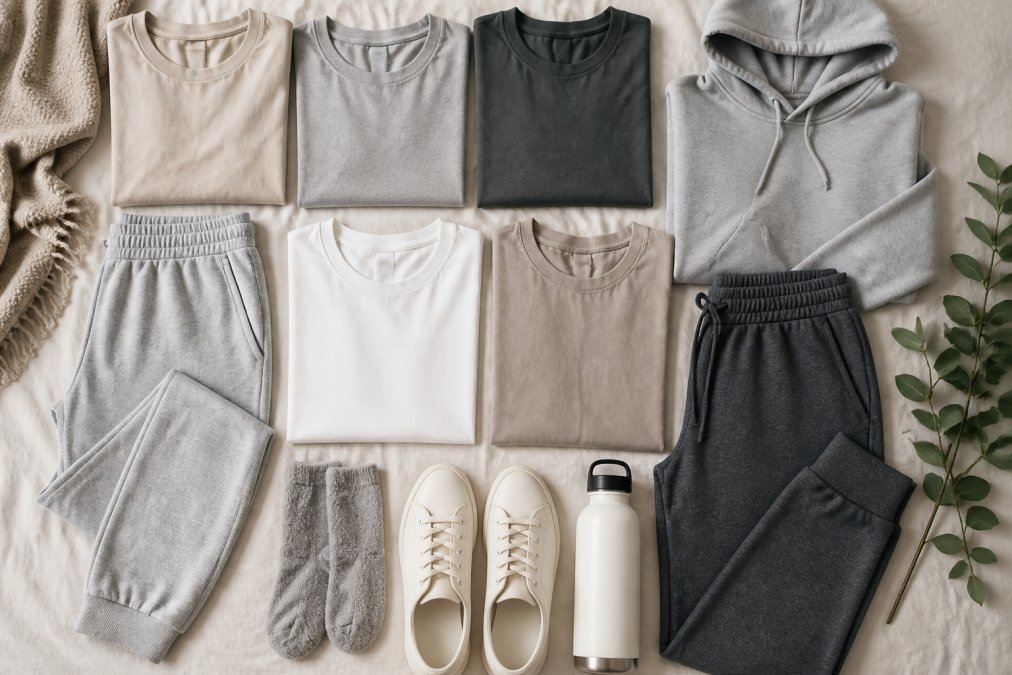
Start with neutral basics: 3-4 quality t-shirts in black, gray, or white. Add 2-3 graphic tees reflecting your personality. Include 2 pairs of joggers or comfortable pants, one neutral, one with subtle color or pattern. One quality hoodie and one lightweight cardigan provide layering flexibility.
Each piece combines with multiple others. A gray t-shirt works with both joggers, both hoodies, and under the cardigan. A graphic tee works standalone or layered under a hoodie. This creates 15+ outfit combinations from about 10 pieces.
Rotating shifts tempt you to buy cheap pieces, but cheap apparel falls apart quickly. A single quality t-shirt from Ortrends ($24.99) outlasts three cheap alternatives. Investing in fewer, better pieces actually favors durability math.
Add one "going out" piece, casual overshirt, soft blazer, or structured hoodie, for errands or public outings, preventing the need to change clothes entirely during recovery time.
Sensory-Friendly Options for Post-Shift Relaxation
Post-shift sensory sensitivity is real. Your nervous system has been in alert mode. Tight seams, scratchy tags, rough textures, or heavy fabrics can feel genuinely painful rather than just uncomfortable.
Sensory-friendly apparel prioritizes smooth seams, seamless construction where possible, and soft finishes. Flat-lock seams eliminate irritation of standard seams. Tagless designs remove constant awareness of a label at your neck.
Premium cotton, especially combed and ring-spun cotton like Bella+Canvas, feels noticeably softer than standard cotton. Lightweight fabrics that move with your body feel less restrictive than heavier options. Oversized cuts allow movement without fabric clinging to your skin.
Avoid anything with elastic that digs, zippers that catch, or buttons creating pressure points. Drawstring waists should be soft and adjustable. Necklines should be relaxed; crew necks tend to feel less restrictive than tight variations.
Soft, muted tones (grays, soft greens, warm whites) feel less stimulating than bright or saturated colors during recovery.
Conclusion
Comfortable nursing apparel for off shift is part of your recovery protocol. The right shoes reduce foot fatigue. Breathable fabrics let your skin recover. Quality graphic tees help you feel like yourself again. Layering strategies provide temperature flexibility. Compression wear improves circulation. A capsule wardrobe simplifies getting dressed when tired. Sensory-friendly options honor your nervous system's need to decompress.
Quality apparel compounds over time. A single premium t-shirt from Ortrends ($24.99) survives hundreds of washes without print cracking or fabric degradation. Our hoodies ($44.95) combine soft Bella+Canvas fleece with DTF printing that resists peeling, keeping designs vibrant through your entire rotation. Research on textile durability and care shows premium construction reduces replacement frequency by 60% compared to budget alternatives.
At Ortrends, we've designed collections specifically for professionals needing apparel that works as hard as you do, then supports genuine recovery when your shift ends. Every piece celebrates individuality while delivering comfort and durability your lifestyle demands. Consumer reports on apparel durability and satisfaction consistently show customers investing in quality basics report higher satisfaction and longer wardrobe lifecycles.
Your off-shift hours are when your body heals. Comfortable nursing apparel accelerates that recovery. Sleep and recovery research from the National Sleep Foundation emphasizes that environmental comfort, including clothing, directly impacts sleep quality and post-shift recovery speed.
Shop Ortrends now and build your recovery wardrobe with apparel designed for who you actually are.
Frequently Asked Questions
What fabrics work best for nursing apparel when off shift?
Breathable, moisture-wicking fabrics like cotton blends, bamboo, and lightweight synthetics are ideal for off-duty comfort. These materials allow your skin to breathe after long hours in scrubs and support recovery. Look for soft, stretchy options that don't cling to your body, giving you the relaxation your skin needs after a demanding shift.
How do I choose the best shoes for nurses standing all day?
Prioritize shoes with contoured footbeds, arch support, and cushioning designed to reduce foot fatigue. Look for lightweight, breathable options that prevent moisture buildup. Slip-on styles work well for quick transitions. Quality matters, investing in supportive footwear reduces pain and improves circulation, helping you recover faster during off-duty time.
Are durable graphic tees for nurses a good off-shift choice?
Yes. High-quality graphic tees made from premium cotton blends offer comfort, durability, and style. Look for DTF or DTG printing that resists cracking after repeated wear and washing. They're versatile enough for lounging, running errands, or casual outings, making them essential pieces in any nurse's off-duty wardrobe.
How can compression garments help with post-shift recovery?
Compression wear supports circulation and reduces swelling in your legs and feet after standing for long shifts. Wearing compression socks, sleeves, or leggings during off-duty hours can ease discomfort and speed recovery. They're especially helpful if you experience foot fatigue or circulation issues, making relaxation more effective.
This article was written using GrandRanker