

Custom T-Shirt Design Ideas for Pet Rescue Fundraisers
Table of Contents
- Why Custom T-Shirts Are a Fundraising Powerhouse for Pet Rescue
- Animal Rescue T-Shirt Slogans That Spark Emotion and Action
- 10 Custom T-Shirt Design Ideas for Pet Rescue Campaigns
- Fundraising T-Shirt Design Tips: Layout, Color, and Typography
- How to Sell Custom Shirts for Charity: A Step-by-Step Plan
- Choosing the Right Shirt Style and Fabric for Your Event
- Design Templates and Tools to Get You Started Fast
- Common Mistakes to Avoid in Rescue Merchandise
- Your Next Step: Turn These Ideas into Donations
- Frequently Asked Questions
Last Updated: September 7, 2026
Why Custom T-Shirts Are a Fundraising Powerhouse for Pet Rescue
Animal rescue organizations run on two things: passion and funding. While donation drives and adoption events bring in support, custom t-shirt design ideas for pet rescue campaigns turn your biggest advocates into walking billboards for your cause. Every shirt sold does double duty, raising money today while spreading community awareness every time someone wears it.
The economics work in your favor. A well-designed tee costs a fraction of what you charge supporters, leaving a healthy margin for your shelter or rescue group. Unlike other merchandise, shirts get worn repeatedly, which means your message keeps working long after the transaction ends. This guide from Ortrends walks through proven design concepts, practical selling steps, and the details that separate professional-looking apparel from amateur efforts.
Animal Rescue T-Shirt Slogans That Spark Emotion and Action
The right slogan stops someone mid-scroll and makes them reach for their wallet. Animal rescue t-shirt slogans work best when they tap into the emotional bond between people and their pets. Short, punchy phrases beat long explanations every time.
Strong options fall into a few reliable categories. Pride-focused slogans like "Rescue Is My Favorite Breed" or "Who Rescued Who?" celebrate the identity of rescue pet owners. Action-oriented messages such as "Adopt. Don't Shop." and "Save a Life, Adopt" give a clear call to action. Humor also performs well, with lines like "My Dog Has Me Well Trained" or "I Was Adopted by a Schnauzer" resonating with owners who see their pets as family members with opinions.

Pair your slogan with a simple, legible font. Script fonts look elegant but become unreadable from a distance, which defeats the purpose of wearable advertising. A bold sans-serif typeface ensures your message lands clearly at an adoption event or across a crowded park.
10 Custom T-Shirt Design Ideas for Pet Rescue Campaigns
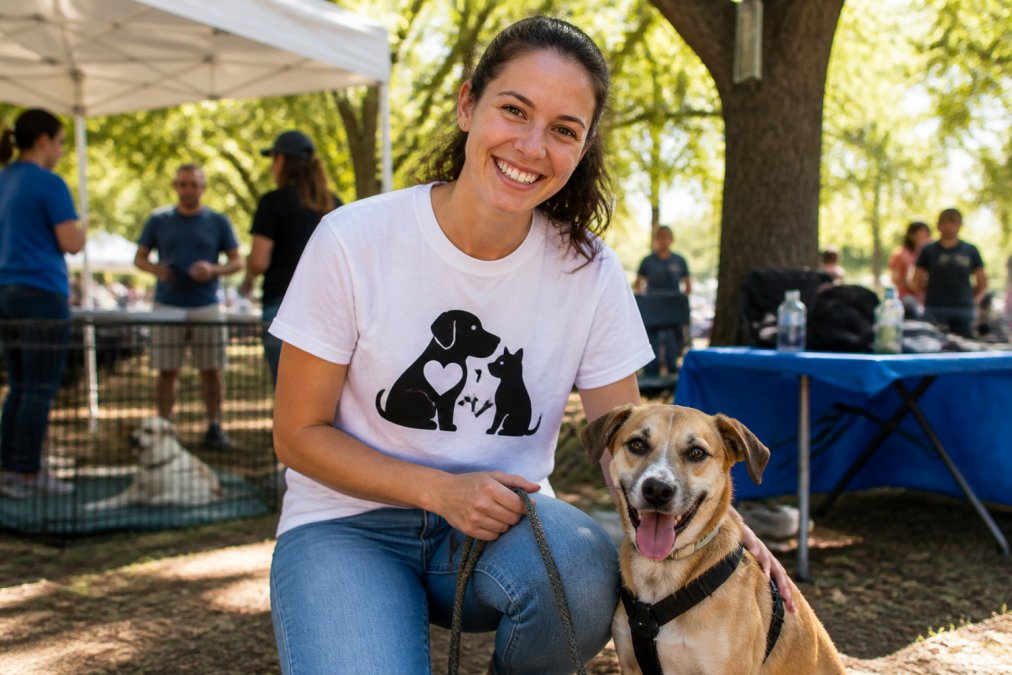
The best fundraising campaigns blend heart with wearability. These custom t-shirt design ideas for pet rescue give you a starting point that appeals to different segments of your supporter base.
- Adopt Don't Shop with a bold paw print or heart graphic
- Rescue dog portrait rendered in simple vector art
- Shelter cat illustration with a witty caption
- Breed-specific humor for schnauzer, pit bull, or beagle lovers
- "Rescue Mom" or "Rescue Dad" titles with coordinating graphics
- Before and after split designs showing a pet's transformation
- Minimalist paw print trail leading to an adoption symbol
- Vet tech and volunteer appreciation shirts for your team
- Funny rescue life quotes that make people smile
- Event-specific designs with your fundraiser name and date
Adopt Don't Shop: The Classic That Never Misses
"Adopt Don't Shop" remains the most recognized message in animal welfare for good reason. It condenses a complex issue into four memorable words that spark conversations. The key is giving this classic a fresh visual treatment so it doesn't feel generic.

Consider a hand-drawn style with a dog and cat silhouette forming a heart shape between them. Or pair the slogan with a single bold paw print in your organization's colors. The design should look intentional, not like a default template. When someone asks about your shirt, you want them to hear about your specific rescue, not just receive a generic nod of agreement.
Rescue Dog and Shelter Cat Portraits
Portrait designs create instant emotional connection. A clean line-art illustration of a floppy-eared rescue dog or a wide-eyed shelter cat turns your shirt into a conversation starter about the animals waiting for homes. These designs work especially well when supporters can point to the graphic and say, "That looks just like my dog."
Work with a designer or use vector art resources to create a stylized portrait rather than a photorealistic image. Photorealistic prints can look muddy on fabric and often don't survive repeated washing as well as bold, simplified graphics. A strong silhouette with expressive details reads clearly from across the room, which matters when you're trying to catch attention at a busy adoption fair.
Humor That Highlights the Rescue Life
Humor breaks down barriers. A shirt that makes someone laugh opens the door for you to share your rescue's mission. Designs like "My Rescue Dog Is My Therapist" or "I'm Not Spoiled, I'm a Rescue" let owners express the joyful chaos of life with an adopted pet.
Fundraising T-Shirt Design Tips: Layout, Color, and Typography
The difference between a shirt that sells and one that sits in a box often comes down to design psychology. This section explains the 'why' behind the choices, giving your rescue a strategic edge.
The Psychology of Color in Animal Advocacy
Color isn't just about aesthetics; it's a silent communicator that can influence a supporter's decision to buy. In animal welfare, the goal is to trigger feelings of empathy, trust, and hope.
- Blue and Green: These colors evoke trust, stability, and health. They are excellent for building a credible brand for an established shelter. A deep navy or forest green shirt with a clean, white logo suggests professionalism and reliability.
- Orange and Yellow: These are high-energy, optimistic colors that grab attention. They are ideal for adoption event shirts or campaigns focused on the joy of rescue. A bright orange shirt with a playful slogan can feel approachable and fun.
- Red and Pink: These colors are associated with love, passion, and urgency. They can be powerful for fundraising drives or campaigns highlighting animals in critical need of medical care.
- Neutral Tones (Heather Gray, Cream): These offer a modern, soft aesthetic that appeals to a broad audience. They serve as a versatile canvas, allowing a colorful graphic or a bold, dark slogan to stand out without visual competition.
A common pattern is to use a high-contrast, saturated color for the shirt itself and a complementary color for the design. For example, a classic white design on a royal blue shirt is highly legible and conveys a sense of purpose. Avoid pastel-on-pastel combinations, which can feel washed out and fail to make an impact from a distance.
Typography: Legibility Is a Fundraising Tool
Your slogan is your pitch, and if people can't read it, you've lost the sale. The primary goal of typography on a fundraising shirt is legibility at a glance, not artistic flair.
- Limit to Two Fonts: Use one bold, condensed sans-serif font (like Oswald, Bebas Neue, or Montserrat) for the main message. Use a secondary, simpler font for supporting text like your organization's name or website.
- Avoid Script Fonts for Main Messages: While elegant, script fonts are notoriously difficult to read from a distance or in a small thumbnail on a social media feed. If you love a script style, use it sparingly for a single accent word, not the core call to action.
- Test at Thumbnail Size: Most people will first see your shirt design on a phone screen. Crouch down and view your design mockup at a small size. If the message isn't instantly clear, simplify the font or increase the weight.
Layout: The Front-to-Back Strategy
The most effective layout for a fundraising shirt is a two-part strategy:
- Front (The Hook): Place your emotional slogan or a strong graphic here. This is the conversation starter. It should be large enough to read from across a room at an adoption event.
- Back (The Billboard): Use the back of the shirt for your rescue's official name, logo, website, and the event name or year. This turns the wearer into a walking billboard for your specific organization, not just a generic message. When they turn around, people can find you.
Print Techniques and Their Trade-offs
Your choice of print method affects both cost and durability.
- Screen Printing: This is the industry standard for bulk orders of 25 or more. It offers the lowest per-unit cost and the most durable result. The ink is laid down thick, creating a vibrant, long-lasting design that can withstand years of washing.
- Direct-to-Garment (DTG): This is a digital, print-on-demand method ideal for small orders or highly detailed designs with many colors. The print is softer and thinner than screen printing, but it is more cost-effective for runs under 25 shirts. However, DTG prints can fade faster than screen prints if not cared for properly.
- Heat Transfer Vinyl (HTV): This is best for small batches or single shirts with simple, bold text or shapes. It creates a slightly raised, plastic-like texture. It's not ideal for large fundraising campaigns due to higher per-unit costs and a less premium feel.
How to Sell Custom Shirts for Charity: A Step-by-Step Plan
Selling shirts for a cause requires the same planning as any retail launch. Start with a clear fundraising goal, then work backward to determine how many shirts you need to sell. A concrete target gives your campaign urgency and lets supporters see their impact.
Set your price point by covering your per-shirt cost, then adding your desired profit margin. Most rescue groups price shirts between $20 and $30 for adults, which feels accessible while still generating meaningful revenue. Offer a children's size option at a slightly lower price to capture family purchases.
Promote across every channel you already use. Post design previews on social media to build anticipation, send email updates to your volunteer list, and mention the shirts at adoption events. Consider a short pre-sale window where supporters can order before you commit to a production run. This approach works especially well with print-on-demand, since you only pay for shirts after customers have paid you.
Choosing the Right Shirt Style and Fabric for Your Event
The shirt style you choose directly affects how often people wear your design. A heavyweight cotton tee feels substantial but runs hot in summer. A tri-blend or ring-spun cotton shirt offers a softer hand feel that many people prefer for everyday wear. Bella+Canvas unisex tees, made from 100% ring-spun cotton, offer a combination of softness and durability.
Consider your audience and season. A summer adoption event calls for short sleeves in breathable fabrics. Fall and winter fundraisers might perform better with long-sleeve tees or hoodies, which also justify a higher price point. Think about your volunteer team too. A distinct shirt color for staff and fosters helps attendees identify who to approach with questions, turning your merchandise into a functional uniform.
Sustainable and eco-friendly fabric choices resonate strongly with the animal welfare crowd.
Design Templates and Tools to Get You Started Fast
You don't need a professional graphic designer to launch a successful campaign, but you do need to be aware of the legal landscape around imagery. This section covers the tools to get you started and the legal guardrails to keep your non-profit safe.
The Right Tools for Every Skill Level
- Canva: This is the go-to for most non-profits. The free version offers thousands of templates, and the Pro version (which is free for registered non-profits) unlocks a vast library of stock photos, illustrations, and brand kits (canva.com). You can easily customize a template with your rescue's colors and logo.
- Placeit by Envato: This service is unique because it provides realistic mockups. You can upload your design and see it on a model in a real-world setting. This is invaluable for testing the 'thumbnail test' and for creating compelling social media previews to generate pre-sale buzz.
- Adobe Express: A lighter, web-based version of Adobe's creative suite. It offers excellent typography tools and integrates with Adobe Fonts, giving you access to high-quality typefaces that can elevate your design.
- Inkscape: A free, open-source vector editor. If you have a hand-drawn sketch or a complex idea, Inkscape allows you to create scalable vector artwork that will print crisply at any size. It has a steeper learning curve than Canva, but it's a powerful tool for creating original art.
The Legal Side of Using Animal Imagery
This is the most critical and often-overlooked aspect of designing merchandise for a non-profit. A simple mistake here can lead to costly legal battles and reputational damage.
- Copyright and Stock Photos: You cannot simply grab a photo of a random dog from Google Images and put it on a shirt. That image is likely copyrighted by its owner. Using it without permission is infringement, regardless of your non-profit status. If you use a stock photo from a site like Shutterstock or Adobe Stock, you must purchase the appropriate license. A standard license is often sufficient for merchandise, but you must read the terms carefully to ensure it covers print-on-demand or bulk manufacturing.
- The Right of Publicity: This is a less-known but equally important issue. If you want to feature a specific, recognizable pet (like a famous internet-famous dog or a local shelter mascot), you need written permission from the pet's owner. This is known as the Right of Publicity, and it protects an individual's (or in this case, a pet's) likeness from being used for commercial purposes without consent.
- Trademark Infringement: Be careful with phrases that are trademarked. For example, while "Adopt Don't Shop" is a widely used slogan, other phrases like "Rescue Dog" or specific breed-related terms may be trademarked by certain organizations or companies. A quick search on the United States Patent and Trademark Office (USPTO) database can help you avoid a costly mistake.
- The Safest Path: Original Artwork: The most secure and unique approach is to commission original artwork. You can hire a local artist or a designer on platforms like Fiverr or Upwork to create a custom illustration. This ensures you own the rights to the image and that your design is 100% unique to your rescue.
From Template to Production: A Quick Workflow
- Sketch Your Idea: Start with a simple sketch on paper or a whiteboard. Focus on the core message and the main graphic.
- Build in Canva or Inkscape: Translate your sketch into a digital format. Use your rescue's brand colors and fonts.
- Create a Mockup: Use Placeit to see your design on a real shirt. Take a screenshot and view it as a thumbnail on your phone. If it's not clear, go back to the drawing board.
- Verify Legality: Check for trademark issues and confirm you have the rights to any images used.
- Order a Physical Sample: Before committing to a large run, order a single sample shirt from your chosen printer. This is non-negotiable. Colors render differently on fabric than on a screen, and you need to see the actual product.
Common Mistakes to Avoid in Rescue Merchandise
Even well-intentioned campaigns stumble on avoidable errors. The most frequent mistake is cramming too much information onto the shirt. A cluttered design with your full mission statement, website, event date, and three graphics becomes unreadable noise. Edit ruthlessly and let one element carry the message.
Poor color contrast also undermines good design. White text on a yellow shirt or light gray on white disappears from a distance. Test your design by viewing it as a thumbnail on a phone screen, since that's how most people will first encounter it on social media. If the message isn't clear at that size, simplify it.
Skipping the proofing stage causes expensive problems. Always request a physical sample before committing to a large production run. Colors render differently on fabric than on a computer monitor, and a design that looked sharp on screen might print muddy or too dark. One sample shirt costs far less than a batch of unwearable mistakes.
Your Next Step: Turn These Ideas into Donations
The gap between a good idea and a successful fundraiser comes down to execution. Pick one strong design concept that fits your rescue's personality, set a clear sales goal, and promote it relentlessly across your existing channels. A single well-run shirt campaign can fund a month of veterinary care or a season of food for your foster network.
When you're ready to move from concept to orders, Ortrends makes the process simple with made-to-order apparel that ships fast from California. The premium-quality materials, including soft ring-spun cotton tees, keep your supporters comfortable while your design does the talking. Every purchase directly supports your mission, and the durable prints hold up wash after wash, keeping your message visible for years.
Get started with Ortrends and turn your rescue's story into apparel your community will be proud to wear.
Frequently Asked Questions
How do I design a t-shirt for a pet rescue fundraiser?
Start with a clear slogan that speaks to your mission, like 'Adopt Don't Shop' or 'Rescue Is My Favorite Breed.' Pair it with a simple, high-contrast graphic of a dog or cat that works at a distance. Use a maximum of two colors for the design to keep printing costs down and ensure the message stays readable. Place the slogan on the back and the logo on the front left chest for a professional look.
What are the best slogans for animal rescue t-shirts?
The best animal rescue t-shirt slogans are short, emotional, and action-oriented. Proven options include 'Who Rescued Who,' 'Adopt Don't Shop,' 'Save a Life, Adopt,' and 'My Rescue Pet Is My Best Friend.' Humor works too: 'I Was Adopted by a Rescue Dog' or 'My Dog Has Me Well Trained.' A slogan that makes people smile or feel connected is more likely to get worn repeatedly, which is free advertising for your cause.
How can custom apparel help raise money for animal shelters?
Custom apparel raises money by turning supporters into walking billboards. Beyond the direct sale, each shirt worn in public sparks conversations and brings new donors and adopters to your cause. Set a clear fundraising goal and track sales publicly to create momentum and encourage friendly competition among supporters.
How do I choose the right t-shirt material for a charity event?
Choose a shirt that people will actually wear again. A 100% ring-spun cotton tee like the Bella+Canvas 3001 offers a soft feel and a flattering fit that most volunteers and donors prefer. If your event is outdoors in summer, look for lighter colors and breathable fabric. Avoid heavy, stiff cotton that feels like a billboard; comfortable shirts get worn more often, which means more visibility for your rescue's mission.