

How to Choose Quality Cotton Hoodies: A 2026 Buying Guide
Table of Contents
- What Makes a Cotton Hoodie High Quality
- Understanding Fabric Weights: What is GSM in Hoodies
- 100% Cotton vs. Polyester Blend Hoodies: Which Is Better
- Ring-Spun vs. Open-End Cotton: The Difference Matters
- The Role of Fleece Lining in Cotton Hoodies
- Breathability and Moisture-Wicking Performance
- Durability and Shrinkage: What to Watch For
- Printability and Surface Smoothness for Graphic Hoodies
- Sustainability and Ethical Sourcing in Cotton Production
- How to Care for Cotton Hoodies to Extend Their Life
- Tactile Testing: How to Assess Quality Before You Buy
- Long-Term Wear Analysis: What Happens After 50+ Washes
- Choosing the Right Cotton Hoodie for Your Needs
- Conclusion
Last Updated: August 9, 2026
What Makes a Cotton Hoodie High Quality
Quality cotton hoodies separate themselves through a combination of fiber selection, construction methods, and finishing techniques that determine how the garment performs over time. The difference between a hoodie that feels soft for a month and one that maintains its comfort after 50 washes comes down to specific, measurable factors that most casual shoppers never consider.
High-quality cotton hoodies start with the fiber itself. The length and consistency of the cotton fibers directly impact how durable and soft the finished fabric becomes. Longer fibers create stronger yarns that resist pilling and maintain their structure through repeated washing. When you run your hand across a quality hoodie, you're feeling the result of careful fiber selection and yarn construction, not just cotton, but how that cotton was processed.
The construction method matters just as much as the raw material. A quality cotton hoodie uses ring-spun cotton, which twists fibers tightly together to create stronger, smoother yarn. This contrasts with open-end cotton, a faster and cheaper manufacturing process that produces a rougher, less durable result. The difference becomes obvious after a few washes: ring-spun hoodies hold their shape while open-end versions start to deteriorate.
At Ortrends, we focus on these foundational quality markers because they directly affect how long your hoodie lasts and how comfortable it remains. The premium apparel we create uses construction methods that prioritize longevity, not just initial softness. This means choosing materials and processes that stand up to active lifestyles, whether you're wearing a hoodie through hospital shifts or daily wear.
Surface smoothness and printability also signal quality. A well-constructed cotton hoodie has a smooth, even surface that accepts prints cleanly and holds them without cracking. This surface quality comes from the yarn's consistency and how the fabric is finished after weaving. Budget hoodies often have uneven surfaces that cause prints to crack and fade quickly, which is why understanding fabric construction matters before you buy.
Understanding Fabric Weights: What is GSM in Hoodies
GSM stands for grams per square meter, and it's the primary measurement used to determine how heavy and substantial a cotton hoodie fabric feels. A higher GSM number means more fiber packed into the same area, resulting in a thicker, warmer, more durable fabric. Understanding GSM helps you choose a hoodie that matches your actual needs instead of guessing based on how it feels in a store.
Most quality cotton hoodies range between 200 and 400 GSM, with the category breaking down into three distinct weight classes that serve different purposes.
Lightweight vs. Midweight vs. Heavyweight Hoodies
Lightweight hoodies typically measure between 200-250 GSM. These work best for layering or mild climates where you need coverage without excessive bulk. A lightweight hoodie compresses easily for travel and dries quickly after washing, making it practical for active lifestyles. The tradeoff is that lightweight fabrics show wear faster and offer less insulation. Many people underestimate how quickly a 200 GSM hoodie starts to feel thin after regular washing.
Midweight hoodies fall in the 280-320 GSM range and represent the sweet spot for most wearers. This weight provides genuine warmth without excessive bulk, maintains its structure through repeated washing, and offers enough substance to feel premium without being heavy. Midweight is what most quality cotton hoodies target because it balances comfort, durability, and practicality. If you're buying one hoodie to wear frequently, midweight almost always outperforms both lighter and heavier options.
Heavyweight hoodies exceed 350 GSM and feel substantial in hand. These are built for serious warmth and maximum durability. A 400 GSM hoodie feels like armor compared to lightweight alternatives, it resists pilling, maintains its color better, and can genuinely last for years with proper care. The downside is that heavyweight hoodies take longer to dry, can feel restrictive if you're active, and may be overkill for mild climates. They're the right choice for people who want one hoodie that lasts a decade, not one they'll wear occasionally.
The GSM number directly impacts how a hoodie performs in the real world. A 250 GSM hoodie might feel acceptable in the store, but after 20 washes it starts showing thinness in high-wear areas. A 320 GSM hoodie maintains its integrity much longer. When you're evaluating quality cotton hoodies, always ask for the GSM, it's the most reliable single number that predicts longevity.
100% Cotton vs. Polyester Blend Hoodies: Which Is Better
This comparison drives more confusion than almost any other fabric decision. The answer depends entirely on what you prioritize: pure comfort and breathability, or durability and easy care.
100% cotton hoodies offer superior breathability and the softest hand feel against skin. Cotton is a natural fiber that regulates temperature effectively, making it ideal for people who wear hoodies in variable climates or during active work. Nurses and healthcare professionals often prefer 100% cotton because it breathes better during long shifts. The disadvantage is that pure cotton shrinks more readily, requires more careful washing, and can develop wrinkles more easily. Cotton also pills more readily than blended fabrics, especially in lower-quality constructions.
Polyester blend hoodies typically mix 80-90% cotton with 10-20% polyester. This small percentage of synthetic fiber dramatically improves durability, reduces shrinkage, and decreases pilling. Blended hoodies maintain their shape better through repeated washing and require less careful handling. The polyester content also makes the fabric slightly stiffer initially, which some people find less comfortable against skin, though this typically softens with washing.
Pros and Cons of Each Fiber Type
For 100% cotton, the advantages include maximum breathability, softest feel, and no synthetic chemical content. The disadvantages are higher shrinkage risk, more pilling potential, and more demanding care requirements. If you wash in hot water or use a dryer on high heat, a 100% cotton hoodie will shrink noticeably.
For cotton-polyester blends, the advantages include better shape retention, less pilling, easier care, and lower shrinkage. The disadvantages are slightly less breathability and a stiffer initial feel. Blends also don't feel quite as luxurious initially, though the difference diminishes after a few washes.
The practical choice depends on your lifestyle. If you're buying a hoodie you'll wear constantly and wash frequently, a quality blend outperforms 100% cotton because it maintains its appearance longer. If you wear it occasionally and prioritize maximum comfort, 100% cotton wins. At Ortrends, our premium hoodies use high-quality cotton in constructions that minimize these tradeoffs, we focus on ring-spun fiber and proper finishing so that even 100% cotton options resist pilling and maintain their shape better than standard alternatives.
Ring-Spun vs. Open-End Cotton: The Difference Matters
The way cotton yarn is spun fundamentally changes the fabric's properties. This is where manufacturers cut corners most aggressively, and it's the single biggest factor separating quality hoodies from budget alternatives.
Ring-spun cotton twists individual fibers together tightly using a ring-spinning frame. This process is slower and more expensive, but it creates yarn with superior strength, smoothness, and consistency. Ring-spun yarn produces fabric that feels softer, resists pilling, and maintains its integrity through dozens of washing cycles. When you feel a truly premium hoodie, you're almost always touching ring-spun cotton. The fibers are aligned and tightly bound, creating a smooth surface that accepts prints cleanly and holds them without cracking.
Open-end cotton (also called rotor-spun) uses a faster, cheaper spinning method that creates looser, less consistent yarn. Open-end production can spin yarn 10 times faster than ring-spinning, which explains why budget hoodies cost so much less. The tradeoff is that open-end yarn is weaker, creates a rougher fabric surface, and pills more readily. Open-end hoodies often feel acceptable initially but deteriorate noticeably after 10-15 washes. The surface becomes fuzzy as fibers break free, prints crack and fade faster, and the overall structure weakens.
The difference becomes obvious when you compare side by side. Run your hand across a ring-spun hoodie, it feels smooth and consistent. An open-end hoodie feels slightly rough, almost like the surface is already starting to pill. This isn't a defect; it's the natural result of how the yarn was constructed. After 20 washes, that rough surface becomes even more pronounced as loose fibers escape.
Quality cotton hoodies use ring-spun construction because it's the only method that produces fabric durable enough to justify premium pricing. If a hoodie is advertised as "premium" but uses open-end cotton, that's a red flag. The manufacturer is cutting the most important corner, the one that determines whether your hoodie lasts two years or two months.
The Role of Fleece Lining in Cotton Hoodies
Not all cotton hoodies have fleece lining, and understanding when lining adds value versus when it's unnecessary helps you choose appropriately.
A fleece lining is a brushed fabric applied to the inside of the hoodie body, typically in the torso area. The brushing process creates tiny loops that trap warm air, providing insulation without adding bulk. Fleece lining transforms a hoodie from a lightweight layering piece into genuine outerwear. For people in cold climates or those who wear hoodies as their primary warmth layer, fleece lining is essential.
The quality of fleece lining varies dramatically. Premium fleece lining uses fine fibers that feel soft and maintain their structure through repeated washing. Budget fleece lining uses coarser fibers that pill aggressively and compress after a few washes, losing insulation value. A hoodie with poor fleece lining actually performs worse than one without lining at all, because the pilling creates friction and the compressed lining provides no warmth.
Fleece lining also affects how a hoodie ages. High-quality lining maintains its softness and insulation properties for years. Poor lining starts shedding fibers after a few washes, leaving lint on your clothes and reducing the hoodie's functionality. When evaluating quality cotton hoodies with lining, examine the fleece closely, it should feel soft and consistent, not coarse or already pilling.
For healthcare professionals like nurses who work indoors in temperature-controlled environments, fleece lining is often unnecessary and adds unwanted bulk. For outdoor workers or people in cold climates, fleece lining should be a priority. Understanding this distinction helps you avoid paying for features you won't use or skipping features that would significantly improve your experience.
Breathability and Moisture-Wicking Performance
Breathability determines how comfortable a hoodie feels during activity or in warm conditions. This is where natural fibers like cotton show their strongest advantage over synthetics, and where quality construction becomes functionally important, but only if you know how to measure it.
Cotton's breathability comes from its fiber structure. Cotton naturally absorbs moisture and allows air circulation through the fabric matrix. A quality cotton hoodie wicks moisture away from skin, keeping you dry during activity. This is why nurses and healthcare professionals prefer cotton hoodies for shifts where they're moving constantly. The fabric moves moisture outward, preventing the clammy feeling that comes from trapped sweat. However, not all cotton fabrics perform equally; the construction method determines how effectively moisture moves through the material.
How Fabric Construction Affects Breathability
Breathability depends on three measurable factors: fiber type, weave density, and yarn construction.
Weave density is the most direct predictor. A tightly woven fabric (higher GSM, closer thread count) reduces breathability compared to a more open weave. A 250 GSM hoodie with a loose weave breathes better than a 320 GSM hoodie with a tight weave, even though the heavier fabric is denser overall. This is the fundamental tradeoff in hoodie design: heavier fabrics provide more warmth and durability but breathe less effectively. Midweight hoodies (280-320 GSM) typically balance these properties best, they provide genuine warmth while maintaining reasonable breathability for active wear.
Yarn construction also impacts moisture movement. Ring-spun yarn creates a smoother surface that allows moisture to move efficiently through the fabric. The tight twist in ring-spun construction creates a more uniform fiber arrangement, reducing dead air pockets that trap moisture. Open-end yarn, by contrast, has a looser structure that initially seems like it would breathe better, but the inconsistent fiber arrangement actually creates turbulence that slows moisture movement. After pilling occurs (which happens quickly with open-end cotton), the rough surface traps moisture even more effectively, making the hoodie feel clammy during activity.
Fiber length affects breathability indirectly. Longer-staple cotton fibers create smoother yarn with fewer loose fiber ends. These loose ends create friction that impedes moisture movement. A hoodie made from short-staple cotton feels slightly less breathable initially, and this gap widens as the fabric pills and loose fibers accumulate on the surface.
Polyester Blends and Breathability Trade-offs
Polyester blends reduce breathability compared to 100% cotton because polyester doesn't absorb moisture as effectively. A hoodie that's 20% polyester will feel slightly less breathable than pure cotton, though the difference is often minimal in quality constructions, typically 5-10% less moisture absorption. However, polyester dries faster after washing, which some people prefer for active wear. The trade-off is that blended fabrics feel slightly less comfortable against skin during high-moisture activity because moisture sits on the surface longer before evaporating.
For sustained activity (exercise, outdoor work, healthcare shifts), 100% cotton in a midweight construction (280-320 GSM) with ring-spun yarn provides the best moisture-wicking performance. The smooth surface allows moisture to move efficiently, the fiber absorbs sweat before it accumulates on skin, and the weight provides enough substance for durability without excessive heat retention.
Testing Breathability Before You Buy
If you're evaluating hoodies in person, you can assess breathability without technical equipment. Hold the hoodie up to light and look through it. A more breathable fabric allows light to pass through more easily. This isn't a perfect test, but it gives you a visual sense of weave density. A hoodie that's nearly opaque to light will feel less breathable than one where light passes through noticeably.
You can also feel the difference by holding the fabric against your skin. A breathable hoodie feels lighter and less restrictive against skin. An open-end hoodie with tight weaving might feel heavier and more suffocating, even if the GSM is lower. This tactile difference predicts real-world performance during activity.
For people buying hoodies to wear during active work or in warm climates, breathability should be a primary consideration. Look for 100% cotton in a midweight construction (280-320 GSM) with a smooth surface and loose-to-medium weave. This combination provides the best moisture-wicking performance for sustained activity. If you're buying a blend, prioritize ring-spun construction to minimize the breathability penalty of polyester content.
Durability and Shrinkage: What to Watch For
Durability and shrinkage are the two factors that separate a hoodie you'll wear for years from one that deteriorates within months. Understanding how to predict and minimize both helps you make a choice you won't regret.
Shrinkage happens because cotton fibers relax and contract when exposed to heat and moisture. A 100% cotton hoodie can shrink 3-5% in length and width if washed in hot water or dried on high heat. This might sound minor, but a 5% shrinkage on a hoodie that fits well means it no longer fits at all. Cotton-polyester blends shrink less, typically 1-3%, because polyester resists shrinkage. This is one practical advantage of blended fabrics that pure cotton can't match.
Quality construction reduces shrinkage risk even for 100% cotton. Pre-shrinking processes applied during manufacturing can reduce shrinkage to 2-3% even for pure cotton. If a manufacturer doesn't pre-shrink, they're cutting costs at your expense. A quality hoodie from Ortrends uses pre-shrunk cotton, which means you can wash and dry it normally without worrying about significant size loss.
Durability depends on fiber length, yarn construction, and fabric density. Longer cotton fibers create stronger fabric that resists tearing and maintains its structure. Ring-spun construction creates stronger yarn that holds together through repeated washing. Higher GSM means more fiber in the same area, which spreads wear across more material. A 320 GSM ring-spun hoodie will outlast a 240 GSM open-end hoodie by years, not months.
The areas that wear first are predictable: cuffs, collar, and underarms. These high-friction areas experience constant stress from movement and washing. A quality hoodie uses reinforced stitching in these areas and slightly heavier fabric to extend life. Budget hoodies use standard stitching and uniform fabric weight, so these areas deteriorate first.
Pilling is a form of surface wear that makes a hoodie look old even if the fabric is structurally sound. Pilling happens when short fibers break free and form little balls on the surface. Ring-spun construction resists pilling because the fibers are tightly bound. Open-end construction pills aggressively because the yarn is looser. After 30 washes, a budget open-end hoodie will look noticeably pilled while a quality ring-spun hoodie looks nearly new.
Printability and Surface Smoothness for Graphic Hoodies
If you're buying a hoodie for its design, whether it's a custom graphic, a meaningful print, or a branded design, the surface quality directly determines how long that print lasts and how good it looks initially.
A smooth, even fabric surface accepts ink cleanly and creates sharp print lines. The ink bonds evenly across the surface, creating consistent color and detail. A rough or uneven surface causes ink to sit unevenly, creating fuzzy edges and inconsistent color. This is why professional printers prefer ring-spun cotton, the smooth surface produces superior print quality.
Fabric weight affects printability too. A 250 GSM hoodie has less structural stability than a 320 GSM version, which means the print can crack more easily during movement. The heavier fabric provides a more stable base for the ink layer, allowing it to flex without tearing. This is why quality graphic hoodies use midweight or heavier constructions.
The finish applied after weaving also impacts printability. A quality finish creates a smooth, slightly absorbent surface that accepts ink while maintaining clarity. A poor finish leaves the surface either too slick (ink sits on top and cracks) or too rough (ink bonds unevenly). At Ortrends, we select fabrics specifically for their printability because we know that a beautiful design deserves a surface that showcases it properly.
Print durability depends on both fabric quality and print technique. A premium print on a budget hoodie will crack and fade faster than a standard print on quality fabric. The fabric's stability matters as much as the ink itself. After 50 washes, a print on a quality ring-spun hoodie will look nearly unchanged while the same print on an open-end hoodie will show significant cracking and fading.
Sustainability and Ethical Sourcing in Cotton Production
Cotton production has genuine environmental and ethical implications that matter if you care about where your clothes come from. Understanding these factors helps you make a choice aligned with your values.
Conventional cotton farming uses significant pesticides and water. Growing cotton requires substantial irrigation in most climates, and pesticide use is intensive compared to many other crops. This impacts soil health, water quality, and farmworker safety. If environmental impact matters to you, organic cotton offers a meaningful alternative. Organic cotton is grown without synthetic pesticides, uses less water through better soil management, and prohibits harmful chemicals in processing.
Ethical sourcing addresses how workers are treated throughout production. Fair trade certification ensures that farmers receive fair prices for their cotton and that working conditions meet basic standards. Many manufacturers claim ethical sourcing without third-party verification, which is essentially meaningless. Genuine ethical sourcing comes with certifications from organizations like Fair Trade USA or the Global Organic Textile Standard (GOTS).
The cost difference between conventional and ethically sourced cotton is real but often smaller than people expect. An ethically sourced, organic cotton hoodie might cost 15-25% more than conventional alternatives, not double. This reflects the reality that sustainable practices add cost but not dramatically.
Quality and sustainability aren't mutually exclusive. Many premium hoodies use organic cotton in ring-spun constructions, combining durability with environmental responsibility. If you're buying a hoodie you'll wear for years, the environmental impact per wearing decreases significantly compared to buying cheap hoodies you replace frequently.
At Ortrends, we prioritize quality materials because durability is itself a form of sustainability. A hoodie you wear for five years has far less environmental impact than buying a new one every year, regardless of the cotton source. We focus on construction methods and materials that maximize longevity, which aligns with both quality and environmental responsibility.
How to Care for Cotton Hoodies to Extend Their Life
Proper care is where most people lose durability gains they paid for in fabric quality. A premium hoodie cared for poorly deteriorates faster than a budget hoodie cared for well. But equally important: understanding how to assess whether a hoodie is worth careful maintenance based on its construction quality prevents you from investing effort in garments that won't reward that investment.
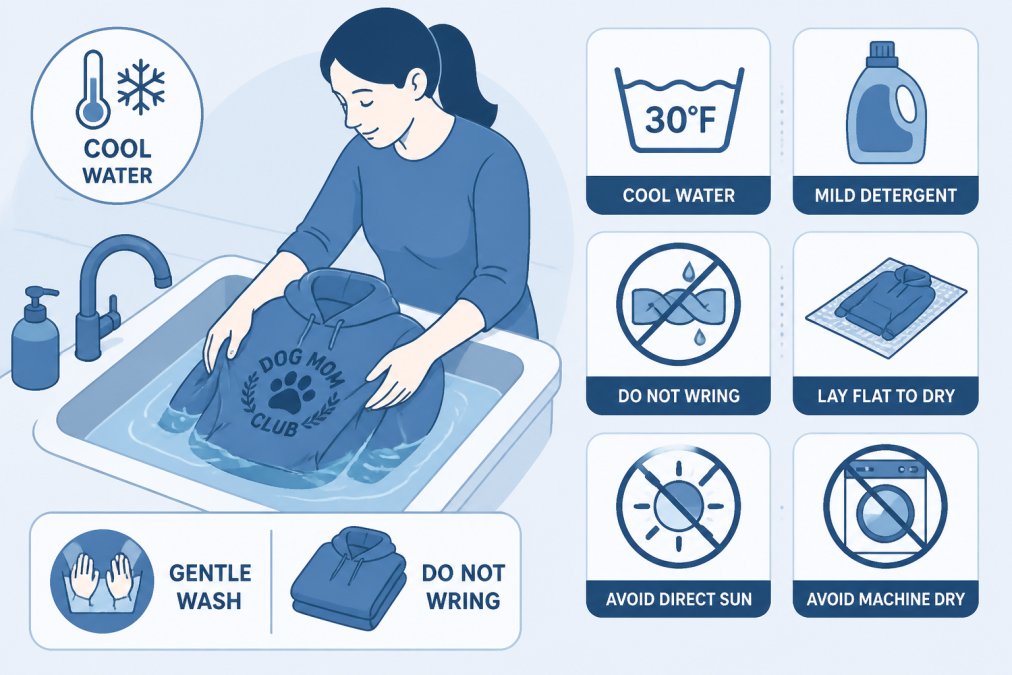
Pre-Purchase Care Assessment: Is This Hoodie Worth the Effort?
Before you commit to careful maintenance, assess whether the hoodie's construction justifies it. A ring-spun hoodie at 320 GSM rewards careful care with years of wearability. An open-end hoodie at 240 GSM will deteriorate regardless of care quality, so investing in gentle washing is wasted effort. Use these quick checks:
Check the yarn construction. Feel the fabric surface. If it feels rough or already slightly pilled, it's open-end cotton. Open-end hoodies don't justify careful care because they'll pill and deteriorate regardless. A smooth, consistent surface indicates ring-spun construction, which rewards maintenance.
Verify the GSM. If available, check the tag or product description. A hoodie under 260 GSM won't hold up long-term even with perfect care. A hoodie at 300+ GSM will reward careful maintenance with extended wearability. The sweet spot for care investment is 280-320 GSM ring-spun cotton.
Examine the seams. Look at stitching density and consistency. Loose or irregular stitching indicates lower-quality construction that won't benefit from careful washing. Tight, consistent stitching indicates the manufacturer invested in durability, making your care effort worthwhile.
If a hoodie fails these checks, use standard care (warm water, normal drying) and expect shorter lifespan. If it passes, invest in the detailed care practices below.
Washing Practices That Preserve Structure
Water temperature matters more than detergent choice. Cold water is ideal for colored hoodies because it minimizes dye bleeding and prevents the heat-induced shrinkage that weakens fibers. Warm water works for lighter colors but increases shrinkage risk even for pre-shrunk cotton. Hot water should be avoided entirely; it causes 2-3% additional shrinkage beyond the initial manufacturing shrinkage and accelerates color fading.
Wash inside-out to minimize fading and pilling on the visible surface. This simple step extends the visible lifespan significantly because the outer surface, which receives the most UV exposure and friction, stays protected during the wash cycle.
Detergent selection has real consequences. Use a gentle, pH-neutral detergent. Heavy-duty formulas contain surfactants that break down cotton fibers faster, reducing the hoodie's structural integrity over time. Avoid bleach entirely and use oxygen-based cleaners only for stubborn stains on white hoodies. These products weaken fibers and accelerate color fading.
Wash frequency affects durability more than most people realize. Washing every 2-3 wears (rather than after every wear) extends hoodie lifespan significantly. Cotton fibers weaken slightly with each wash cycle, so reducing wash frequency by 30% can extend lifespan by 1-2 years. If the hoodie doesn't smell or have visible stains, wearing it again is acceptable and extends its life.
Drying: Where Most Damage Occurs
Machine drying on high heat causes more damage than any other single practice. High heat causes shrinkage, speeds up color fading, and weakens fibers by breaking down the cellulose structure. A hoodie dried on high heat ages 2-3 times faster than one air-dried.
Air drying is significantly better. Hang the hoodie or lay it flat to dry. Hanging works for most hoodies, but laying flat is gentler on the shoulder seams and prevents the stretching that occurs over years of hanging. If you must use a dryer, use the lowest heat setting and remove the hoodie while still slightly damp. Overdrying weakens fibers and increases shrinkage beyond the initial manufacturing shrinkage.
Drying time correlates with fiber damage. A hoodie that takes 2 hours to air dry experiences less fiber stress than one that takes 6 hours. If air drying takes excessively long (in humid climates), using a dryer on low heat for 20-30 minutes is preferable to leaving the hoodie damp for hours, which encourages mildew and mold growth.
Storage and Seasonal Care
Fold rather than hang for long-term storage. Hanging stretches shoulder seams over time, gradually widening the hoodie. Folding preserves the original dimensions. For hoodies you wear frequently, hanging is acceptable because the wear cycle prevents permanent stretching.
Keep storage spaces cool and dry. Sunlight fades colors and can weaken fibers through UV exposure. Store hoodies in a cool, dry place away from direct sunlight. If storing for long periods (off-season), ensure the space is clean and dry; moisture encourages mildew and mold growth, which permanently damages the fabric.
Check stored hoodies monthly during off-season. Unfold and refold them in a different configuration to prevent permanent creases. This takes 30 seconds and prevents the fabric from developing permanent fold lines that weaken the structure.
Stain Treatment and Damage Prevention
Treat stains immediately. Fresh stains are easier to remove than set-in ones. Rinse with cold water first, then treat with a gentle stain remover. Avoid hot water, which can set protein-based stains (blood, sweat, food). For stubborn stains, soak in cold water with mild detergent for several hours before washing.
Inspect for damage before washing. Check for small holes, loose seams, or pulled threads. Washing can enlarge small damage. If you find damage, repair it before washing. A loose seam can become a large hole after one wash cycle if not addressed.
Pilling management extends visible lifespan. If pilling occurs (which indicates lower-quality open-end construction), use a fabric shaver or lint roller to remove pills gently. This doesn't repair the underlying construction problem, but it improves appearance. For quality ring-spun hoodies, pilling is minimal and rarely requires intervention.
Recognizing When a Hoodie Has Reached End-of-Life
Understanding when to stop investing care effort prevents wasted maintenance on hoodies that won't recover. A hoodie has reached functional end-of-life when:
- Seams are separating or torn. Once seams fail, the hoodie's structural integrity is compromised. Repair is possible but often costs more than replacing the hoodie.
- Fabric is thin or torn in high-wear areas. If the underarms or collar show thinning or small tears, the fabric has lost structural integrity. Further washing will enlarge these areas.
- Pilling is extensive and doesn't improve with shaving. Extensive pilling indicates the yarn structure has broken down. This is cosmetic damage, but it signals that the fabric is deteriorating internally.
- Shrinkage has made the hoodie unwearable. If a hoodie has shrunk more than 2-3% despite careful care, the cotton wasn't properly pre-shrunk. Further washing won't reverse this.
Quality cotton hoodies cared for properly should remain wearable for 3-5 years. If your hoodie reaches end-of-life sooner, the construction quality was lower than advertised. If it lasts longer, you've made a sound investment.
Tactile Testing: How to Assess Quality Before You Buy
If you're buying in person, tactile testing reveals quality that specifications alone can't convey. Your hands can detect ring-spun versus open-end construction, surface smoothness, and overall fabric quality within seconds.
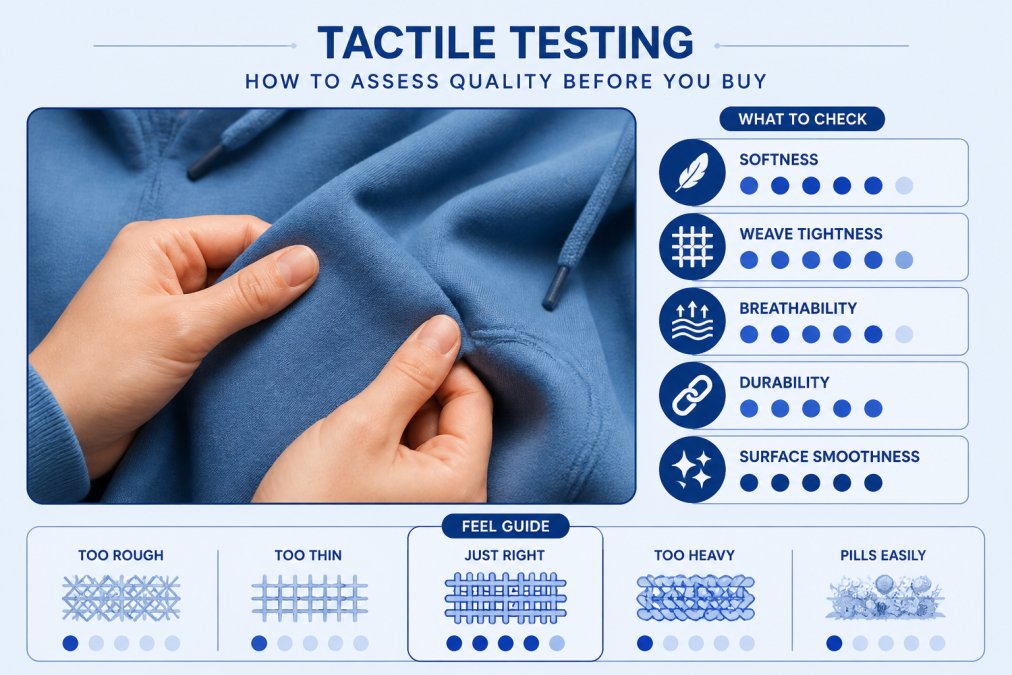
Feel the surface smoothness. Run your hand across the fabric in both directions. A ring-spun hoodie feels smooth and consistent. An open-end hoodie feels slightly rough, almost like the surface is already starting to pill. This isn't subjective, the difference is physically detectable. If the fabric feels rough or uneven, that's a sign of lower-quality construction.
Check for pilling. Rub the fabric firmly between your fingers. If pills form immediately, the fabric is low-quality open-end cotton. Quality ring-spun fabric resists pilling even with aggressive rubbing. This single test predicts how the hoodie will look after 20 washes.
Assess weight and density. Hold the hoodie and feel how substantial it is. A 320 GSM hoodie feels noticeably heavier than a 240 GSM version. Heavier doesn't always mean better, a 240 GSM ring-spun hoodie can outperform a 280 GSM open-end hoodie, but weight indicates fiber density, which correlates with durability.
Examine the print quality if it's a graphic hoodie. Look at the edges of the design, they should be sharp and clean. Run your finger across the printed area, it should feel smooth and bonded to the fabric, not sitting on top like a sticker. If the print feels raised or the edges are fuzzy, the print quality is compromised.
Check the seams. Look at the stitching on the collar, cuffs, and side seams. Quality hoodies use consistent, tight stitching with appropriate stitch density. Loose or inconsistent stitching suggests lower-quality construction. The seams should look straight and even, not wavy or irregular.
Feel the collar and cuffs. These high-wear areas should feel substantial and well-constructed. The collar should lay flat and maintain its shape. Cuffs should feel snug and consistent, not loose or bunched. These details predict how the hoodie will hold up over time.
These tactile tests take less than a minute but reveal more about quality than any specification sheet. If you're buying online, these tests become impossible, which is why established retailers with strong return policies matter more for quality purchases.
Long-Term Wear Analysis: What Happens After 50+ Washes
Understanding how hoodies age helps you predict whether your purchase will remain wearable or deteriorate. Real-world wear patterns are more informative than theoretical specifications.
After 10 washes, quality differences start becoming obvious. A ring-spun hoodie looks nearly identical to its initial state. An open-end hoodie shows visible pilling on the surface and possibly some color fading. The printed design on a quality hoodie remains sharp; on a budget hoodie, the edges might show slight cracking.
After 25 washes, the gap widens significantly. A quality ring-spun hoodie maintains its shape and appearance. The fabric still feels soft, the print remains intact, and the color is only slightly faded. An open-end hoodie looks noticeably worn, the surface is fuzzy from pilling, the print shows clear cracking, and the overall structure has started to weaken.
After 50 washes, the difference becomes dramatic. A quality ring-spun hoodie from a premium manufacturer looks like it's been worn 10 times. The fabric maintains its integrity, the print is essentially unchanged, and the color fading is minimal. An open-end hoodie looks tired, the surface is heavily pilled, the print is significantly cracked and faded, and the fabric has lost structural integrity. The underarms and collar show noticeable wear and thinning.
The factors that determine this trajectory are all measurable: fiber length, yarn construction, GSM, and finishing quality. These aren't subjective opinions, they're physical properties that directly predict durability. A hoodie made with ring-spun cotton at 320 GSM will outperform an open-end hoodie at 240 GSM by a massive margin over 50 washes.
This is why understanding quality markers matters. You're not paying for prestige or brand names, you're paying for physical properties that determine how long the hoodie remains wearable. After 50 washes, you'll either be grateful for that investment or regretting the money you spent on something that deteriorated.
Choosing the Right Cotton Hoodie for Your Needs
Different use cases demand different hoodie specifications. Understanding your actual needs prevents buying features you don't need or skipping features that would dramatically improve your experience.
For daily casual wear, a midweight ring-spun hoodie (280-320 GSM) in 100% cotton or a cotton blend works well. You need durability for frequent washing and wearing, but you don't need excessive warmth or specialized features. A quality hoodie in this category should last 2-3 years with normal care.
For active work (healthcare, outdoor jobs, sports), prioritize breathability and durability. A 100% cotton ring-spun hoodie in midweight construction maximizes moisture-wicking while maintaining strength. Fleece lining is optional unless you work in cold environments. The smooth surface matters for printability if you want a custom design.
For cold weather, heavyweight ring-spun cotton (350+ GSM) with fleece lining provides genuine insulation. The extra weight and lining offset the reduced breathability. You're prioritizing warmth over everything else, which is appropriate for the use case. Quality fleece lining is essential, poor lining defeats the purpose.
For graphic or custom designs, surface smoothness and print durability are priorities. A midweight ring-spun hoodie (300-320 GSM) provides the best balance of print quality and wearability. The smooth surface accepts ink cleanly, and the weight provides stability for the print layer. Avoid lightweight hoodies for graphic designs, the print won't last.
For gift-giving, quality matters more than specific features because you're betting on durability without knowing the recipient's exact preferences. A premium midweight ring-spun hoodie in a neutral color works for almost anyone. At Ortrends, our collections are designed with this in mind, each piece combines quality construction with meaningful designs that feel special enough to give as gifts.
The common thread across all use cases is ring-spun construction and appropriate weight. These two factors matter more than brand, price, or marketing claims. A $35 ring-spun hoodie at 300 GSM will outperform a $60 open-end hoodie at 250 GSM. Specifications predict performance far better than brand reputation.
Choosing quality cotton hoodies comes down to understanding the specific factors that determine durability and comfort: fiber construction, fabric weight, yarn spinning method, and finishing quality. These aren't abstract concepts, they're measurable properties that directly predict how your hoodie will perform after 50 washes, not just the first week.
The investment in a quality hoodie pays dividends every time you wear it. A ring-spun cotton hoodie at 320 GSM will feel better, last longer, and maintain its appearance far better than cheaper alternatives. For healthcare professionals, pet lovers, and anyone who values apparel that keeps up with their lifestyle, quality construction isn't a luxury, it's practical value.
At Ortrends, we focus on these quality markers because we know our customers wear their hoodies constantly. We combine premium ring-spun cotton with original designs that celebrate individuality, creating pieces that last years while looking great. When you're ready to invest in a hoodie that won't deteriorate after a few months of wear, Shop Now with Ortrends and experience the difference that quality construction makes.
Frequently Asked Questions
What is the best type of cotton for hoodies?
Ring-spun cotton is considered the best type for hoodies because the fibers are twisted together during processing, creating stronger, softer yarn with better durability. Combed cotton, which removes short fibers and impurities, also produces higher-quality hoodies with improved softness and reduced pilling. Look for hoodies labeled as ring-spun or combed cotton for superior hand feel and longevity compared to standard open-end cotton.
Does GSM matter when choosing a cotton hoodie?
Yes, GSM (grams per square meter) directly affects how a hoodie feels and performs. Lightweight hoodies are typically 200-250 GSM, midweight 280-320 GSM, and heavyweight 320+ GSM. Higher GSM indicates a denser, more durable fabric that resists pilling and maintains its shape longer. For a quality cotton hoodie you'll wear frequently, aim for at least 280 GSM to ensure it withstands regular washing and wear without thinning out.
Are 100% cotton hoodies better than polyester blends?
100% cotton hoodies offer superior breathability, softness, and comfort against skin, making them ideal for everyday wear and warmer climates. However, polyester blends (typically 50/50 or 60/40 cotton-polyester) provide better durability, shape retention, and shrinkage resistance. The best choice depends on your priorities: choose 100% cotton for maximum comfort and breathability, or a cotton blend if you want easier care and longer-lasting shape.
How do I know if a cotton hoodie is good quality before buying?
Assess quality by checking the fabric weight (aim for 280+ GSM), examining the fiber type (ring-spun or combed cotton is best), and inspecting the stitching for tight, even seams. Feel the fabric's hand feel for softness and smoothness, and look for a dense weave without visible gaps. Read customer reviews mentioning durability after multiple washes, and check whether the hoodie has reinforced seams at stress points like sleeves and drawstrings.
What causes cotton hoodies to shrink, and how can I prevent it?
Cotton naturally shrinks when exposed to heat and agitation during washing and drying. To prevent shrinkage, wash your hoodie in cold water on a gentle cycle, avoid high heat in the dryer (use low heat or air dry instead), and remove it promptly to prevent wrinkles. Pre-shrunk cotton hoodies minimize this issue, so look for labels indicating pre-shrinking. Proper care can reduce shrinkage to 2-3% or less, preserving your hoodie's fit and longevity.
How long does a quality cotton hoodie typically last?
A quality cotton hoodie made from ring-spun or combed cotton with proper care can last 3-5 years or more. After 50+ washes, high-quality hoodies maintain their shape, color, and softness, while lower-quality versions may show pilling, fading, or fabric thinning. Factors affecting longevity include initial fabric weight (280+ GSM), fiber type, construction quality, and how you care for it. Investing in a well-made hoodie pays off through extended wear life.
This article was written using GrandRanker