

How to Keep Graphic Prints From Cracking
Table of Contents
- Why Do Graphic Tees Crack
- Print Type Differentiation: Screen Print vs. Direct-to-Garment
- How to Wash Graphic Tees Without Damaging Prints
- Air Dry vs. Machine Dry Graphic Tees
- Storage and Handling: Preventing Peeling and Cracking
- How to Fix Cracked Screen Print Designs
- Ironing Graphic Tees Safely
- Your Graphic Tee Care Routine at a Glance
- Conclusion
Last Updated: August 7, 2026
Why Do Graphic Tees Crack
Graphic tees crack because prints sit on top of fabric rather than becoming part of it. Every wash, wear, and movement stresses the ink or transfer layer. Heat and friction are the primary culprits, machine drying combines high temperatures with tumbling action that breaks the bond between print and fabric, while washing agitation wears away at design edges.
Heat and friction as primary culprits
Machine drying is particularly damaging. The drum tumbles clothes for 30-60 minutes at temperatures exceeding 130°F, causing the print to flex repeatedly while heat accelerates adhesive breakdown. Washing also creates friction, vigorous agitation rubs fibers against the design, wearing away edges and surface. Turning garments inside-out shields the printed side from direct contact with the agitator and other clothes.
How water hardness affects print durability
Hard water contains dissolved minerals that bind to detergent instead of dissolving into water, leaving less detergent available to clean. Excess residue weakens the print bond, and mineral deposits on fibers make fabric stiffer and more prone to cracking at stress points.
If you live in an area with hard water, use a water softener in your washing machine or add a commercial water-softening agent. These products precipitate out minerals, allowing detergent to work effectively and reducing residue that degrades prints.
Print Type Differentiation: Screen Print vs. Direct-to-Garment
Not all graphic prints are created equal. Screen prints, direct-to-garment (DTG) prints, and heat transfer vinyl (HTV) have different durability profiles and optimal care routines.
Screen Print
Screen printing pushes thick ink layers directly onto fabric. The ink sits on top rather than bonding into fibers, making designs vibrant but prone to cracking if flexed or exposed to high heat.
Key vulnerabilities: Cured ink becomes brittle over time, making older designs susceptible to cracking at stress points. Fine details are more vulnerable than solid prints.
Optimal care: Wash inside-out in cold water on a gentle cycle. Air dry exclusively, machine drying causes the cured ink to contract and expand at different rates than fabric, creating micro-cracks. Avoid folding across the design; hang whenever possible. Screen prints typically last 50-100+ washes with proper care, but fail within 10-15 washes if machine-dried regularly.
Direct-to-Garment (DTG) Print
DTG uses inkjet technology to spray ink directly onto fabric. The thinner ink bonds more closely with fibers, creating a softer feel and design that seems part of the shirt.
Key vulnerabilities: DTG prints fade more easily with repeated washing and sun exposure because the ink is thinner. Color bleeding can occur in the first 3-5 washes if washed in hot water or with dark garments.
Optimal care: Wash inside-out in cold water on a gentle cycle with mild detergent. Air dry to avoid heat damage. DTG typically lasts 40-80 washes before noticeable fading occurs.
Heat Transfer Vinyl (HTV)
HTV is a thin, colored plastic film cut into a design shape and heat-pressed onto fabric. It's the most heat-sensitive print type and can peel away entirely if the adhesive bond fails.
Key vulnerabilities: High dryer temperatures, direct iron contact, or prolonged sunlight exposure can cause the vinyl to shrink, curl, or peel. HTV cracks and peels at stress points like necklines and armholes because the vinyl is less flexible than fabric.
Optimal care: Wash inside-out in cold water on a delicate cycle. Never machine dry; air dry exclusively. Do not iron directly over HTV. Avoid folding across the design. HTV typically lasts 25-50 washes before visible peeling begins.
Quick Reference: Print Type Durability and Care
| Print Type | Durability (Washes) | Primary Failure Mode | Heat Sensitivity | Wash Temperature | Drying Method |
|---|---|---|---|---|---|
| Screen Print | 50-100+ | Cracking at edges | High | Cold only | Air dry only |
| DTG | 40-80 | Fading and color bleed | Medium | Cold only | Air dry preferred |
| HTV | 25-50 | Peeling and curling | Very High | Cold only | Air dry only |
When in doubt, treat the shirt as screen print or HTV, the most restrictive care routine will protect any print type.
How to Wash Graphic Tees Without Damaging Prints
Your washing routine determines whether graphic tees last six months or three years. Most people wash graphic tees like regular clothes, which accelerates cracking and fading.
Step 1: Wash inside-out in cold water
Turn your graphic tee inside-out before washing. This shields the printed side from direct contact with the agitator, other clothes, and friction. Use cold water, never warm or hot. Cold water reduces print material expansion and contraction, which weakens adhesion, and prevents color bleeding and fading.
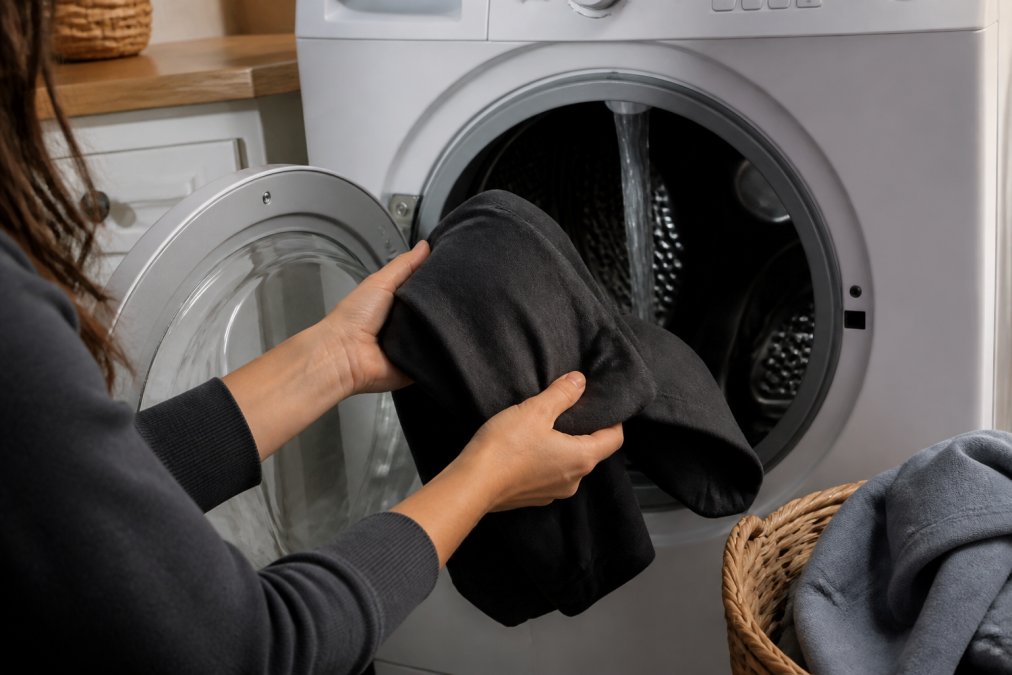
Step 2: Use a gentle cycle and mild detergent
Select the gentle or delicate cycle. This uses slower agitation and shorter wash times, reducing mechanical stress on fabric and print. Choose mild detergent labeled for delicates. Avoid heavily perfumed or enzyme-based detergents, which break down print material or fade colors. Use the recommended amount or slightly less.
If your water is hard, add a water-softening agent to help detergent work effectively and reduce mineral buildup that degrades prints.
Step 3: Skip fabric softener and bleach
Fabric softeners coat fibers with a slippery layer that weakens the print-to-fabric bond, making peeling more likely. Bleach breaks down both fabric and ink, causing fading and accelerated cracking. Never use either on graphic tees.
Step 4: Use a mesh laundry bag for extra protection
Place your graphic tee inside a mesh laundry bag before washing. The bag creates a barrier between your shirt and the agitator, other clothes, and friction. Mesh bags are inexpensive, reusable, and one of the easiest ways to add protection.
Air Dry vs. Machine Dry Graphic Tees
The drying method has as much impact on print longevity as the washing routine.
Why tumble drying causes heat damage
Machine drying applies sustained heat and friction for 30-60 minutes. Tumbling flexes the print repeatedly while heat causes the print material and fabric to expand and contract at different rates, creating stress at design edges where cracking begins. Even low-heat settings are problematic because extended time multiplies damage.
Best practices for air drying
Hang your graphic tee on a clothesline, drying rack, or hanger. This eliminates both heat and friction damage entirely. Air drying takes 4-8 hours depending on humidity and airflow, but graphic tees air-dried consistently last 2-3 times longer than those machine-dried.
Hang the shirt by the shoulders or sides, not the hem. Avoid direct sunlight when possible, especially for darker colors or multi-color designs. UV exposure fades prints and makes ink brittle.
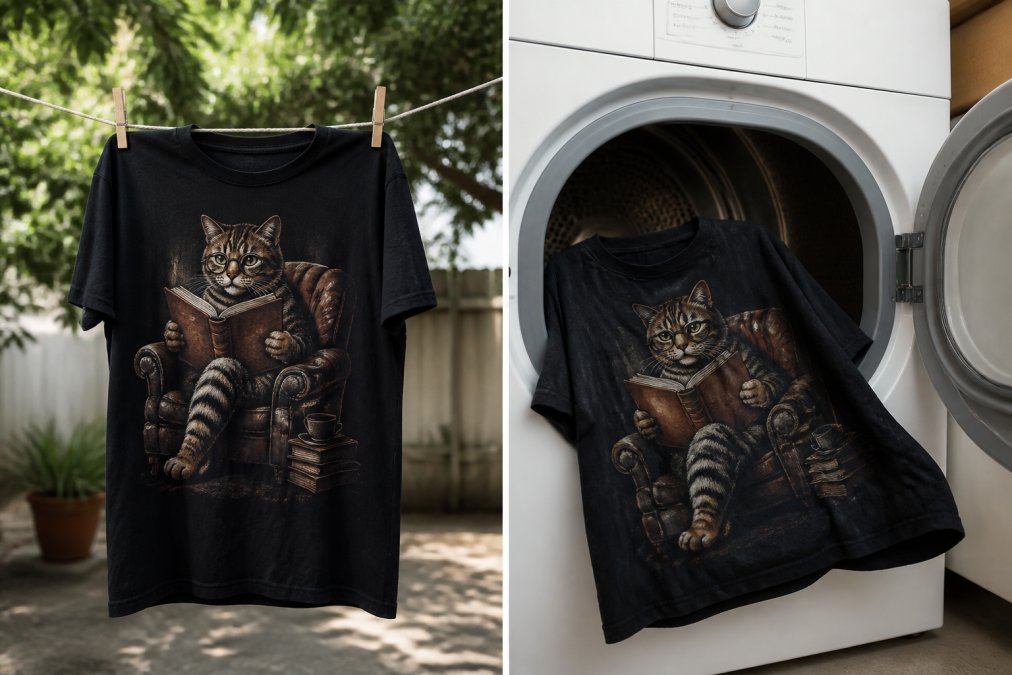
Air drying is the gold standard. It's free, requires only a hanger, and eliminates the two biggest sources of print damage.
Storage and Handling: Preventing Peeling and Cracking
How you store graphic tees between wears matters as much as washing and drying.
Proper folding techniques
Fold carefully to avoid creating stress points on the print. Fold along the sides rather than across the chest or design. For large designs, hang the shirt instead. Store folded shirts in a cool, dry place with good air circulation. Avoid plastic bins or airtight containers, which trap moisture. Use breathable storage boxes or open shelving.
Stack folded shirts loosely so they're not compressed under other garments' weight. Compression creates permanent creases that become stress points where prints crack.
Avoiding direct sunlight and humidity
Sunlight fades prints and makes ink brittle. Store graphic tees away from windows or direct sunlight. High humidity promotes mildew and color bleeding. Aim for storage around 50% humidity. Keep storage areas at consistent temperature, avoid attics, basements, or areas near heating vents where temperature fluctuates.
How to Fix Cracked Screen Print Designs
If your graphic tee shows cracking, you have several options depending on damage severity.
Assessing Damage Severity and Progression
Stage 1 (Minor): Hairline cracks appear at design edges or detailed areas. The print still adheres fully. Stage 2 (Moderate): Visible breaks in the ink layer with slight peeling at edges. The adhesive bond is weakening. Stage 3 (Severe): Large areas of peeling, flaking, or complete separation. The shirt is nearing the end of its wearable life.
Stage 1 Intervention: Stabilizing Early Cracks
Fabric glue method: Apply flexible fabric adhesive (such as Aleene's Tacky Glue or Beacon Fabri-Tac) along crack edges. These remain flexible after drying, which is critical, rigid adhesives will crack again. Clean the area gently first to remove loose ink or debris. Apply a thin, even adhesive line, pressing the print back down onto fabric. Allow to dry completely (typically 24 hours) before wearing or washing. This works best for cracks at design edges where the print is largely intact.
Heat-setting method: For relatively new shirts with minor cracks, carefully applying low heat with an iron on the back side (with a pressing cloth barrier) at around 230°F for 10-15 seconds can help re-bond ink. This is risky and should only be attempted if the print is already failing. Do not use this method on heat transfer vinyl or DTG prints.
Realistic expectations: These interventions extend shirt life by 5-15 additional washes but are not permanent solutions. The underlying adhesive failure continues, and cracks will likely reappear.
Stage 2 Intervention: Camouflaging Moderate Damage
Fabric paint camouflage: For small, localized cracked areas, paint over them with fabric paint matching the original design color. Use a small brush and apply thin layers, allowing each to dry. This won't restore the original appearance but makes damage less noticeable. This works best for solid-color designs.
Patch method: For larger damaged areas, apply a fabric patch over the cracked section. Cut a patch from matching or complementary fabric, fray edges slightly to blend, and glue or stitch it over the damaged area. This is visible but can look intentional if done thoughtfully.
Acceptance and repurposing: Once moderate damage occurs, accept the cosmetic imperfection and wear the shirt in lower-stakes situations, as a sleep shirt, gym shirt, or work shirt. This extends garment life and keeps it out of the landfill.
When Professional Repair Makes Sense
For high-value or sentimental shirts, professional screen print repair or re-printing may be worth the cost ($25-$50 per garment). Some custom apparel shops offer repair services where they carefully remove the damaged print and apply a new one. Ask about their process before committing.
Prevention: Catching Problems Before They Start
Once you notice the first signs of cracking, adjust your care routine immediately. Switch to air drying exclusively, reduce wash frequency if possible, and consider using a mesh laundry bag. These changes can halt early-stage cracking progression and extend shirt life significantly.
End-of-Life Repurposing
Once a graphic tee reaches severe cracking or peeling, don't throw it away. Cut out sections with intact design to make patches for other garments, tote bags, or quilts. Use plain fabric areas for rags or cleaning cloths. Some people collect old graphic tees and turn them into t-shirt quilts, preserving designs in a new form.
Ironing Graphic Tees Safely
If your graphic tee needs pressing, approach it carefully. Never iron directly over the printed area. If pressing is necessary, iron the back side or plain areas only. Set your iron to low temperature and use a pressing cloth to create a barrier.
For shirts with large prints covering most of the garment, skip ironing entirely. Hang the shirt while slightly damp from washing, and it will dry wrinkle-free. If wrinkles are unavoidable, use a steamer instead of an iron, steamers apply heat and moisture from a distance, which is gentler on prints.
Your Graphic Tee Care Routine at a Glance
| Step | Action | Why It Matters |
|---|---|---|
| Before washing | Turn inside-out, use mesh bag | Protects print from friction and agitation |
| Wash cycle | Cold water, gentle cycle, mild detergent | Reduces heat stress and chemical damage |
| Avoid | Fabric softener, bleach, hot water | These weaken print adhesion and fade colors |
| Drying | Air dry on hanger or clothesline | Eliminates heat and friction damage |
| Storage | Cool, dry place away from sunlight | Prevents fading and humidity damage |
| Ironing | Never directly over print; use low heat | Protects ink from heat damage |
Graphic tees from Ortrends are made with premium materials and high-quality prints designed to last. But even the best prints need proper care. Follow this routine, inside-out washing, cold water, gentle cycle, and air drying, and your favorite designs will stay vibrant and crack-free for years. Start with one of our Work Hard Love Harder or Quality Never Fades designs, and protect your investment with the care routine outlined here. Your shirt will thank you.


Frequently Asked Questions
How to stop graphics from cracking?
Wash graphic tees inside-out in cold water using a gentle cycle and mild detergent. Air dry instead of machine drying, and avoid direct sunlight during storage. Skip fabric softeners and bleach, which break down print fibers. Use a mesh laundry bag for extra protection against friction. These steps reduce heat exposure and fiber stress, the two main causes of cracking.
Does washing inside out prevent graphic cracking?
Yes. Washing inside-out protects the print from direct friction with other garments and reduces surface-level wear. Combined with a gentle cycle and cold water, inside-out washing significantly extends print longevity. This is especially effective for screen-printed designs, which are more prone to peeling when exposed to agitation during the wash cycle.
Can you fix a cracked graphic print on a t-shirt?
Minor cracks can be temporarily stabilized using fabric glue applied carefully to the underside of the print, but this is not a permanent fix. For larger cracks or peeling, the damage is usually irreversible once the print begins to separate from the fabric. Prevention through proper washing, drying, and storage is far more effective than attempting repairs after cracking occurs.
Why does heat cause graphic prints to crack?
Heat causes the ink or emulsion in screen-printed designs to become brittle and lose flexibility. When the fabric shrinks or flexes during wear, the hardened print cannot move with it, causing it to crack and peel. Machine drying, direct sunlight, and high-temperature washing all accelerate this process. Cold water and air drying preserve the print's elasticity and durability.
This article was written using GrandRanker