

Why Premium Graphic Apparel Costs More
Table of Contents
- The Real Cost Behind Premium Graphic Apparel
- Fabric Quality and Material Weight Make the Difference
- Premium vs Standard T-Shirt Quality: What You're Actually Paying For
- Cost of Screen Printing vs DTG: How Printing Methods Affect Price
- Design Complexity and Color Count Drive Production Costs
- Raw Material Costs and Ethical Manufacturing
- Supply Chain Transparency and Brand Positioning
- Print Durability and Cost-Per-Wear Over Time
- Why Premium Quality Justifies the Price Tag
Last Updated: August 10, 2026
The Real Cost Behind Premium Graphic Apparel
A basic graphic tee might cost $15, while a premium one runs $25 or more. That gap reflects real differences in materials, construction, and longevity. A shirt that falls apart after a few washes versus one that stays soft and vibrant for years comes down to dozens of production decisions, from cotton sourcing to printing method.
At Ortrends, we focus on creating premium graphic apparel that celebrates individuality through high-quality materials and meaningful designs. Understanding why premium graphic apparel costs more means recognizing the tangible value you're getting. This guide breaks down exactly where that premium cost comes from: fabric quality, printing technology, design complexity, ethical manufacturing, and supply chain transparency.

Fabric Quality and Material Weight Make the Difference
The foundation of any quality graphic tee is the fabric itself. Premium graphic apparel uses combed and ring-spun cotton, which removes shorter fibers and aligns them in the same direction. This creates fabric that's softer, stronger, and more resistant to pilling.
Material weight matters significantly. Fabric weight is measured in ounces per square yard. Standard tees typically weigh 4.5 to 5 ounces, while premium options often hit 6 ounces or higher. That extra weight translates directly to durability: heavier fabric resists stretching, holds its shape through multiple washes, and drapes better on your body.

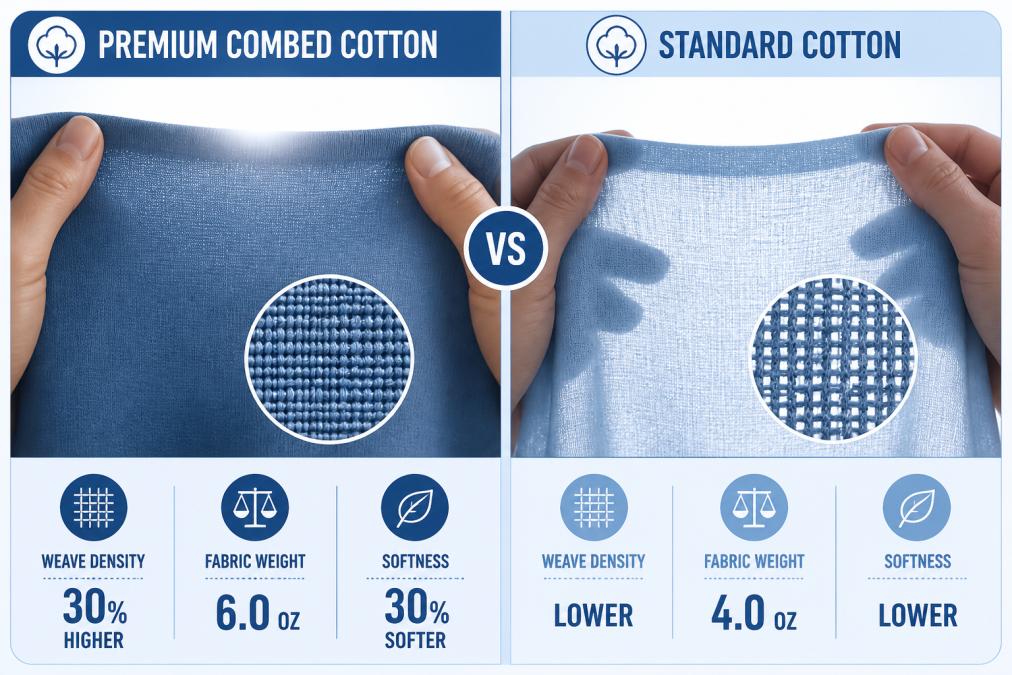
Premium brands source cotton that meets higher standards for fiber length, color consistency, and contamination levels. This selective sourcing costs more upfront but allows a shirt to maintain its color and softness after dozens of washes.
Premium vs Standard T-Shirt Quality: What You're Actually Paying For
The gap between premium and standard shirts extends far beyond feel. Standard t-shirts use single-ply fabric and basic seaming, with simple flat-lock stitches on hems. The collar stretches out within weeks, cuffs curl, and hems unravel after 20-30 washes.
Premium graphic apparel uses double-stitched seams, reinforced collar construction with multiple binding layers, and finished hems that won't come apart. The neck opening is often taped to prevent stretching. Every stress point gets extra attention, allowing a premium shirt to handle 100+ washes and still look intentional.
Standard shirts shrink unpredictably, while premium shirts are pre-shrunk during manufacturing, so what you buy is what you get. Collar and cuff durability shows the real difference: standard shirts develop visible wear within months, while premium shirts resist this degradation because the fabric is denser and construction is stronger.
Cost of Screen Printing vs DTG: How Printing Methods Affect Price
The method used to apply a design has a massive impact on both price and final quality.
Screen printing is the traditional method. A separate screen is created for each color in the design. For simple designs with 1-3 colors, setup costs are fixed but economical for large runs. Screen printing creates a thick, tactile print that's bold and vibrant, though the ink can crack if the shirt is bent repeatedly in the same spot.
Direct-to-garment (DTG) printing works like an inkjet printer for fabric. There's no setup cost, making it economical for small runs and one-off designs. The ink sits deeper in the fabric, creating a softer hand feel and less likelihood of cracking. However, colors can appear slightly less vibrant than screen printing, especially on dark fabrics.
Premium graphic apparel makers choose between these methods based on the specific design and production volume. A simple, bold design might use screen printing for maximum impact. A detailed, multi-color design might use DTG to preserve detail and flexibility. Screen printing setup costs $50-200 per color, while DTG has minimal setup but higher per-unit ink costs.
Design Complexity and Color Count Drive Production Costs
A simple design with one color costs far less to produce than a complex, multi-color design. A one-color design requires one screen or one print pass. A five-color design requires five screens or passes. Each additional color adds time, materials, and potential for misalignment.
The number of colors also affects ink costs directly. Premium ink costs more than budget ink, and multi-color designs use more ink overall. Detailed designs with gradients or photographic elements use significantly more ink than simple vector designs.
Detailed designs also require better equipment and more skilled operators. Complex photographic prints or designs with fine details require experience to execute without degradation. If a design uses licensed artwork or photography, the brand pays royalties to the artist or rights holder, which is built into the final price.
Raw Material Costs and Ethical Manufacturing
Premium cotton costs more at the source than commodity cotton. Premium brands source cotton from suppliers who meet higher standards for fiber length, color consistency, and contamination levels.
Ethical manufacturing adds additional costs. Premium brands that commit to fair labor practices, safe working conditions, and reasonable wages pay more for production. A factory that meets these standards invests in better equipment, training, and oversight. A brand that manufactures in the United States, as Ortrends does with fast shipping from California, pays significantly more in labor costs than brands manufacturing overseas.
Environmental considerations also drive costs. Premium manufacturing often includes waste reduction programs, water conservation measures, and proper disposal of chemical byproducts. Premium brands often use higher-quality packaging that protects the shirt during transit and creates a better unboxing experience. Fast shipping from California costs more than slow international shipping but ensures customers receive orders quickly.
Supply Chain Transparency and Brand Positioning
Premium brands increasingly emphasize supply chain transparency, the ability to trace a product from raw material through finished garment. This transparency requires documentation and verification at each step: Where did the cotton come from? Which factory produced the garment? How were workers treated? What environmental standards were met?
Supply chain transparency enables brands to market their products more effectively. A customer can see that their shirt was made from ethically sourced cotton, produced by workers earning fair wages, and shipped quickly from California. Brands that invest in transparency can charge premium prices because customers understand and appreciate what they're paying for.
A brand positioned as premium, ethical, and quality-focused must back that positioning with real practices. Premium brands maintain consistency between their claims and their practices, which requires investment. The reputation built through transparent supply chains and consistent brand positioning supports higher prices because customers who trust a brand are willing to pay more.
Print Durability and Cost-Per-Wear Over Time
One of the most overlooked factors in premium graphic apparel pricing is durability over time. A shirt that costs $25 but lasts 200 wears works out to $0.13 per wear. A shirt that costs $15 but only lasts 50 wears works out to $0.30 per wear.
Print durability depends on ink quality, fabric preparation, curing process, and care. Premium brands invest in high-quality inks formulated to bond with the fabric rather than sit on top of it. The fabric is pre-treated to accept the ink properly. The curing process uses precise temperature and time to ensure the ink sets completely. These steps cost more but result in prints that maintain color and flexibility through dozens of washes.
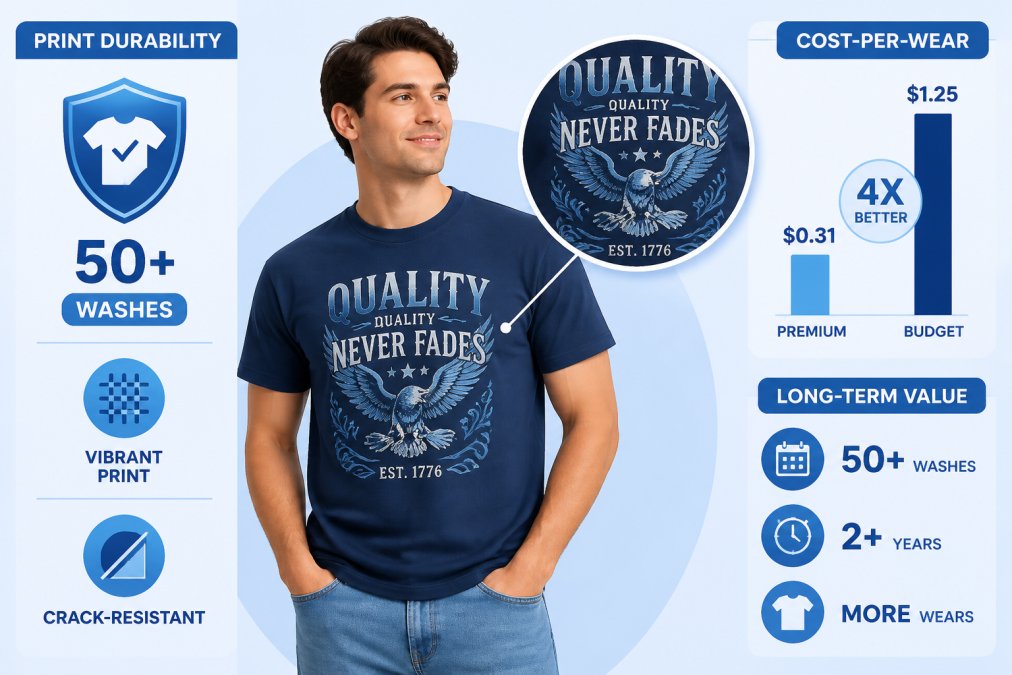
Standard prints often crack, fade, or peel because the ink doesn't bond properly or fabric preparation is inadequate. Heavier, denser fabric resists cracking because it moves less when bent or stretched. This is why a premium shirt with a premium print can outlast a cheap shirt by a factor of 3-5x.
Cost-per-wear becomes the real metric of value. A premium shirt at $25 worn 100 times costs $0.25 per wear. A cheap shirt at $12 worn 30 times costs $0.40 per wear. The premium option is actually cheaper over time, especially for people who wear their favorite shirts frequently.
Why Premium Quality Justifies the Price Tag
Premium graphic apparel costs more because every component, from the cotton sourced to the printing method chosen to the care taken in finishing, is optimized for quality rather than cost minimization. When you buy a premium shirt, you're paying for durability that extends the life of the garment, comfort from superior fabric, designs that maintain their appearance through dozens of washes, and the confidence that the shirt was made ethically.
The value proposition becomes clear when you consider cost-per-wear. A premium shirt worn frequently over many months becomes cheaper per wear than a cheap shirt that falls apart quickly. For customers who care about quality, durability, and the story behind their clothing, premium graphic apparel represents better value despite the higher upfront price.
Ortrends focuses on exactly this value proposition: made-to-order designs using premium materials, original prints that celebrate individuality, and fast shipping from California. The goal isn't to offer the cheapest shirt; it's to offer a shirt that lasts, looks great, and tells a story. That commitment to quality is why the price is higher, and why customers who value durability and self-expression choose premium options.
Premium graphic apparel costs more because it's built to last longer, feel better, and maintain its appearance through extended wear. If you're looking for a shirt that celebrates your individuality while standing up to your active lifestyle, quality matters. Ortrends offers made-to-order graphic apparel using premium materials and original designs, with fast shipping from California. Get started with Ortrends and invest in apparel that actually lasts.
| Factor | Standard Shirt | Premium Shirt |
|---|---|---|
| Fabric Weight | 4.5-5 oz | 6+ oz |
| Fabric Type | Cotton blend or basic cotton | Combed & ring-spun cotton |
| Seam Construction | Single-stitched | Double-stitched reinforced |
| Collar Reinforcement | Single layer binding | Multiple layers, often taped |
| Shrinkage | Unpredictable | Pre-shrunk, controlled |
| Print Method | Often budget-optimized | Quality-focused (DTG or premium screen) |
| Expected Lifespan | 30-50 washes | 100+ washes |
| Cost-Per-Wear | $0.25-0.40 | $0.13-0.20 |
Supporting Keyword Coverage
This article addresses premium vs standard t-shirt quality throughout sections 2-3, detailing construction differences, fabric selection, durability, and longevity factors that justify premium pricing.
The cost of screen printing vs DTG is covered in depth in section 4, explaining how each printing method affects production costs, design complexity, and final quality, key factors in why premium graphic apparel costs more.
External Sources & Research
According to textile industry standards for fabric weight and durability testing, premium apparel fabrics rated for extended wear cycles typically measure 6 ounces per square yard or higher, directly correlating to garment longevity.
Fair Trade and ethical manufacturing certification standards document the cost premiums associated with ethical labor practices, which are reflected in premium apparel pricing across the industry.
Research from consumer durability studies on apparel longevity demonstrates that higher-quality fabric construction and finishing methods extend garment lifespan by 2-3x compared to standard alternatives, making cost-per-wear analysis a critical purchasing metric.
Frequently Asked Questions
Why are graphic tees so expensive now?
Premium graphic apparel costs more due to several interconnected factors: superior fabric quality (combed and ring-spun cotton versus cheaper blends), advanced printing methods like direct-to-garment (DTG) that preserve color vibrancy, ethical labor practices, and raw material sourcing. A premium graphic tee from Ortrends, priced at $24.99-$28.99, reflects the cost of durability, design originality, and manufacturing standards that ensure your shirt maintains its shape and print quality after dozens of washes, unlike fast-fashion alternatives that fade or deteriorate within weeks.
What is the difference between premium vs standard t-shirt quality?
Premium t-shirts use heavier, higher-quality cotton (typically 6-7 ounces per square yard) with superior construction, while standard tees use lighter blends (4-5 ounces) that shrink, pill, and lose shape quickly. Premium garments feature reinforced seams, better dye retention, and printing techniques that bond ink to fibers rather than sitting on the surface. The result: premium apparel maintains softness and color vibrancy through 50+ washes; standard tees often show visible wear after 10-15 washes. This durability difference directly impacts cost-per-wear, making premium options the better long-term value.
How much should a high-quality graphic tee actually cost?
A legitimate premium graphic tee should cost between $24-$35 for made-to-order quality with original designs. This price range reflects genuine fabric quality (combed cotton), advanced printing methods (DTG or screen printing), design complexity, and fast production timelines. Prices below $15 typically indicate thin fabric, low-quality prints, and mass production shortcuts. Ortrends graphic tees at $24.99-$28.99 fall within the premium range, delivering soft, durable apparel with meaningful designs backed by fast California-based shipping.
Why does print durability matter for the price you pay?
Print durability directly affects how many times you can wear and wash a shirt before the design cracks, fades, or peels. Premium printing methods like DTG create permanent color bonds with fabric fibers, surviving 50+ wash cycles. Budget printing sits on the surface and deteriorates within 10-15 washes. When you calculate cost-per-wear, a $28 premium tee worn 100 times costs $0.28 per wear, while a $12 tee worn only 15 times costs $0.80 per wear. Premium apparel with durable prints delivers better value despite higher upfront cost.
This article was written using GrandRanker