

Benefits of Wearing Comfortable Graphic Hoodies
Table of Contents
- Why Comfort Matters: The Psychological and Physical Benefits
- Graphic Hoodies as a Form of Personal Expression
- Fabric Quality and Material Composition: What to Look For
- How to Style Graphic Hoodies for Everyday Wear
- Layering Techniques for Seasonal Transitions
- Durability and Wash-Resistance: Making Your Hoodie Last
- How to Care for Graphic Apparel: Print Longevity Tips
- Best Quality Graphic Hoodies for Gifts: What to Look For
- Hoodies vs. Sweatshirts: Key Differences
- Conclusion
- Frequently Asked Questions
Last Updated: September 12, 2026
Why Comfort Matters: The Psychological and Physical Benefits
The benefits of wearing comfortable graphic hoodies start with how they make you feel, not just how they look. A hoodie that fits well and feels soft against your skin reduces daily friction, and that small reduction in irritation adds up over a long shift, a travel day, or a weekend of errands. According to the American Psychological Association's research on clothing and mood, what we wear can measurably influence our emotional state and confidence. This guide from Ortrends breaks down what actually makes a comfortable hoodie worth owning, from fabric weight to print durability.
Comfort is not a luxury detail. It is the foundation of a garment you will actually reach for.
The psychological side matters as much as the physical. Wearing something soft and familiar creates a sense of security and safety that helps you settle into your day. Stress reduction from comfortable clothing is real, and it shows up in how relaxed you feel in social settings, at work, or at home. The tactile experience of heavyweight cotton against your skin signals comfort before you even think about it.
Physical comfort comes down to three things: fabric weight, fit and silhouette, and breathability. A hoodie that traps heat or restricts movement works against you. One that moves with your body and regulates temperature works for you all day.
Graphic Hoodies as a Form of Personal Expression
Personal expression through clothing is one of the fastest ways to communicate who you are without saying a word. Graphic hoodies carry a design, a message, or a piece of your identity on your chest, and that visibility matters. A nurse who wears a hoodie celebrating their profession, a pet owner with a design featuring their favorite breed, or anyone who simply loves a bold print all use the same tool: the graphic itself.
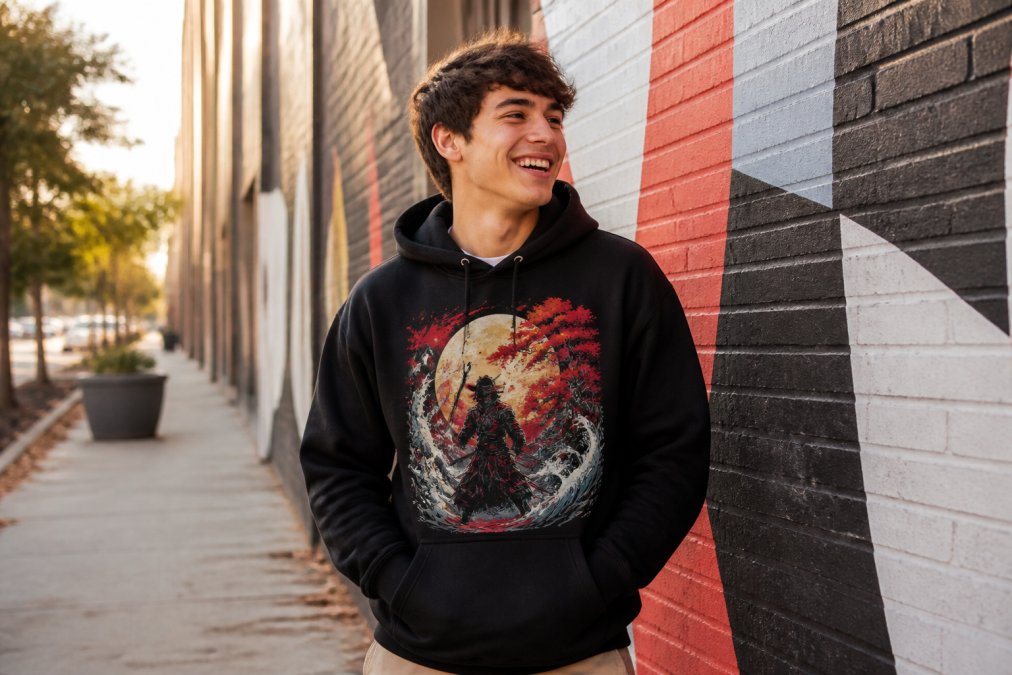
Streetwear aesthetic has pushed graphic hoodies into the mainstream, but the appeal runs deeper than trend cycles. Original and meaningful prints let you signal belonging to a group, a hobby, or a value system. That is why designs tied to specific identities, like nursing or pet ownership, tend to sell well: they feel personal in a way a plain hoodie never can.
The best graphic hoodies do two jobs at once. They look good, and they say something true about the person wearing them. When a print is original rather than mass-produced, that authenticity shows.
Fabric Quality and Material Composition: What to Look For
Fabric quality decides whether a graphic hoodie lasts one season or five. The two numbers that matter most are fabric weight and fiber content. Fabric weight is measured in grams per square meter, and heavier fabrics generally hold their shape better and feel more substantial. Heavyweight cotton, typically in the 300 to 400 GSM range, resists stretching at the cuffs and hem far better than lighter alternatives.
Material composition is the second half of the equation. Cotton offers softness and breathability. Polyester blends add durability and moisture-wicking properties, which helps during physical activity or warm weather. A cotton-poly blend often strikes the best balance for everyday wear.
| Fabric Type | Weight Range | Best For | Trade-Off |
|---|---|---|---|
| Lightweight cotton | 200-250 GSM | Warm weather, layering | Less shape retention |
| Midweight blend | 250-300 GSM | Everyday wear | Moderate durability |
| Heavyweight cotton | 300-400 GSM | Cool weather, structure | Slower to dry |
| Fleece-lined | 350-450 GSM | Cold climates | Bulkier fit |
Textile quality also shows up in the details: reinforced stitching at stress points, a lined hood, and ribbed cuffs that snap back after washing. These are the markers of garment construction that separate a hoodie you keep from one you donate.
How to Style Graphic Hoodies for Everyday Wear
Styling a graphic hoodie well comes down to balancing the boldness of the print with the rest of your outfit. Because the hoodie is the loudest piece, keep everything else simple. Neutral bottoms, clean sneakers, and minimal accessories let the design do the talking.
For everyday wear, these combinations work reliably:
- Graphic hoodie with straight-leg jeans and white sneakers
- Oversized hoodie with leggings and chunky boots
- Fitted hoodie with joggers and a crossbody bag
- Hoodie under a denim or bomber jacket with tapered trousers
Fit profile matters here. An oversized hoodie reads relaxed and casual; a fitted one reads sharper. Neither is wrong, but they send different messages. Match the fit to the setting.
For smart-casual environments, a graphic hoodie in a solid, muted base color with a smaller chest print reads more polished than a full-front bold graphic. Layer it under a structured jacket and pair it with chinos instead of sweatpants. The goal is to keep the hoodie as the accent, not the whole outfit.
Layering Techniques for Seasonal Transitions
Layering is how a graphic hoodie earns its place in your wardrobe across more than one season. In cooler months, wear it under a heavier coat or over a thermal base layer. In spring and fall, the hoodie itself can be the outer layer, with a light tee underneath for breathability.
Thermal regulation depends on how you build the layers, not just the hoodie alone. Moisture-wicking base layers pull sweat away from your skin, the hoodie traps warmth, and an outer shell blocks wind and rain. Get the order right and you stay comfortable across a wide temperature range.
Seasonal transition tips:
- Fall: hoodie over a long-sleeve tee, add a light jacket for evenings
- Winter: thermal base layer, hoodie, insulated coat
- Spring: hoodie as the outer layer, tee underneath
- Summer nights: lightweight hoodie over a tank or tee
The versatility of a good hoodie is what makes it a wardrobe staple. It adapts to the season instead of sitting in a drawer for half the year.
Durability and Wash-Resistance: Making Your Hoodie Last
Durability separates a hoodie that survives a year of washing from one that pills and fades within weeks. Wash-resistance comes down to three variables most buyers never think about: the fabric's construction, the print method used, and how the two interact over dozens of laundry cycles.
Start with the fabric. A tight, compact knit holds its shape and resists pilling far better than a loose, low-twist yarn. Look for ring-spun or combed cotton, which removes short fibers before spinning and produces a smoother, stronger yarn. Open-end (also called carded) cotton is cheaper and coarser, and it tends to pill and shed sooner. If a product page lists only "100% cotton" with no spinning detail, that is usually a sign of open-end yarn.
Print method is the second half of the durability equation, and it is where budget hoodies fail fastest. The three methods you will see most often behave very differently:
| Print Method | How It Works | Durability | Feel |
|---|---|---|---|
| Screen print (plastisol) | Thick ink pushed through a mesh screen and cured | Very durable; resists cracking if cured properly | Sits on top of fabric, slightly raised |
| Water-based / discharge screen print | Thin ink that dyes or soaks into the fiber | Durable and soft; can fade gradually | Almost no hand feel |
| DTG (direct-to-garment) | Inkjet-style print applied directly to the garment | Moderate; can fade or crack on dark or synthetic blends | Soft, but ink sits on the surface |
| Heat transfer / vinyl | Design pressed on with heat and adhesive | Weakest; peels and cracks first | Plastic-like, can feel stiff |
A print that cracks after a few washes ruins an otherwise good garment. Cracking usually happens because the ink layer was under-cured at the factory, applied too thickly, or stretched beyond its tolerance when the fabric shrank. That is why the interaction between fabric and print matters: a heavyweight cotton that shrinks in a hot dryer will pull the ink with it and crack along the stress lines.
Fit retention is the third variable. Cuffs and hems that lose their shape make a hoodie look worn out long before the fabric actually wears through. Ribbed cuffs with a small percentage of spandex or elastane snap back after washing; cheap elastic does not. Reinforced stitching at the shoulder seams, armholes, and pocket corners is the other structural tell, flatlock or double-needle stitching distributes stress, while a single row of straight stitching will pop under repeated pulling.
A useful rule of thumb: if a hoodie feels heavy, has a tight knit, uses a water-based or well-cured screen print, and lists spandex in the cuff ribbing, it is built to last. If it feels light, has a raised plastic-feeling print, and lists no fiber detail beyond "cotton blend," expect a short life.
How to Care for Graphic Apparel: Print Longevity Tips
How to care for graphic apparel determines whether the print lasts months or years, and the difference between a print that survives 50 washes and one that cracks at 10 usually comes down to a handful of habits. Most care guides list the rules without explaining why they work, here is the mechanism behind each one, so you can make judgment calls when the label is vague.
Turn the hoodie inside out before washing. This is the single highest-impact habit. In a top-loading or front-loading machine, the drum and other garments rub against the surface of the fabric. That friction is what causes pilling on the fabric and abrasion on the print. Turning the garment inside out puts the print against itself instead of against the agitator, which dramatically reduces surface wear.
Wash in cold water on a gentle cycle. Heat is the enemy of both the fabric and the ink. Hot water causes cotton fibers to swell and then contract as they cool, which stresses the bond between the ink and the fabric. Cold water keeps the fibers stable and slows dye loss. A gentle or delicate cycle reduces the mechanical agitation that abrades the print.
Skip fabric softener and dryer sheets. Softeners work by depositing a thin layer of lubricating chemicals (often quaternary ammonium compounds) on the fabric. On a printed surface, that residue builds up and dulls the print, and it can also weaken the ink-to-fabric bond over time. If you want softness, use wool dryer balls instead, they fluff the fabric mechanically without leaving residue.
Avoid bleach and harsh detergents. Chlorine bleach attacks cotton fibers directly and will fade both the fabric and the print. Oxygen-based (color-safe) bleach is gentler but still unnecessary for a hoodie that is washed regularly. A mild, dye-free detergent is the safest choice.
Air dry when possible, or tumble dry on low. The dryer is where most print damage happens. High heat shrinks the cotton, and as the fabric shrinks it pulls on the ink layer, which is what produces the characteristic web of cracks across a graphic. Air drying on a line or a flat rack avoids this entirely. If you must use a dryer, low heat and removing the garment while it is still slightly damp will minimize shrinkage and stress.
Iron inside out, never directly on the print. Direct heat from an iron will melt or gloss the ink surface. If you need to smooth wrinkles, turn the garment inside out and use a low setting, or place a thin cotton cloth between the iron and the print.
Wash graphic hoodies less often than you think. Unless a hoodie is visibly soiled or sweaty, airing it out between wears is often enough. Every wash cycle is a small amount of wear, so reducing frequency extends the life of both the fabric and the print.
The American Cleaning Institute's fabric care guidance confirms that cold-water washing and low-heat drying extend the life of printed and dyed garments. These habits protect both the graphic and the fabric's softness over time.
A little care goes a long way. Treat the hoodie well and it stays soft, keeps its shape, and holds the print for years.
Best Quality Graphic Hoodies for Gifts: What to Look For
The best quality graphic hoodies for gifts combine a design that feels personal with construction that lasts. When you give a hoodie, you are giving something the person will wear repeatedly, so the fabric and print quality matter more than they would for a novelty item.
Look for these markers before you buy:
- A design tied to the recipient's identity, hobby, or profession
- Heavyweight or midweight fabric that feels substantial
- Reinforced stitching and a lined hood
- A print method that resists cracking
- Accurate sizing so the fit works on the first wear
Made-to-order apparel has an edge here because the design is produced for the order rather than pulled from a warehouse shelf. At Ortrends, every piece is made to order with original prints, so a gift tied to a nurse, a pet lover, or a specific occasion feels intentional rather than generic. Fast shipping from California ensures you receive your favorite designs without delay.
The Federal Trade Commission's guidance on textile labeling requires accurate fiber content and care labels on apparel, which is a useful check when comparing quality claims between sellers.
Hoodies vs. Sweatshirts: Key Differences
The main difference between a hoodie and a sweatshirt is the hood. A hoodie has a hood and usually a front pocket; a sweatshirt is a plain pullover or crewneck without either. That single feature changes warmth, styling, and how the garment fits into a wardrobe.
Hoodies offer more coverage and warmth around the head and neck, which makes them better for cold weather and outdoor use. Sweatshirts tend to have a cleaner, more simplified silhouette, which can read slightly more polished in casual attire settings.
| Feature | Hoodie | Sweatshirt |
|---|---|---|
| Hood | Yes | No |
| Front pocket | Usually | Rarely |
| Warmth | Higher | Moderate |
| Styling range | Casual to streetwear | Casual to smart-casual |
| Best for | Cold weather, layering | Mild weather, clean looks |
For graphic apparel, both work, but hoodies give you more surface area for a design and more ways to style it. If you want one piece that covers the most situations, the hoodie wins.
Conclusion
Choosing a comfortable graphic hoodie comes down to fabric weight, fit, print quality, and care. Get those right and you have a garment that feels good, lasts, and says something about who you are.
Ortrends makes that choice easier with made-to-order graphic hoodies built for comfort and durability. Every design is original, the materials are premium, and each piece ships fast from California. Whether you are shopping for yourself or hunting for a gift that feels personal, Ortrends has a design that fits. Shop now and find a hoodie that keeps up with your life.
Frequently Asked Questions
What are the benefits of wearing a comfort hoodie?
Wearing a comfort hoodie offers physical and psychological benefits. Physically, soft fabrics and a relaxed fit reduce skin irritation and allow freedom of movement. Psychologically, the familiar weight and texture can lower stress and provide a sense of security. For many, a graphic hoodie also serves as a conversation starter and a way to express identity, combining comfort with personal style in one garment.
How do graphic hoodies help express personal identity?
Graphic hoodies let you wear your interests, humor, or causes on your sleeve, literally. Whether it's a pet portrait, a nurse-themed design, or an abstract print, the artwork communicates something about who you are without saying a word. This visual self-expression can boost confidence and help you connect with others who share similar passions, turning a simple garment into a social signal.
What features make a graphic hoodie high-quality and comfortable?
Look for heavyweight cotton or a cotton-poly blend with a soft hand feel. Check for double-stitched seams, a lined hood, and a print that's integrated into the fabric rather than sitting on top. A good fit should allow layering without being baggy. Wash-resistance and print durability are also key: high-quality hoodies keep their shape and graphic integrity after many cycles.
Are graphic hoodies appropriate for casual professional settings?
Yes, with the right styling. Choose a hoodie with a subtle or abstract graphic and pair it with dark jeans or chinos and clean sneakers. Avoid overly loud or offensive prints. A neutral-colored hoodie with a small logo or minimal design can work in smart-casual offices, especially in creative fields. Layering under a blazer or jacket can also dress it up while keeping the comfort factor.