

Best Fabric for Everyday Graphic Tees
Table of Contents
- What Makes the Best Fabric for Everyday Graphic Tees
- Cotton vs Polyester for Graphic Tees: Pros and Cons
- Understanding Fabric Weight and GSM in T-Shirt Quality
- Ring-Spun Cotton and Tri-Blends: Why They Matter
- Best T-Shirt Fabric for Screen Printing and Print Durability
- Breathability and Moisture-Wicking for Active Wear
- How to Wash Graphic Tees to Prevent Cracking and Fading
- Fabric Durability and Shrinkage: What Lasts Through 50+ Washes
- Climate-Specific Fabric Recommendations for Your Lifestyle
- Frequently Asked Questions
Last Updated: September 17, 2026
What Makes the Best Fabric for Everyday Graphic Tees
When you're shopping for the best fabric graphic tees, the fabric matters more than most people realize. A shirt that feels amazing on day one can lose its shape after a few washes, or the print can crack and fade before you've worn it a dozen times. When you're shopping for the best fabric graphic tees, the fabric matters more than most people realize. A shirt that feels amazing on day one can lose its shape after a few washes, or the print can crack and fade before you've worn it a dozen times. The difference between a graphic tee that lasts and one that doesn't often comes down to three core factors: fiber content, fabric weight, and construction quality.

The best fabric for everyday graphic tees balances softness with durability. It needs to hold its shape through repeated wear and washing, keep prints intact without cracking, and feel comfortable enough that you actually want to reach for it. Different fibers and blends excel at different things, which is why understanding what you're buying matters.
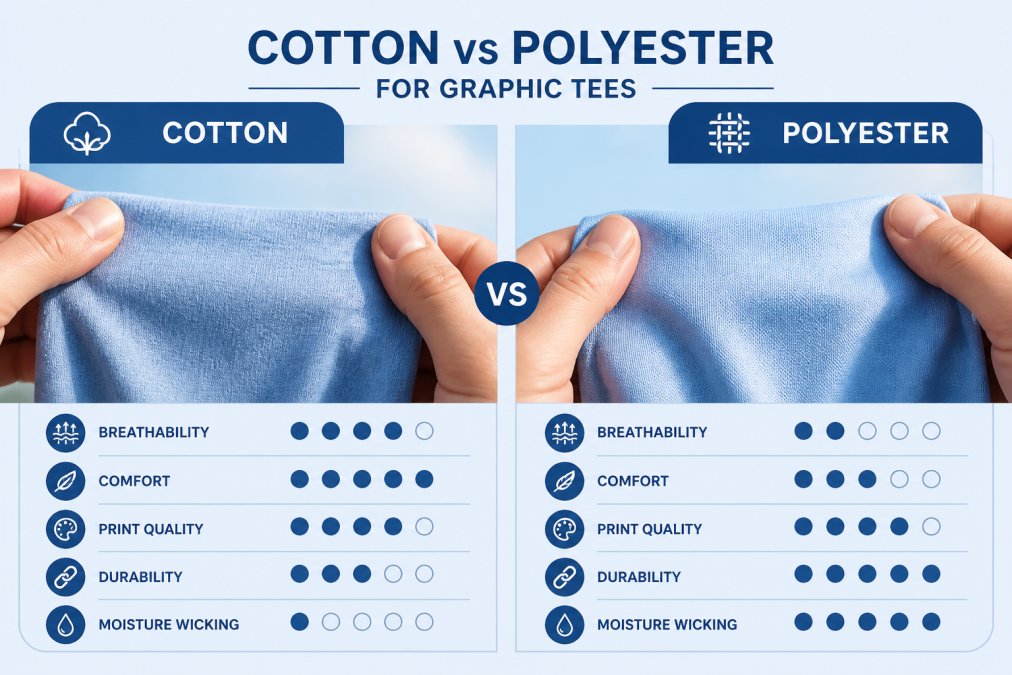
Cotton vs Polyester for Graphic Tees: Pros and Cons
Cotton and polyester are the two dominant fibers in graphic tee production, and they approach comfort and durability from opposite angles. Understanding their trade-offs helps you pick the right shirt for your lifestyle.
100% cotton, particularly ring-spun cotton, delivers the softness and breathability that make a tee feel like a second skin. Cotton absorbs moisture naturally, which keeps you cool in warm weather and makes it ideal for everyday wear. The downside: pure cotton can shrink if not cared for properly, and it's more prone to pilling over time. Print adhesion on cotton requires specific techniques, but when done well, prints last longer because the fibers hold ink better than synthetics.
Polyester excels at durability and moisture-wicking. It resists shrinkage, doesn't pill easily, and maintains its color vibrancy longer than cotton. Polyester is also cheaper to produce, which is why many fast-fashion brands use it. The catch: polyester doesn't breathe as well as cotton, and it can feel plastic-like against skin. For active wear or gym tees, polyester wins. For everyday comfort, most people prefer cotton.
Poly-cotton blends split the difference. A 50/50 or 65/35 cotton-polyester blend gives you the softness of cotton with the durability and shrinkage resistance of polyester. Blends are forgiving, they're harder to damage through washing, and they maintain their fit longer. Many premium graphic tee brands use blends because they solve both comfort and longevity problems at once.

Here's what matters: if you're buying a tee you plan to wear dozens of times a year, cotton or a cotton-heavy blend is the safer choice. If durability under stress is the priority, polyester or a balanced blend handles it better.
| Fiber Type | Softness | Breathability | Shrinkage Risk | Print Durability | Best For |
|---|---|---|---|---|---|
| 100% Cotton | Excellent | Excellent | High | Very Good | Everyday comfort, casual wear |
| Polyester | Fair | Good | None | Good | Active wear, durability |
| Cotton-Polyester Blend | Very Good | Very Good | Low | Excellent | Most everyday uses |
| Ring-Spun Cotton | Excellent | Excellent | Moderate | Excellent | Premium everyday tees |
Understanding Fabric Weight and GSM in T-Shirt Quality
Fabric weight, measured in GSM (grams per square meter), directly affects how a tee feels and how long it lasts. This is one of the most overlooked specifications when buying graphic tees, but it's crucial.
Lightweight tees typically run 4.0-4.5 oz per square yard, or around 130-155 GSM. These feel soft and breathable, perfect for layering or warm weather. The trade-off: they're thinner and more prone to showing through prints. Lightweight shirts also tend to stretch out faster with wear.
Midweight tees, the sweet spot for most everyday wear, fall between 5.0-6.0 oz, or 170-200 GSM. They have enough body to feel substantial without being heavy. Midweight fabrics hold prints better, maintain their shape longer, and feel durable without being stiff. This is the weight you want for a graphic tee that gets regular wear.
Heavyweight tees start at 6.5 oz and go up to 7.5+ oz (220+ GSM). These are dense, structured shirts that feel premium and last longer. The downside: they can feel stiff initially and take longer to soften. Heavyweight is ideal if you want a tee that will look good after 50+ washes.
The Ortrends collection uses lightweight 4.2 oz Airlume combed and ring-spun cotton. At this weight, the fabric is breathable enough for everyday wear but substantial enough to hold detailed prints.
When you see a tee listed without a weight specification, that's a red flag. Reputable brands always disclose GSM or ounce weight because it's a key quality indicator. If a brand won't tell you the weight, they're probably hiding the fact that it's cheap and thin.
Ring-Spun Cotton and Tri-Blends: Why They Matter
Ring-spun cotton is a specific processing method that creates softer, stronger yarn than conventional combed cotton. The process twists fibers together tightly, which reduces pilling and increases durability. Ring-spun cotton costs more to produce, which is why it appears on premium graphic tees.
The difference you'll feel: ring-spun cotton has a noticeably smoother hand-feel. It doesn't pill as easily, and it maintains its softness through dozens of washes. If you've owned a graphic tee that felt silky even after a year of wear, it was likely ring-spun.
Tri-blends combine three fibers, typically cotton, polyester, and rayon, to optimize comfort and performance. Cotton provides softness, polyester adds durability and shrinkage resistance, and rayon contributes a luxurious drape and additional softness. Tri-blends are lighter weight than pure cotton but feel more substantial than a standard blend.
The advantage of tri-blends: they deliver exceptional softness while resisting shrinkage and pilling. The downside: they're expensive, and print adhesion requires careful technique. Tri-blends work best for minimalist designs where the fabric itself is part of the appeal.
For most people buying the best fabric graphic tees, ring-spun cotton or a quality cotton-polyester blend delivers better value than tri-blends. You get durability and comfort without the premium price tag.
Best T-Shirt Fabric for Screen Printing and Print Durability
Print durability depends on both the fabric and the printing technique. Screen printing, the traditional method for graphic tees, works best on tightly woven fabrics with consistent surface texture.
Cotton is the gold standard for screen printing. The fibers grip ink mechanically, and the ink bonds well to the cotton surface. This is why screen-printed tees on pure cotton can last for years without cracking. Polyester is trickier: the smooth surface doesn't grip ink as well, so prints can peel or crack more easily unless special polyester inks are used.
DTG (Direct-to-Garment) and DTF (Direct-to-Film) printing, newer technologies, work differently. DTG sprays ink directly onto the fabric, while DTF prints onto a film that's then transferred onto the shirt. Both methods work on cotton and blends, but DTF has become popular because it produces vibrant prints that resist cracking better than traditional screen printing on some fabrics.
The key factor: fabric weight and weave density affect how well prints adhere. A lightweight, loosely woven fabric will show print degradation faster than a midweight, tightly woven one. If print durability is your priority, choose a midweight cotton or cotton-blend shirt with a tight, consistent weave.
Breathability and Moisture-Wicking for Active Wear
Breathability, the fabric's ability to allow air circulation, separates a shirt that keeps you cool from one that traps heat. Cotton naturally breathes well because its fibers absorb and release moisture. Polyester, while moisture-wicking (it pulls sweat away from skin), doesn't breathe as well because it doesn't absorb moisture the way cotton does.
The distinction matters: moisture-wicking and breathability aren't the same thing. A polyester shirt might wick sweat away from your skin, but if it doesn't breathe, that moisture sits in the fabric rather than evaporating. Cotton breathes better but absorbs moisture, which can make it feel damp if you're sweating heavily.
For active wear, gym sessions, outdoor activities, and high-movement jobs, polyester or a polyester-heavy blend performs better because it keeps you dry. For everyday wear where you're not sweating heavily, cotton or a balanced blend feels more comfortable because it breathes naturally.
Thermal regulation, how well a fabric maintains your body temperature, also depends on fiber content. Cotton is naturally temperature-regulating. Polyester is less effective at this.
Skin Sensitivity and Hypoallergenic Properties
Beyond breathability, fabric choice significantly impacts skin comfort for people with sensitive skin, eczema, or contact dermatitis. This is an often-overlooked factor in graphic tee selection.
100% cotton, particularly organic cotton, is naturally hypoallergenic. Cotton fibers are smooth and don't trigger allergic reactions in most people. However, conventional cotton is heavily treated with pesticides and synthetic dyes during production. These chemical residues can irritate sensitive skin. Organic cotton eliminates this problem because it's grown without synthetic pesticides and typically dyed with low-impact dyes. If you have sensitive skin, look for organic cotton or tees labeled "GOTS certified" (Global Organic Textile Standard), which guarantees chemical-free production.
Quality Never Fades Vintage Script Tee →
Polyester is synthetic and can irritate sensitive skin in two ways: (1) the smooth plastic-like surface can trap sweat and bacteria, creating an environment for skin irritation, and (2) polyester is often treated with chemical finishes (dyes, softeners, flame retardants) that don't wash out completely. People with sensitive skin often report itching or rashes from polyester tees, especially in warm weather when sweat increases skin contact.
Blends present a mixed picture. A cotton-polyester blend with a high cotton percentage (65% cotton or higher) is generally safe for sensitive skin, especially if the cotton is organic. A 50/50 blend or polyester-heavy blend carries more risk because the polyester component increases chemical exposure and reduces breathability, trapping moisture against skin.
Fabric texture also matters for sensitive skin. Tees with a smooth, soft finish (ring-spun cotton or combed cotton) are less likely to cause irritation than rough or nubby textures. Seams can be another irritation point; flat-lock seams or tagless construction (tear-away labels) reduce friction against sensitive areas like the neck and shoulders.
Chemical finishes applied during manufacturing can linger even after washing. Some brands use softening agents, wrinkle resistance treatments, or sizing that irritate skin. Pre-washing a new graphic tee in hot water (before first wear) removes many of these residual chemicals. For people with severe sensitivity, this step is essential.
If you have sensitive skin, prioritize: (1) ring-spun or combed cotton for smoothness, (2) tagless or flat-seam construction.
How to Wash Graphic Tees to Prevent Cracking and Fading
Even the best fabric deteriorates if you wash it wrong. Print cracking is usually caused by high heat, aggressive drying, or chemical bleach. Fading happens from hot water, excessive agitation, and direct sunlight.
Cold water washing is non-negotiable for graphic tees. Hot water weakens fibers and causes dyes to bleed. Machine wash at cold temperatures, around 30°C (90°F), to preserve both the fabric and the print. Avoid chlorine bleach entirely; it breaks down fibers and degrades ink. Non-chlorine bleach is safer if you need it.
Low-heat drying prevents print cracking. Tumble dry on low heat, or air dry for maximum longevity. High heat shrinks fabric and causes prints to crack. Many people hang-dry graphic tees to avoid this entirely, which adds years to their lifespan.
Turn shirts inside out before washing. This reduces friction between the print and the washing machine, which minimizes cracking and fading. It's a simple step that makes a measurable difference.
The Ortrends collection specifies these care instructions: machine wash cold (max 30°C or 90°F), tumble dry low, and avoid dry cleaning. Following these guidelines keeps prints looking crisp and prevents the fabric from degrading prematurely.
Fabric Durability and Shrinkage: What Lasts Through 50+ Washes
True durability reveals itself over time. A tee that feels great initially might lose its shape after 20 washes, or the print might crack after 30. The question is: what holds up through 50+ washes without significant degradation?
Shrinkage is the primary culprit. 100% cotton can shrink 3-5% if not pre-shrunk, which translates to a noticeably smaller fit after a few washes. Pre-shrunk cotton minimizes this, but some shrinkage is inevitable. Polyester resists shrinkage almost entirely. Blends split the difference: a 65/35 cotton-polyester blend shrinks minimally (typically under 1%) because the polyester prevents the cotton from contracting significantly.
To put this in practical terms: a 100% cotton tee that measures 20 inches across the chest pre-wash can shrink to 19.2 inches after 10 cold-water washes if not pre-shrunk. A pre-shrunk version might shrink only 0.2-0.4 inches. A 65/35 blend typically shrinks 0.1-0.2 inches. This difference becomes noticeable by wash 15-20.
Pilling happens more on cotton than polyester. Conventional combed cotton pills noticeably after 15-25 washes, especially in high-friction areas (underarms, collar, side seams). Ring-spun cotton pills significantly less, many ring-spun tees show minimal pilling even after 50 washes because the tight yarn twist reduces fiber breakage. Polyester almost never pills, which is why polyester-blend tees maintain a smooth surface longer.
Print durability over 50+ washes depends on both fabric and printing method. Screen-printed tees on quality midweight cotton (5.5-6.0 oz) typically show minimal cracking through 50 washes if cared for properly. The tight weave grips ink mechanically, and the fabric weight provides structural integrity. DTG (direct-to-garment) prints on thin cotton (under 4.5 oz) often show visible cracking by wash 30-40 because the lightweight fabric flexes more, stressing the ink layer. DTF (direct-to-film) prints perform better across fabric weights, with many lasting 50+ washes without noticeable degradation, making them a more durable choice for everyday wear.
Color retention also varies by fiber. 100% cotton dyes fade gradually over 50+ washes, especially in bright colors like red and black. Polyester holds color more consistently because synthetic fibers bond differently with dyes. A cotton-polyester blend splits the difference: color fades slightly slower than pure cotton but not as stubbornly as polyester.
Construction quality determines whether a shirt survives 50+ washes structurally intact. Tees with reinforced seams (double-stitched or box-stitched), shoulder tape, and side seams maintain their structure through repeated washing. Cheap tees with single-stitched seams and no shoulder reinforcement start showing seam separation by wash 20-30. Premium construction adds 20-30 additional washes of usable life.
Climate-Specific Fabric Recommendations for Your Lifestyle
Your climate should influence your fabric choice. Different environments stress fabrics differently.
Warm, humid climates demand breathable fabrics. 100% cotton or cotton-heavy blends excel here because they breathe and allow moisture to evaporate. Lightweight weights (4.0-4.5 oz) keep you cool without adding bulk. Polyester traps heat and can feel uncomfortable in sustained warmth.
Cold climates benefit from fabric that retains warmth. Cotton is naturally temperature-regulating, so it works well even in cold. Midweight to heavyweight options provide more insulation. Polyester doesn't regulate temperature effectively, so blends with cotton are better than pure polyester in cold weather.
High-activity environments, jobs where you're moving constantly or sweating, need moisture-wicking fabrics. Polyester or polyester-heavy blends pull sweat away from skin and dry quickly. Pure cotton absorbs moisture and stays damp, which is uncomfortable during intense activity.
Dry climates (low humidity) work well with any fiber, but cotton is still the comfort winner. Polyester can feel static-prone in dry air, which adds another minor discomfort factor.
The best fabric for everyday graphic tees isn't one-size-fits-all, it depends on your climate, activity level, and how often you wash. But if you're looking for a single recommendation that works for most people, midweight ring-spun cotton or a quality cotton-polyester blend delivers the softness, durability, and print longevity that make a tee worth wearing repeatedly. At Ortrends, our graphic tees use Airlume combed and ring-spun cotton with thoughtful construction details, side seams, shoulder tape, and tear-away labels, designed to keep shirts looking sharp through dozens of washes. Whether you're building a wardrobe of everyday basics or looking for a meaningful gift, choosing the right fabric is the foundation of a tee that actually lasts.
Frequently Asked Questions
What is the best fabric for graphic tees that will last?
Ring-spun cotton and poly-cotton blends offer the best durability for everyday graphic tees. Ring-spun cotton fibers are twisted tightly, creating stronger tensile strength and resistance to pilling. A 50/50 poly-cotton blend combines cotton's breathability with polyester's durability and colorfastness. Look for fabrics with a GSM (grams per square meter) of at least 150-180 for longevity. Ortrends uses 100% Airlume ring-spun cotton at 4.2 oz weight, which maintains shape through repeated washing.
How does fabric choice affect how long a graphic print lasts?
Fabric composition directly impacts print adhesion and crack resistance. Cotton absorbs DTF and DTG inks deeply. Polyester can repel some inks, but blended fabrics offer balance, the cotton component anchors the print while polyester adds stretch resistance. Lightweight fabrics (under 150 GSM) flex too much during wear and washing. Heavier, tightly woven fabrics like ring-spun cotton reduce movement.
Is 100% cotton or 100% polyester better for everyday comfort?
100% cotton is superior for everyday comfort and breathability. It naturally feels softer against skin. However, pure cotton shrinks more and wrinkles easily. Ortrends' Airlume combed cotton offers natural softness.
What fabric should I choose if I'm concerned about cracking prints?
Choose ring-spun cotton or a cotton-dominant blend (at least 70% cotton). Ring-spun cotton has superior tensile strength, reducing the micro-movement that causes prints to crack. Avoid lightweight fabrics under 150 GSM, as they flex excessively during wear and washing. When washing, turn the shirt inside out, use cold water, and air dry to minimize stress on the print.
Does fabric weight matter for graphic tees?
Yes, fabric weight significantly impacts durability and comfort. GSM (grams per square meter) indicates density, higher GSM means thicker, more durable fabric. Lightweight tees (under 150 GSM) feel soft but wear thin quickly and show through easily. Medium-weight tees (150-180 GSM) offer the best balance of comfort and durability for everyday wear. Heavyweight tees (over 200 GSM) last longer but can feel stiff and are less breathable. Ortrends uses 4.2 oz (approximately 145 GSM) lightweight Airlume cotton, which prioritizes softness and breathability with thoughtful construction details like shoulder tape and side seams.