

Is Organic Cotton Graphic Apparel Worth It? A 2026 Review
Table of Contents
- How We Evaluated Organic Cotton Graphic Apparel
- Organic Cotton vs Conventional Cotton Durability: What Actually Holds Up
- Is Organic Cotton Better for Sensitive Skin?
- What Organic Cotton Graphic Apparel Costs and Why
- How to Care for Organic Cotton Graphic Tees So They Last
- Real Ortrends Pieces: What You Get at $24.99 to $25.99
- Where Organic Cotton Graphic Apparel Falls Short
- Who Should Buy Organic Cotton Graphic Apparel (and Who Shouldn't)
- Frequently Asked Questions
Last Updated: September 15, 2026
How We Evaluated Organic Cotton Graphic Apparel
If you have ever pulled a graphic tee out of the dryer and watched a plastic-feeling print peel off in sheets, you already know the question that matters: is organic cotton graphic apparel worth it, or is it just a more expensive version of the same disposable shirt? At Ortrends, we build made-to-order graphic apparel, so we have a bias worth naming up front. We also have a simple test for any blank: does it survive a hundred washes without pilling, losing shape, or cracking at the print edge?

That test shapes how we evaluated this category. We looked at four things: fiber quality and how it holds up to abrasion, print adhesion on organic versus conventional blanks, how the fabric behaves against reactive skin, and the real cost per year rather than the sticker price. We also weighed what a shirt feels like on the third wear, not the first, because that is where cheap cotton gives itself away.
The short answer most shoppers are looking for: organic cotton graphic apparel is worth it when the shirt is built with long-staple combed cotton, a low-impact print method, and construction details like side seams and shoulder tape. It is not worth it when a brand charges a premium for the word "organic" while using the same short-staple blank and heat-transfer print as a budget tee.
Organic Cotton vs Conventional Cotton Durability: What Actually Holds Up
Durability comes down to fiber length and how the yarn is spun, not the organic label itself. Organic cotton refers to how the crop is grown, without synthetic pesticides or fertilizers, while conventional cotton uses them. Neither term tells you whether the shirt will pill in two months.
What determines that is staple length, the individual fiber's length, and the spinning method. Longer fibers can be combed to remove short strands, then ring-spun into a tighter, smoother yarn. That yarn resists abrasion and sheds fewer loose fibers, which is what causes those little pills under the arm.
Fiber Length and Why It Affects Pilling
Pilling happens when short fibers work loose from the yarn and tangle into knots on the surface. Combed ring-spun cotton removes most of those short fibers before spinning, so there is less material available to pill. A 4.2 oz combed ring-spun cotton tee, the weight used across the Ortrends line, keeps a soft hand while staying light enough for daily wear.
Print Adhesion on Organic vs Conventional Blanks
Print longevity depends more on the printing method than on whether the cotton is organic. Direct-to-film and direct-to-garment printing fuse pigment into the fabric rather than laying a thick plastic layer on top, which is why DTF and DTG prints resist cracking and stiffening through repeated laundering. A heavy heat-transfer vinyl print on any blank, organic or not, is the one most likely to peel.
The American Society for Testing and Materials publishes the standard test methods used to measure fabric pilling and abrasion resistance, which is how manufacturers verify these claims in the first place. You can review the relevant standards through ASTM textile test standards.
Is Organic Cotton Better for Sensitive Skin?
Organic cotton is generally gentler on reactive skin, but the fiber is only part of the reason. The bigger factor is what is left in the finished garment: residual chemical finishes, dyes, and the hardware that touches your neck and underarms.
Conventional cotton is often treated with softeners, wrinkle-resistant finishes, and chlorine-based bleaching. Organic cotton is typically processed with hydrogen peroxide instead of chlorine bleach and dyed with lower-impact colorants. For someone with eczema or contact sensitivities, that difference in finishing chemistry often matters more than the farming method.
The other irritation source is the label. A stiff woven tag at the nape rubs against the neck all day. A tear-away label, printed or designed to be removed cleanly, eliminates that friction point entirely. That is a small construction detail that makes a real difference for anyone who reacts to tags.
What the Certification Labels Actually Mean
REACH certification is a European Union regulation restricting hazardous substances in consumer products, and it signals the garment was tested for restricted chemicals. WRAP certification covers lawful, humane, and ethical manufacturing at the factory level. Fair Labor Association membership indicates the producer has agreed to independent monitoring of labor conditions.
None of these labels guarantee softness or fit. They tell you the shirt was made without a list of restricted substances and under monitored labor conditions. Read them as a floor, not a ceiling.
If you want to understand the regulatory framework behind restricted substances in textiles, the Environmental Protection Agency's chemical safety resources explain how chemical restrictions are set and enforced.
What Organic Cotton Graphic Apparel Costs and Why
Organic cotton graphic apparel typically costs more because the raw material costs more to grow and the supply chain is smaller. Organic cotton yields less per acre than conventional cotton, requires separate handling through ginning and spinning to avoid contamination, and carries certification costs at every step (Organic Agriculture).
Here is where the price actually goes, and how to judge whether a specific shirt earns its price:
| Cost Factor | What It Covers | Why It Raises Price |
|---|---|---|
| Raw fiber | Organic cotton bales | Lower yield per acre, separate supply chain |
| Spinning | Combed ring-spun yarn | Extra combing step removes short fibers |
| Printing | DTF or DTG application | Higher per-unit cost than bulk screen print |
| Construction | Side seams, shoulder tape | More labor, better shape retention |
| Certification | REACH, WRAP, labor monitoring | Audit and compliance fees |
| Made-to-order | Per-piece production | No bulk-run cost savings |
The question to ask is not "why is this more expensive" but "what am I getting for the difference." A made-to-order model means each piece is produced individually rather than in a bulk run, which removes the volume discount but also removes the pressure to cut fiber quality to hit a price point.
At Ortrends, tees run $24.99 to $25.99. That price reflects the blank, the print method, and the made-to-order production, not a marketing premium for the word "organic." Compare that against what a shirt actually costs you per year of wear, and the math shifts. A $12 tee that pills and fades after a season costs more per wear than a $26 tee that holds its shape for years.
How to Care for Organic Cotton Graphic Tees So They Last
Caring for organic cotton graphic tees comes down to three rules: wash cold, dry low, and keep heat away from the print. Heat is what breaks down both cotton fibers and print adhesion, so every step that lowers temperature extends the shirt's life.
Wash, Dry, and Iron Settings That Protect the Print
Follow this routine and a well-made tee will outlast most of what is in your drawer:
- Machine wash cold, no higher than 90°F (30°C)
- Turn the shirt inside out before washing to protect the print surface
- Use non-chlorine bleach only, and only when necessary
- Tumble dry on low heat, or hang dry for maximum print life
- Iron on medium heat, and never press directly on the print
- Skip dry cleaning entirely, since solvents degrade both fiber and print
The inside-out step is the one most people skip. Friction against other garments in the drum is what abrades a print over time, and reversing the shirt puts that friction on the inside seam instead of the graphic.
Real Ortrends Pieces: What You Get at $24.99 to $25.99
Every piece in the current lineup uses the same foundation: 100% Airlume combed and ring-spun cotton at 4.2 oz, a retail crew fit, ribbed knit collar, side seams, shoulder tape, and a tear-away label. The differences are in the print and the message.
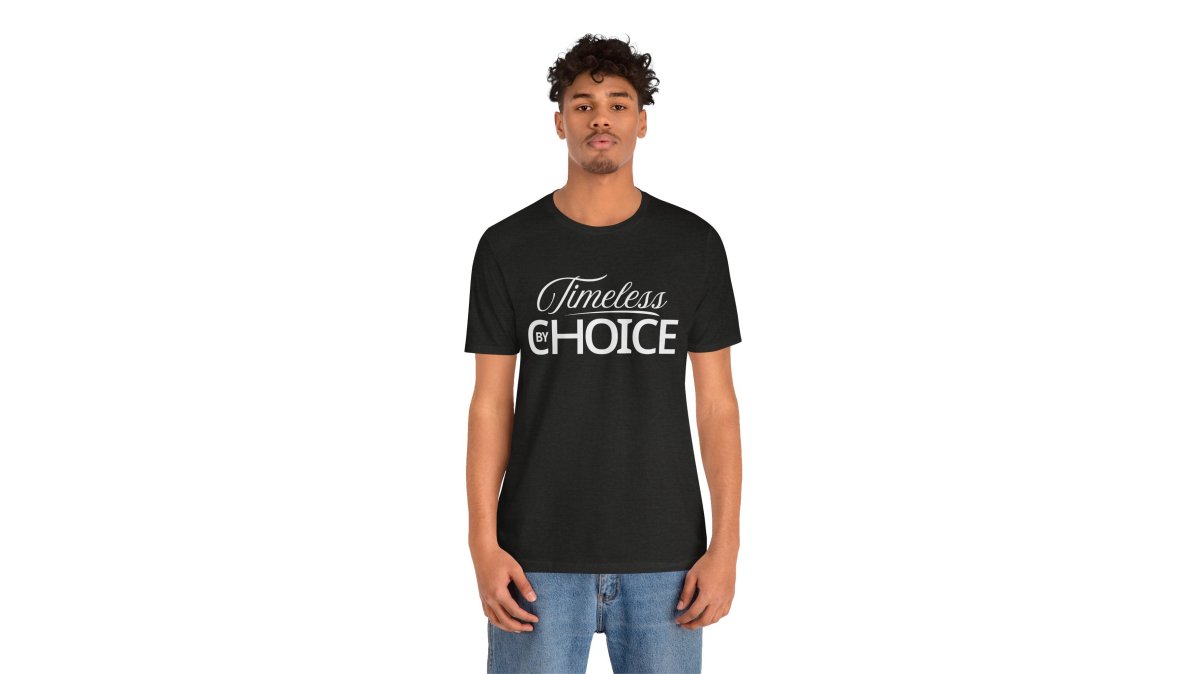
The [Quality Never Fades Vintage Script Tee(/products/quality-never-fades-vintage-script-tee-premium-typographic-streetwear-unisex-t-shirt) | ortrends.com] carries a bold vintage script on the front and subtle worn-in detailing on the back, printed with DTF and DTG methods on body and sleeves. The Timeless By Choice Graphic Tee takes a quieter approach with a chest graphic and a clean crew neckline, the kind of shirt that layers under a denim jacket without competing for attention.
For something with more visual weight, the Never Retire Sunset Beach Tee uses a vintage sunset composition with a beach chair and seabirds, printed on the same 4.2 oz Airlume cotton. The Collect Moments Not Things Unisex T-Shirt sits at $24.99 on a Bella+Canvas 3001 blank with DTF printing, aimed at travelers and minimalists who want a message rather than a logo.
What ties them together is the blank quality, not the design. A soft, breathable 4.2 oz combed cotton tee with reinforced shoulder tape holds its silhouette through repeated wash cycles, which is the part customers notice after a month of wear rather than on day one.
Where Organic Cotton Graphic Apparel Falls Short
Organic cotton graphic apparel is not the right call for everyone, and the honest limitations are worth stating plainly.
The price gap is real. If you need a shirt for a one-time event, a team uniform you will replace next season, or a giveaway item where unit cost is the only metric, an organic blank is the wrong tool. You will pay more for durability you do not need.
Selection is narrower. Because organic cotton supply chains are smaller, the range of colors, weights, and blends available to any print-on-demand brand is smaller than what conventional cotton offers. If you want a very specific heavyweight fleece or an unusual color, you may not find it.
Care demands more attention. An organic cotton tee with a DTF print will last years if you wash cold and dry low. Treat it like a conventional tee and run it through hot cycles, and it will fail at roughly the same rate. The fiber is better; it is not indestructible.
Availability can also be less predictable. Made-to-order production means each piece is printed when ordered rather than pulled from a warehouse shelf, which is a trade-off between inventory certainty and the ability to offer a wider design range without dead stock.
Who Should Buy Organic Cotton Graphic Apparel (and Who Shouldn't)
Buy organic cotton graphic apparel if you wear the shirt regularly and want it to look the same in year two as it did in week one. The value case is strongest for people who treat a few good tees as a wardrobe rather than a disposable purchase.
The clearest fit is anyone whose skin reacts to standard finishes or stiff tags, since the combination of low-impact processing and a tear-away label removes two common irritants at once. Nurses and healthcare workers who live in scrubs and change into a soft tee after a long shift fall into this group, as do pet owners who want a design that reflects something they actually care about rather than a generic graphic.
Skip it if you are buying for a single event, need the lowest possible unit cost, or do not want to think about laundry settings. A conventional cotton tee at half the price will do the job for a season.
The real challenge with graphic apparel is that most of it is designed to look good in a product photo and fall apart in a dryer. Choosing well means looking past the label and at the fiber, the print method, and the construction. Ortrends builds made-to-order graphic tees and hoodies on 100% Airlume combed and ring-spun cotton, printed with DTF and DTG methods that resist cracking, with side seams, shoulder tape, and a tear-away label for comfort that holds up to real wear. If you want a shirt that still looks right after a year of washes, browse the collection and find a design that says something you actually mean.
Frequently Asked Questions
Does organic cotton graphic apparel last longer than conventional cotton?
Organic cotton graphic apparel often uses longer staple fibers, which reduces pilling and helps the fabric hold its shape through repeated washing. Conventional cotton can use shorter fibers that break down faster. That said, durability also depends on construction details like side seams, shoulder tape, and print method. A well-made organic tee with DTF or DTG printing and reinforced seams will typically outlast a cheap conventional tee, but organic alone does not guarantee longevity if the construction is poor.
Is organic cotton better for sensitive skin?
For many people with sensitive skin, yes. Organic cotton is grown without synthetic pesticides, and the finished fabric is less likely to carry chemical residue that can irritate skin. It is also breathable and moisture-wicking, which helps reduce chafing. If you have eczema or contact dermatitis, look for organic cotton graphic apparel with a tear-away or printed label, since traditional tags are a common irritation point. Check for certifications like REACH to confirm the fabric meets restricted substance standards.
How do I care for organic cotton graphic tees without ruining the print?
Wash organic cotton graphic tees in cold water, no higher than 90 degrees Fahrenheit. Turn the shirt inside out before washing to protect the print from friction. Use non-chlorine bleach only if needed, tumble dry on low heat, and iron at medium heat with the shirt inside out. Never dry clean a graphic tee, since the solvents can break down the print adhesive. Following these steps keeps both the organic cotton fibers and the DTF or DTG print intact for years.
Is organic cotton graphic apparel worth the higher price?
It depends on how you wear it. At $24.99 to $25.99 per tee, Ortrends organic cotton graphic apparel costs more than a basic multipack shirt, but the Airlume combed ring-spun cotton holds its shape, resists pilling, and stays soft after repeated washes. If you wear graphic tees weekly and want them to last more than a season, the cost per wear drops below cheap alternatives that fade or crack in weeks. If you only need a one-time event shirt, a lower-cost conventional option may be enough.
Are there noticeable quality differences in printed organic cotton apparel?
Yes, especially in print adhesion and color retention. Organic cotton blanks with a smooth, consistent weave allow DTF and DTG prints to bond more evenly, which reduces cracking and fading. On rougher or inconsistently woven fabric, prints can look patchy or peel at the edges. Ortrends uses DTF and DTG printing on 100% Airlume combed ring-spun cotton, which gives a soft hand feel and crisp detail that holds up through normal laundering cycles when you follow the care instructions.