

Graphic Hoodies vs Pullovers for Active Lifestyle
Table of Contents
- Graphic Hoodies vs Pullovers: Key Differences for Active Wear
- Performance Features for Active Lifestyles
- Material Composition: Choosing the Right Fabric Blend
- How to Style Graphic Hoodies for the Gym
- Layering Strategies for Outdoor Activities
- Durability and Training Longevity
- How to Care for Graphic Prints on Activewear
- Best Workout Hoodies for Men and Women
- Sustainability and Eco-Friendly Materials
- Frequently Asked Questions
Last Updated: August 31, 2026
Graphic Hoodies vs Pullovers: Key Differences for Active Wear
When building an active lifestyle wardrobe, the choice between graphic hoodies and pullovers matters. Both offer distinct advantages depending on your training environment, climate, and personal aesthetic. At Ortrends, we've designed graphic apparel for people who refuse to compromise between performance and self-expression.
A graphic hoodie features a drawstring hood, front kangaroo pocket, and substantial fabric weight, making it ideal for layering and outdoor training. A pullover offers a cleaner silhouette without the hood, delivering a simplified fit that works seamlessly under jackets or as a standalone piece during moderate-intensity workouts. Context determines which works best.
This guide breaks down functional distinctions, material science, styling strategies, and durability factors that separate these two staples. Whether you're a nurse grabbing a quick workout between shifts, a pet lover seeking apparel that matches your energy, or someone seeking unique graphic designs that celebrate what matters to you, knowing which style fits your lifestyle prevents buyer's remorse.
Performance Features for Active Lifestyles
Active wear demands more from fabric than casual clothing. Your apparel needs to manage sweat, regulate temperature across shifting conditions, and maintain its structure through hundreds of washing cycles.
Moisture-Wicking and Breathability
Moisture-wicking fabric pulls sweat away from your skin toward the outer surface, where it can evaporate. Pullovers typically excel here because their simpler construction and reduced fabric mass allow faster evaporation. Without a hood adding extra layers around your head and neck, air circulates more freely.
Graphic hoodies can deliver equally strong moisture-wicking performance, but the hood creates a microclimate. When working hard, that extra fabric traps some warmth, requiring a moisture-wicking blend aggressive enough to compensate. Look for hoodies with synthetic blends, polyester, nylon, or elastane mixed with cotton rather than pure cotton. Pure cotton absorbs sweat rather than wicking it, leaving you drenched and cold once you stop moving (peer-reviewed research).
The best active-wear hoodies use four-way stretch fabric that moves with your body while pulling moisture outward. Pullovers with the same technology deliver slightly faster drying times simply because there's less total fabric involved.
Thermal Regulation and Temperature Control
Pullovers offer simpler thermal management. They layer easily under a jacket without bulk, making them perfect for runners who warm up gradually. You know exactly how warm you'll be, and you can adjust by adding or removing a shell layer.
Graphic hoodies provide inherent warmth through their construction. The hood adds insulation around your head and neck, areas where heat loss accelerates in cold conditions. Fleece-lined hoodies deliver even more thermal protection, making them excellent for outdoor winter training. However, this warmth becomes a liability during moderate-intensity indoor workouts.
The sweet spot for active hoodies is a mid-weight synthetic blend with minimal fleece lining. This delivers enough thermal regulation for temperature swings without bulk that restricts range of motion. Ortrends graphic hoodies use performance fabrics engineered for this balance, soft enough for recovery days, breathable enough for structured training.
Material Composition: Choosing the Right Fabric Blend
Fabric chemistry determines durability, comfort, and performance longevity.
Pure cotton fails in active wear. It absorbs moisture instead of wicking it, loses shape after repeated washing, and takes forever to dry. Polyester-heavy blends (60-80% polyester, 20-40% cotton) strike the performance-comfort balance (peer-reviewed research). Polyester handles moisture-wicking and durability; cotton adds breathability and softness. These blends maintain their shape through hundreds of wash cycles and resist pilling.
Synthetic blends incorporating nylon or elastane (spandex) add four-way stretch and anti-odor properties. A 70% polyester, 20% cotton, 10% elastane blend is the gold standard for active-wear graphic apparel (peer-reviewed research).
Fleece lining, typically polyester fleece, adds warmth and softness to the interior. Brushed fleece retains heat better than smooth fleece. For outdoor training or cool-weather use, this matters. For gym-focused training, lightweight hoodies without fleece lining perform better because they won't cause overheating.
The graphic print itself matters as much as the base fabric. Screen-printed graphics use plastisol ink, which bonds to fabric fibers, preventing the cracking and peeling that plague cheap graphic tees. Ortrends uses screen printing for durability, ensuring your graphic designs survive hundreds of washes without degradation.
How to Style Graphic Hoodies for the Gym
Graphic hoodies work for gym training when you understand their role in your outfit. They're your warmup piece, recovery layer, and social statement.
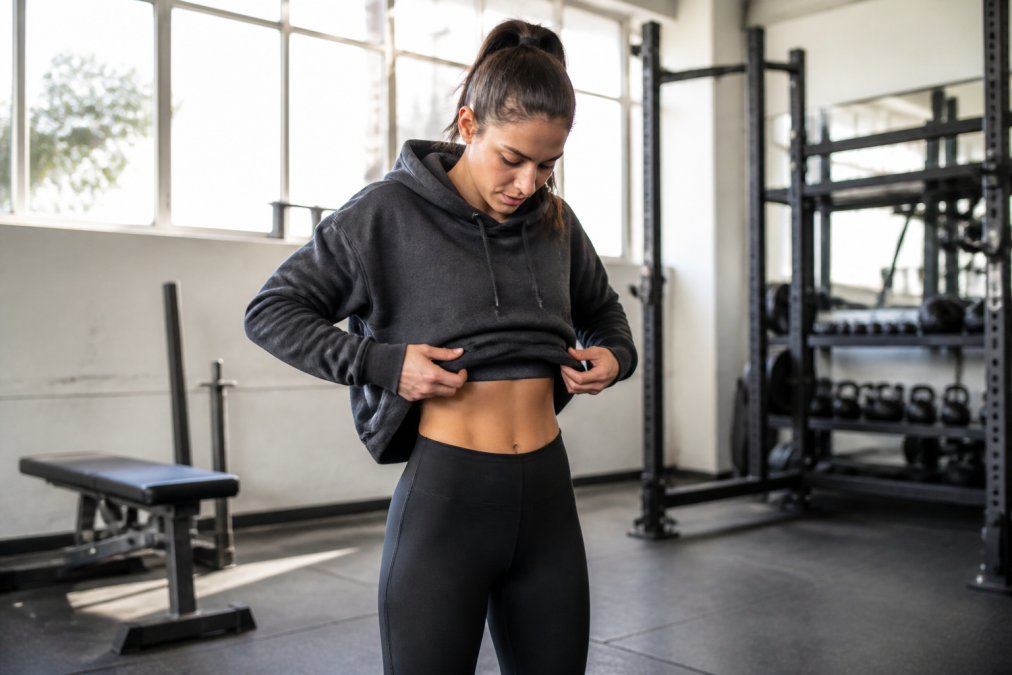
For cardio workouts, wear your graphic hoodie during the first 10-15 minutes of warmup, then remove it once your heart rate elevates. As your body temperature rises, the hoodie becomes excess insulation. This approach works especially well for outdoor runners who train in variable temperatures.
Wear a fitted moisture-wicking base layer underneath, your sports bra or compression shirt, then add the graphic hoodie. This prevents the hoodie from trapping sweat against your skin. When you remove the hoodie mid-workout, you're left with a clean, sweat-managed base layer.
For strength training and gym sessions, graphic hoodies shine as pre- and post-workout pieces. Wear one during your warmup and mobility work when you're moving slowly and generating less heat. After your session, throw it back on during cool-down stretches and recovery.
The streetwear aesthetic is where graphic hoodies truly dominate. Pair a quality graphic hoodie with joggers or tapered pants for a cohesive active-casual look. The graphic becomes your statement, whether it's a meaningful design celebrating your profession, your passion, or your philosophy. This is where Ortrends graphic hoodies excel: the original designs are expressive enough to stand alone as fashion, not just functional sportswear.
Avoid oversized fits for actual training. A hoodie that's too loose creates drag and restricts your range of motion. Fitted or slightly relaxed hoodies work best.
Layering Strategies for Outdoor Activities
Outdoor training demands strategic layering because conditions change constantly.
Pullovers excel in layering systems because they're the middle layer that works with everything. Start with a moisture-wicking base layer, add your pullover, then add an insulating shell jacket on top. This three-layer system manages temperature across a 40-degree range. The pullover stays put because it's not bulky enough to create friction with your outer layer.
Graphic hoodies work differently in layering. The hood makes them better suited as standalone warmth rather than a middle layer. If you're layering a hoodie under a shell jacket, the hood creates bunching and reduces your range of motion. Instead, wear the hoodie as your outer layer on cool days, or use it for pre-activity and post-activity warmth when conditions are mild.
For winter outdoor training, the layering hierarchy is: base layer (synthetic moisture-wicking), mid layer (pullover or lightweight hoodie), shell layer (wind and water-resistant jacket). The pullover typically performs better in this setup because it compresses easier under a shell and doesn't add bulk around your neck and head.
Synthetic blends with anti-odor technology matter in layering systems because you're wearing multiple layers for extended periods. Polyester-dominant blends with built-in anti-odor treatments prevent the smell buildup that happens when sweat sits in fabric for hours.
Durability and Training Longevity
How long your graphic apparel actually lasts depends on fabric quality, print durability, and care practices.
Quality matters immediately. A graphic hoodie made from 70% polyester, 20% cotton, 10% elastane will outlast a 50% cotton, 50% polyester blend by years. The higher polyester content resists pilling and maintains elasticity through hundreds of wash cycles. Ortrends graphic apparel uses performance-grade fabrics specifically engineered for durability.
The graphic print itself determines visible longevity. Screen-printed graphics bond to fabric fibers, creating a permanent bond that survives hundreds of washes. Direct-to-garment printing can crack or peel after 50-75 washes, especially if dried at high heat. This is why screen printing dominates athletic apparel.
Seam construction affects how long hoodies and pullovers hold together. Double-stitched seams resist tearing. Reinforced seams around high-stress areas prevent the ripping that happens when you're pulling a hoodie on and off repeatedly.
Elastic degradation is the silent killer of active wear. Quality hoodies use elastane-blended elastic that maintains stretch for 100+ wash cycles. Budget hoodies use cheap elastic that goes limp after 20-30 washes. Once elastic fails, the entire garment feels wrong.
For training longevity, rotate your hoodies. Don't wear the same one every single day. Fabric needs recovery time between washes to maintain elasticity.
How to Care for Graphic Prints on Activewear
Your graphic design is only as durable as your care routine. Most print damage happens in the washing machine and dryer, not during actual training.
Turn graphic apparel inside-out before washing. This protects the printed surface from friction against other garments and the washing machine drum.
Wash in cold water with mild detergent. Hot water breaks down the ink bonds and fades colors. Skip the bleach entirely, it destroys ink and weakens fabric fibers.
Use the delicate or gentle cycle on your washing machine. High-speed spin cycles create friction that damages prints and stretches fabric.
Air-dry whenever possible. Machine dryers are print killers. High heat melts ink and causes cracking. Hang your graphic hoodies on a line or lay them flat to dry. If you must use a machine dryer, use the lowest heat setting and remove items while still slightly damp.
Avoid fabric softener. It coats fabric fibers and breaks down elastane, causing loss of stretch.
Don't iron directly over graphics. If you need to iron, do it inside-out on low heat.
Store hoodies in a cool, dry place. Avoid plastic storage bins that trap moisture; use breathable fabric storage instead.
For stubborn stains, treat them immediately with cold water and mild detergent. Don't let stains sit, they set permanently and become harder to remove.
Best Workout Hoodies for Men and Women
The market offers countless options, but quality separates the hoodies that last from the ones that disappoint after a few weeks.
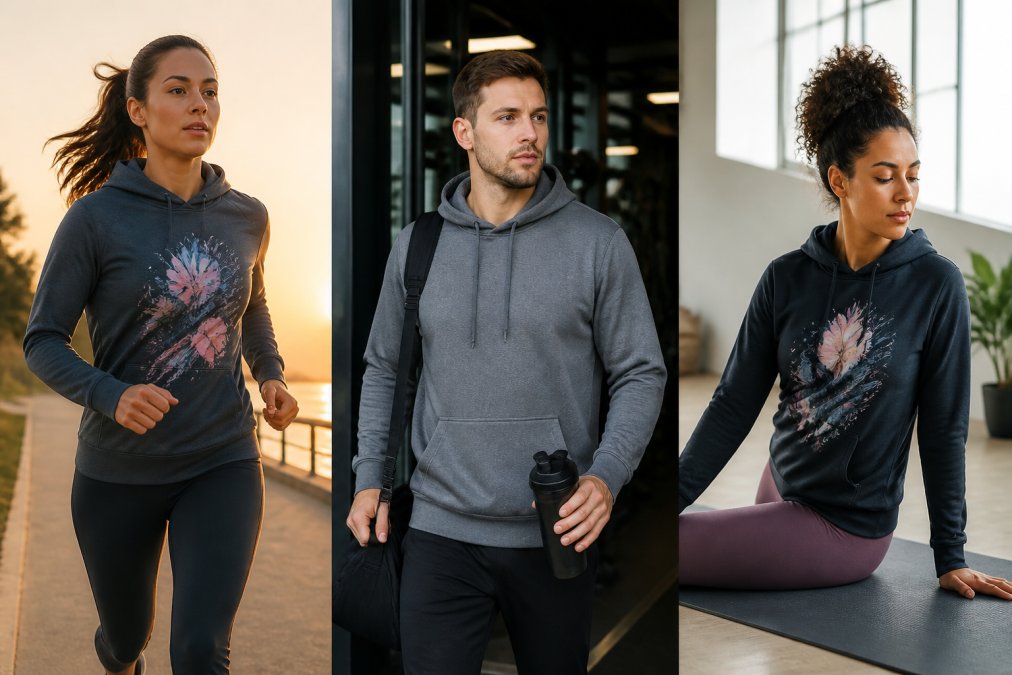
Ortrends graphic hoodies combine performance fabrics with meaningful original designs. Our hoodies use 70% polyester, 20% cotton, 10% elastane blends that deliver moisture-wicking, durability, and four-way stretch. The hood is sized for actual athletes, not oversized for fashion, which means it doesn't restrict your range of motion. Screen-printed graphics ensure your design survives hundreds of washes without cracking or fading. We ship quickly from California, so you get your custom designs without the typical made-to-order delays. For nurses, pet lovers, and anyone seeking apparel that celebrates individuality while keeping up with active training, Ortrends delivers the premium quality and original designs that separate meaningful apparel from generic gym wear.
Performance pullovers from established athletic brands prioritize moisture-wicking and minimal bulk. Look for synthetic-dominant blends with elastane for stretch. Avoid oversized fits; fitted pullovers layer better and move with your body.
For women specifically, fit matters more than for men. Women's cuts typically taper at the waist and shoulders, providing a more contoured silhouette. Quality women's hoodies use slightly thinner fabric than men's versions, which improves breathability without sacrificing warmth.
For men, the standard fit works well for most body types. Look for hoodies with dropped shoulders that don't bunch when you raise your arms.
Both genders benefit from trying on before buying when possible. If you're ordering online, check return policies carefully.
Sustainability and Eco-Friendly Materials
Active wear production has environmental costs that most consumers don't consider. Choosing sustainable apparel aligns your purchases with your values.
Polyester dominates athletic wear because it delivers performance, but it's petroleum-based and takes decades to decompose. Recycled polyester, made from plastic bottles and reclaimed fabric, performs identically to virgin polyester while reducing environmental impact.
Organic cotton costs more than conventional cotton but eliminates pesticide use in growing. For the cotton portion of your blends, organic is better if you can afford the premium.
Natural fibers like hemp and linen offer sustainability advantages but perform differently than synthetic blends in athletic wear. Hemp is durable and requires minimal pesticides, but it's stiffer and less moisture-wicking than polyester. These natural fibers work better for casual apparel than high-performance training gear.
Merino wool is naturally antimicrobial and requires fewer washes, reducing overall environmental impact. It regulates temperature across wide ranges and resists odor. The downside is cost; merino blends are 2-3 times more expensive than polyester blends.
Durable apparel is the most sustainable apparel. A graphic hoodie that lasts 5 years has lower environmental impact than a cheap hoodie replaced every 6 months, regardless of material. Investing in quality, like Ortrends graphic apparel designed to survive hundreds of washes, is the most practical sustainability choice for most athletes.
Check for certifications. Fair Trade certification ensures ethical labor practices. GOTS (Global Organic Textile Standard) certifies organic materials. Bluesign certification ensures chemical safety in manufacturing.
| Sustainability Factor | Impact | Best Choice |
|---|---|---|
| Material sourcing | Pesticide use, water consumption | Organic cotton, recycled polyester |
| Manufacturing | Chemical waste, labor practices | Fair Trade certified, Bluesign certified |
| Product lifespan | Total environmental cost | High-quality durable fabrics |
| End-of-life | Decomposition, landfill impact | Recyclable materials, durability focus |
The choice between graphic hoodies and pullovers isn't about which is universally better, it's about matching the garment to your training context and climate. Pullovers excel for high-intensity training, seamless layering, and minimalist aesthetics. Graphic hoodies deliver warmth, storage, and a platform for self-expression through meaningful design.
At Ortrends, we believe your activewear should celebrate who you are while performing at your level. Our graphic hoodies use premium performance fabrics, original expressive designs, and screen-printed durability that survives your actual training. Whether you're a nurse grabbing workouts between shifts, a pet lover expressing your passion, or someone seeking apparel that means something, Ortrends graphic hoodies deliver the quality and design that separate meaningful clothing from generic gym wear. Shop now and get graphic apparel designed for active lifestyles that actually last.
Frequently Asked Questions
What is the best hoodie to wear for workouts?
The best workout hoodie balances moisture-wicking fabric, breathability, and a fit that allows full range of motion. Look for synthetic blends or fleece with anti-odor technology that manage sweat effectively. Pullover styles offer better layering for outdoor training, while zip-up hoodies provide quick temperature control during intense sessions. Choose based on your specific activity: running benefits from lightweight, quick-dry materials, while strength training works well with slightly heavier fleece for support and durability.
Are graphic hoodies or pullovers better for layering during outdoor exercise?
Pullovers excel at layering because they sit closer to the body without bulk, making them ideal under jackets or between base layers. Graphic hoodies with zip fronts offer more versatility, you can adjust ventilation mid-workout. For cold-weather training, a pullover's streamlined silhouette prevents bunching under outer layers. Consider the graphic print placement: hoodies display designs prominently, while pullovers work better as mid-layer pieces where the print stays hidden but protected.
How do you choose durable graphic apparel for high-intensity activities?
Durability depends on fabric weight, print quality, and construction. Look for synthetic blends or cotton-polyester mixes that resist pilling and maintain shape after repeated washing. High-quality graphic prints use direct-to-garment or screen-printing methods that bond ink to fibers rather than sitting on the surface. Check seam reinforcement and hem quality, these areas fail first in active wear. For insights into garment longevity, consider customer feedback about how prints hold up after multiple wash cycles and intense training sessions.
Does wearing a hoodie while exercising help or hinder performance?
Hoodies can support performance when designed for active use, but they require proper fabric choice. Moisture-wicking hoodies keep sweat off your skin, improving comfort and reducing chafing. However, oversized or heavy hoodies restrict range of motion and trap excess heat during high-intensity workouts. Fitted graphic hoodies with thermal regulation properties work well for moderate activity or outdoor training in cool weather. The key is matching the hoodie's weight and fit to your specific sport, running demands lightweight, breathable designs, while strength training tolerates slightly heavier construction.
This article was written using GrandRanker