

Graphic Tees vs Embroidered Shirts: Which Lasts Longer?
Table of Contents
- Graphic Tees vs Embroidered Shirts: The Durability Verdict
- Durability Comparison Table: Graphic Tees vs Embroidered Shirts
- How Each Method Holds Up Over Time
- Embroidery vs Screen Printing Durability
- Design Complexity Limits for Each Method
- How to Wash Graphic Tees to Last
- Cost-Effectiveness for Bulk Orders and Corporate Apparel
- Comfort, Skin Irritation, and Long-Term Wear
- The Verdict: Which One Should You Pick?
- Frequently Asked Questions
Graphic Tees vs Embroidered Shirts: The Durability Verdict
Choosing between graphic tees vs embroidered shirts for durability often comes down to how you plan to wear and wash them. Embroidered designs generally outlast screen-printed graphics because the thread is physically stitched into the fabric rather than sitting on top of it. Print-on-demand graphic tees, by contrast, rely on ink layers that can crack and peel over time, especially with frequent washing. At Ortrends, we produce made-to-order apparel daily.
The real difference is structural. Embroidery replaces ink with thread, which means the design becomes part of the garment itself. Screen printing lays down a film of ink that bonds to the surface. That distinction determines everything else: wash life, feel, flexibility, and how the design looks after fifty wear cycles. Below, we break down exactly how each method ages, what to expect from your garments, and which option fits your needs.
Durability Comparison Table: Graphic Tees vs Embroidered Shirts
| Factor | Graphic Tee (Screen Print) | Embroidered Shirt |
|---|---|---|
| Design Lifespan | 20-50 washes before cracking | 100+ washes with minimal wear |
| Texture | Smooth, flat ink layer | Raised, textured stitching |
| Best For | Complex, colorful artwork | Logos, text, simple emblems |
| Wash Care | Inside-out, cold water | Gentle cycle, avoid bleach |
| Comfort | Soft, no backing material | Backing can irritate sensitive skin |
| Cost Efficiency | Lower cost per unit at scale | Higher cost, longer garment life |
| Repairability | Hard to fix once cracked | Re-stitchable if thread breaks |
| Color Fading | Prone to fading and peeling | Resists fading, thread holds color |
This comparison table summarizes the core trade-offs, but the details matter more than the summary. Screen printing excels at reproducing detailed artwork with vibrant colors, while embroidery delivers a premium, dimensional look that feels built to last. Understanding your priorities helps you pick the right method for your specific garment.
How Each Method Holds Up Over Time
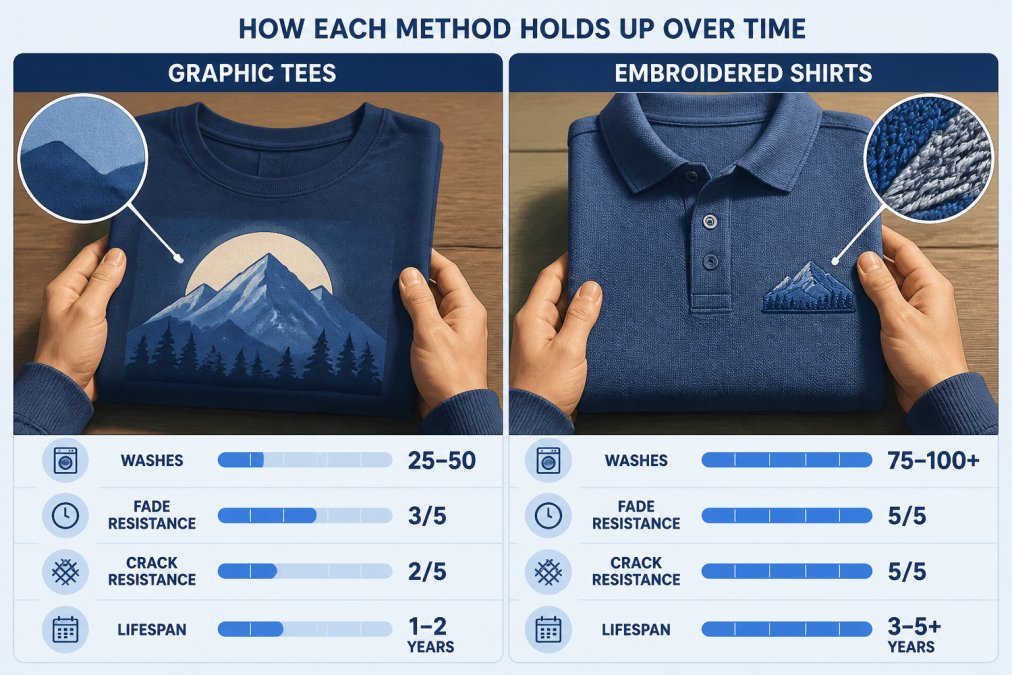
Screen-printed graphic tees and embroidered shirts age very differently, and the gap widens with every wash cycle. The printed design on a graphic tee sits on the fabric surface, making it vulnerable to friction, heat, and detergent chemicals. Over time, the ink develops micro-cracks that expand into visible peeling. Embroidery, on the other hand, uses thread that is pulled through the fabric thousands of times, creating a bond that resists normal wear and tear.
The garment fabric itself also plays a role. Heavier fabric weights, typically measured in ounces per square yard, support both printing and stitching better than lightweight tees. A standard 6 oz cotton tee provides a stable base for either method, but a thinner 4 oz shirt may allow embroidery thread to pucker or distort the surrounding fabric.
Wash Life and Print Longevity
Wash life is where embroidered shirts pull ahead most clearly. A well-executed screen print using plastisol ink typically starts showing hairline cracks after 20 to 30 wash cycles, particularly if the garment is dried on high heat (PubMed). Water-based ink prints may fade sooner since the ink absorbs into the fibers rather than sitting on top. Embroidery, by comparison, can endure 100 or more wash cycles before any thread begins to fray, provided you follow basic care instructions.
The wash method matters more than most people realize. Turning graphic tees inside out before washing protects the print from rubbing against other garments. Using cold water preserves ink saturation and prevents the fabric fibers from breaking down prematurely. Air drying, or using the lowest heat setting on your dryer, extends the life of both the print and the garment itself.
Color Fastness and UV Resistance: The Sunlight Factor
Most durability guides stop at wash cycles, but color fastness under UV exposure is where the two methods diverge in ways you will notice after a season of outdoor wear. Screen-printed plastisol inks are formulated with pigments suspended in a PVC-based carrier. While the cured ink film is thick and opaque, prolonged exposure to direct sunlight breaks down the pigment molecules over time. A graphic tee left in a car dashboard or worn through a summer of outdoor events can show noticeable fading within 30 to 60 days of cumulative sun exposure. Water-based inks perform slightly better because the dye particles are absorbed into the cotton fibers, which shields them partially from UV degradation, but they still lose saturation faster than thread.
Embroidery thread, typically made from polyester or rayon, behaves differently. Polyester thread is manufactured with dye molecules locked into the polymer structure during extrusion, making it inherently more resistant to UV breakdown. Most commercial embroidery threads are rated for lightfastness on the AATCC Blue Wool Scale, with quality polyester threads achieving ratings of 5 or higher out of 8, meaning they retain color integrity through extended sun exposure (aatcc.org). Rayon thread, while visually lustrous, scores lower on the same scale and will fade faster when exposed to direct sunlight. For outdoor uniforms, workwear, or any garment that spends time in the sun, the UV resistance of polyester embroidery thread is a measurable durability advantage that most comparison guides overlook.
Repairability: What Happens When Something Goes Wrong
A snagged thread and a cracked print present very different repair scenarios, and this maintenance angle rarely appears in durability discussions. When a screen-printed design cracks, the damage is permanent. The ink film has fractured at the molecular level, and there is no practical way to re-bond the separated layers. Once peeling begins, it spreads quickly because water and detergent seep into the cracks during washing, accelerating the breakdown from the inside. The only real fix is to replace the garment or cover the damaged area with a patch, which rarely looks intentional.
Embroidery failures, by contrast, are often repairable. A snagged thread can be pulled back through to the inside of the garment and re-secured with a small dab of fray-check adhesive. If a section of stitching comes loose, a local tailor or embroidery shop can re-run the affected stitches in minutes, provided you still have access to the original digitized design file. Even a damaged backing material can be replaced without touching the visible thread. This repairability extends the practical lifespan of embroidered garments well beyond the initial 100-wash benchmark, because minor damage does not force a full replacement. For corporate uniforms or frequently worn branded apparel, this maintenance advantage translates directly into lower replacement costs over a multi-year period.
Visual and Tactile Differences After Wear
After several months of regular wear, the visual gap between the two methods becomes obvious. A printed graphic that has been through the wash may show a spiderweb of fine cracks across the design, and the colors can lose their original vibrancy. The raised texture of embroidery, however, holds its shape and color well. The thread may develop a slight sheen from friction, but the design remains legible and intact.
Tactile differences also emerge. Screen-printed areas can become stiff, especially with thick layers of plastisol ink, and cracking creates rough edges that catch on clothing. Embroidery maintains a consistent raised texture, though the backing material on the inside of the shirt can feel scratchy against the skin. High-quality embroidery uses soft backing that softens after the first few washes.
Embroidery vs Screen Printing Durability
When comparing embroidery vs screen printing durability directly, embroidery wins on almost every objective metric. The tensile strength of embroidery thread, typically polyester or rayon, far exceeds the abrasion resistance of cured ink. Stitch density, the number of stitches per square inch, determines how solid the design feels. A dense, well-digitized logo feels like part of the garment, while a poorly digitized one can pucker or distort the fabric.
Screen printing has its own strengths. It handles gradient colors, photographic images, and fine details that embroidery cannot reproduce. The ink can be layered to create a smooth, soft-hand feel that many people prefer for everyday wear. But that softness comes at a cost: the ink layer is always vulnerable to cracking and peeling, regardless of the print quality.
Textile industry guidance on print longevity and wash testing confirms that printed designs degrade fastest when exposed to high heat and aggressive detergents, while stitched designs maintain integrity through repeated laundering. The practical takeaway is simple. If your garment needs to survive years of heavy rotation, embroidery is the safer investment.
Design Complexity Limits for Each Method
Design complexity often decides which method you should choose. Screen printing handles intricate, multi-colored artwork with ease. A photorealistic image, a detailed illustration, or a design with subtle gradients requires the ink layering that screen printing provides. The process transfers vector artwork onto screens, one color at a time, allowing for rich color vibrancy and smooth transitions.
Embroidery faces harder limits. Each color in an embroidered design requires a separate thread change, and extremely small text or tight detail can become muddled. The digitization process, which converts artwork into stitch patterns, works best with bold logos, clear text, and simple shapes. A design with more than eight or nine colors becomes impractical and expensive to embroider.
This is where many buyers make their decision. A complex, artistic graphic belongs on a screen-printed tee. A clean corporate logo or a meaningful emblem belongs on an embroidered shirt. Matching the design to the method ensures the finished product looks sharp and lasts longer, regardless of which you choose.
How to Wash Graphic Tees to Last
Learning how to wash graphic tees to last is the single most effective way to extend their lifespan. The number one mistake people make is washing printed shirts in warm water with standard detergent and then drying them on high heat. That combination attacks both the ink and the fabric fibers, accelerating cracking and shrinkage.
Follow these steps to protect your printed designs:
- Turn the shirt inside out before washing to shield the print from friction against other clothes.
- Use cold water and a gentle cycle whenever possible.
- Wash with similar colors to prevent dye transfer.
- Skip the dryer when you can. Hang the shirt to air dry or use the lowest heat setting.
- Avoid fabric softeners, which can break down the ink over time.
- Wash printed shirts less frequently by airing them out between wears.
The same care routine benefits embroidered shirts, though they are more forgiving. Embroidery thread resists detergent damage better than ink, but the backing material can weaken with repeated washing. Gentle cycles and cold water protect both the thread and the backing, keeping the design tight and secure.
Cost-Effectiveness for Bulk Orders and Corporate Apparel
For bulk orders and corporate apparel, the cost math changes depending on your timeline. Screen printing offers a lower cost per unit once you produce a large quantity, because the setup cost of creating screens spreads across the entire run. This makes graphic tees an efficient choice for event giveaways, promotional items, and large team uniforms where budget matters more than longevity.
Embroidery costs more per unit, but the garments typically last longer, which can lower the total cost of ownership over time. A corporate polo shirt with an embroidered logo looks professional for years, while a printed tee may need replacement after a season of regular wear. For branded uniforms that employees wear weekly, the higher upfront cost of embroidery often pays for itself.
Turnaround time also factors into the decision. Screen printing requires screen creation and setup, adding days to production. Embroidery requires digitization before stitching begins. Made-to-order operations, like the one Ortrends runs, balance these timelines by producing garments on demand and shipping quickly from California, so you are not waiting weeks for your order.
Comfort, Skin Irritation, and Long-Term Wear
Comfort is a deciding factor for many buyers, especially those wearing the garment for long shifts or sensitive skin. Screen-printed designs sit on the outside of the shirt, leaving the inside smooth against your skin. High-quality prints with soft-hand additives feel nearly invisible during wear, making them ideal for all-day comfort.
Embroidery presents a different experience. The thread and backing material sit on the inside of the garment, and the raised texture can rub against the skin. For areas like the upper chest or back, where logos typically sit, most wearers adjust quickly. But for people with sensitive skin or for garments worn against bare skin, the backing can cause irritation.
The solution is quality construction. Professional embroidery uses a soft, tear-away backing that minimizes irritation, and the stitch density is calibrated to avoid excessive stiffness. Some buyers choose to wear an undershirt with embroidered garments, which solves the comfort issue entirely while adding a layer of protection for the stitching.
The Scratchiness Problem: Backing Materials Explained
The most common comfort complaint about embroidered shirts is the scratchy feeling on the inside of the garment. This irritation comes from the backing material used during the embroidery process, not the thread itself. There are three primary types of backing, and each affects comfort differently:
Tear-away backing is the most widely used in commercial embroidery. It is a stiff, paper-like material that is snapped away after stitching, leaving small remnants trapped under the stitches on the inside of the garment. These remnants are what create that prickly sensation against bare skin. While they soften after several washes, the initial discomfort can be significant for sensitive wearers.
Cut-away backing is a softer, woven material that is trimmed with scissors after embroidery. It leaves a smooth, flexible layer on the inside that does not irritate the skin. This is the preferred choice for garments worn directly against the body, such as polo shirts and performance wear. The trade-off is cost: cut-away backing requires more labor and material, which raises the price per unit.
Water-soluble backing dissolves completely when washed, leaving no residue behind. It is used primarily for delicate fabrics or designs that need to be hooped without visible backing. However, it is less stable during the embroidery process and is rarely used for high-density logos on everyday apparel.
Breathability and Heat Retention: Ink vs Thread
Beyond the backing, the design itself affects how a garment breathes. A screen-printed design creates a continuous film over the fabric surface. Plastisol ink, in particular, is a PVC-based layer that does not allow air or moisture to pass through. On a large chest print or a full-back design, this means the covered area traps heat against your body. In warm weather or during physical activity, a heavily printed tee can feel noticeably hotter than an unprinted one. Water-based inks solve this problem because they soak into the fibers rather than coating them, leaving the fabric's natural breathability intact.
Embroidery sits between these two extremes. The thread covers the fabric surface, but the stitches create thousands of tiny gaps where air can still circulate. A moderately dense embroidered logo does not significantly reduce breathability. However, high-density embroidery with tight stitch coverage, such as a solid block letter or a filled emblem, can create a stiff panel that restricts airflow and flexes less naturally with the fabric. This stiffness is most noticeable on lightweight shirts, where the embroidered area can pull and distort the surrounding material.
Long-Term Wear Comfort: How Each Method Ages Against the Skin
The comfort comparison shifts over time. A screen-printed graphic that has been washed 30 or 40 times develops cracks, and those cracked edges become rough and abrasive against the skin. The ink also stiffens with repeated heat exposure, making the printed area feel like a plastic patch rather than part of the shirt. This degradation is gradual, but after several months of regular wear, the difference between a fresh print and an aged one is unmistakable.
Embroidery, by contrast, becomes softer with age. The thread fibers relax and conform to the fabric after repeated washing, and the backing remnants that initially felt scratchy break down and wash away. A well-made embroidered logo that felt slightly stiff on day one will feel significantly more comfortable after 20 washes, while maintaining its structural integrity. This aging pattern means that for garments worn frequently over a long period, embroidery starts less comfortable but ends more comfortable than screen printing.
Who Should Choose Which Based on Comfort
For specific use cases, the comfort trade-offs point in clear directions. Athletic wear or any garment worn during physical activity should favor screen printing with water-based ink, which preserves breathability and avoids the stiffness of embroidery. Garments worn directly against bare skin, such as t-shirts worn without an undershirt, benefit from screen printing or from embroidery with cut-away backing. For professional attire worn over an undershirt, such as dress shirts or polo shirts, embroidery with quality backing is comfortable and adds a premium feel that printed designs cannot match. Understanding these distinctions helps you choose not just based on durability, but on how the garment will actually feel during the hundreds of hours you will wear it.
The Verdict: Which One Should You Pick?
The choice between graphic tees vs embroidered shirts ultimately depends on your priorities. If you value artistic expression, complex designs, and a soft, all-day feel, a high-quality graphic tee from a print-on-demand service delivers the best experience. If you need a garment that survives years of washing, maintains a professional appearance, and holds up to daily wear, embroidery is the clear winner.
For most people, owning both makes sense. A collection of graphic tees expresses your personality and interests, while a few embroidered shirts cover professional settings and long-term durability needs. At Ortrends, we focus on the graphic side, producing premium made-to-order tees and hoodies with original, meaningful prints on quality materials that keep their shape and softness through repeated washes. Our customers consistently tell us the print quality exceeds what they have bought elsewhere, and the fast shipping from California means you are not waiting weeks for your order.
Frequently Asked Questions
Do embroidered shirts last longer than graphic tees?
Yes, in most cases. Embroidery uses thread stitched directly into the fabric, which won't crack, peel, or flake like printed designs can. The main risk is thread wear or snagging, but a well-made embroidered design can outlast the shirt itself. Screen-printed graphic tees, especially with proper care, can also last for years, but they are more vulnerable to cracking and fading over time.
What shirt printing method lasts the longest?
Embroidery is generally considered the most durable customization method for apparel. Because the design is created with thread, it holds up to frequent washing and wear better than most printing methods. Among printing options, screen printing with plastisol ink is very durable, while direct-to-garment (DTG) prints are thinner and may fade faster. Water-based inks offer a softer feel but can be less vibrant over time.
How does frequent washing affect graphic prints versus embroidery?
Frequent washing breaks down graphic prints through friction, detergent chemicals, and heat. This leads to cracking, peeling, and fading. Embroidery is much more resistant to wash cycles because the thread is part of the fabric structure. However, aggressive washing can cause the embroidery thread to fray or the backing material to break down. Washing both inside out in cold water and air drying will extend their life.
Is embroidery better for high-activity workwear?
For high-activity workwear, embroidery is generally the better choice. It withstands abrasion, stretching, and frequent washing much better than printed graphics. There's no ink to crack or peel, so the design stays intact even with heavy use. The main consideration is comfort; some people find the back of embroidery scratchy against the skin, so a soft backing material is important for all-day wear.
Choosing durable apparel comes down to matching the method to your needs. Graphic tees offer expressive, comfortable designs that work best with proper care. Embroidered shirts provide unmatched longevity for professional and everyday wear. Browse the Ortrends collection for graphic tees and hoodies that combine original artwork with premium, long-lasting materials, and get a design that keeps up with your lifestyle.